
Comprehensive awareness of the role of culture
On the morning of April 8, in Hanoi, the Central Propaganda and Mass Mobilization Committee organized a national conference to study, study, thoroughly grasp and implement the Resolution of the 14th Party Congress for journalists, publishers, artists and intellectuals.
At the conference, the topic "Viewpoints on building and developing Vietnamese culture and people in the Documents of the 14th Party Congress" was presented by Professor Phung Huu Phu - former member of the Party Central Committee, former Standing Deputy Head of the Central Propaganda and Training Commission, former Standing Vice Chairman of the Central Theoretical Council.
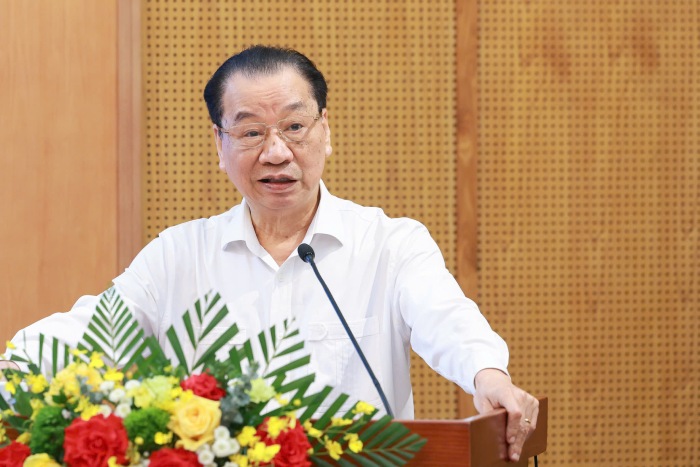
According to the presentation, the 14th Congress marked a clear development in the Party's theoretical thinking towards the field of culture and people, expressed in three groups of documents including: the report summarizing 40 years of renovation, the political report of the 13th Central Executive Committee and Resolution No. 80-NQ/TW of the Politburo on the development of Vietnamese culture.
Regarding the role of culture, in addition to continuing to affirm that culture is a goal, motivation and endogenous resource, the documents have added new perceptions suitable to the development context.
Culture is identified as the foundation for development, not only limited to the spiritual element but also including material values, permeating all areas of social life, from politics, economy to national defense and security. At the same time, culture is placed on par with other fields as a pillar of national development.
This approach emphasizes the independent role of culture in the overall development structure. In addition, culture is also considered a regulatory system, creating links and interactions between fields, contributing to ensuring rapid and sustainable development.
At the national level, culture is identified as a factor shaping soft power, contributing to positioning the country's position in the context of integration, while affirming national cultural values in relation to the global value system.
Regarding people, the consistent viewpoint is to put people at the center of the development strategy, both as creative subjects and as the driving force and goal of development.
In the overall strategy, socio-economic development is central, Party building is key, national defense and security are important, while culture and people play a fundamental role.
Implementation motto and mechanism
Based on that awareness, the documents of the XIV Congress established a system of guidelines for building and developing culture and people in a comprehensive and systematic direction.
First of all, it is the dialectical relationship between culture and people, in which cultural development aims to perfect the character of socialist Vietnamese people, while human development is a condition for continuing to develop culture.
An important content is to build a humane, healthy, civilized, and modern cultural environment, creating a foundation for sustainable development. The development of culture and people is placed on the foundation of national value systems, cultural value systems and family value systems, associated with Vietnamese human standards in the new period.
The documents also emphasize the promotion of core values including patriotism, bravery, wisdom and national self-reliance and self-strengthening spirit; promoting ethics, talent, creativity and aspiration to contribute. This is considered a system of criteria guiding the process of building people and developing culture in the new era.
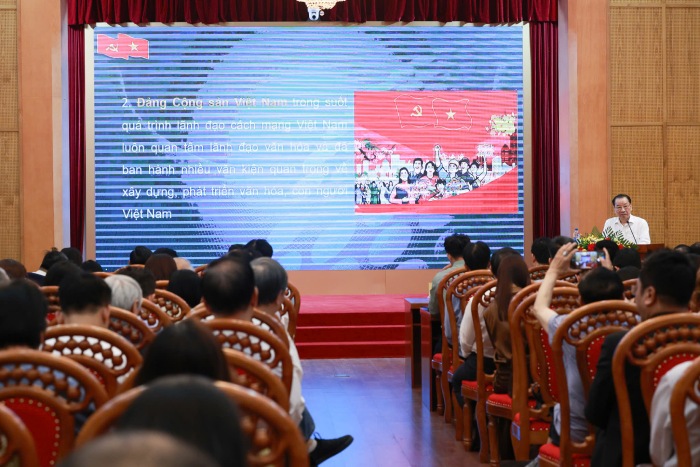
Regarding the organization of implementation, cultural construction and development is identified as the cause of the entire people, led by the Party, managed by the State, and the People are the creative and beneficiary subjects.
In which, intellectuals, artists, cultural managers and entrepreneurs play an important role in creating, spreading and protecting cultural values. At the same time, cadres and party members must play a pioneering and exemplary role in building political culture and morality.
Another highlight is the thinking about resource mobilization being innovated in the direction of combining state resources and social resources.
The State plays a leading role, while the private sector becomes an important driving force. Institutional improvement is identified as a key step to mobilize and effectively use resources, while creating a mechanism to attract and value talent.
In addition, promoting science and technology, innovation and digital transformation is posed as an urgent requirement, creating a new environment and momentum for cultural and human development.
The documents require harmonious handling of relationships such as between construction and opposition, tradition and modernity, ethnicity and internationality, preservation and development, as well as between real life and digital space, ensuring a balance between data expansion and maintaining security and cultural sovereignty.
The system of viewpoints completed in the Documents of the XIV Congress creates a theoretical and practical basis for the process of building an advanced Vietnamese culture imbued with national identity, associated with the development of Vietnamese people in the period up to 2030, with a vision to 2045.


