
On the afternoon of September 12, in Ca Mau, the IV Regional Political Academy in coordination with the Ca Mau Provincial Political School organized a ministerial-level scientific conference on building a team of commune-level leaders and managers after mergers and acquisitions.
Speaking at the workshop, Mr. Ho Thanh Thuy - Deputy Secretary of the Provincial Party Committee, Chairman of the Vietnam Fatherland Front Committee of Ca Mau province - said that after the merger, many communes and wards have wider areas, larger populations, and stronger decentralized authority. This poses increasingly high requirements for the implementation capacity of grassroots cadres.
Mr. Ho Thanh Thuy emphasized that cadre training must be associated with job positions and titles. The goal after training is not only for cadres to "know more" but also to work better, make more accurate decisions, and serve the people more effectively.
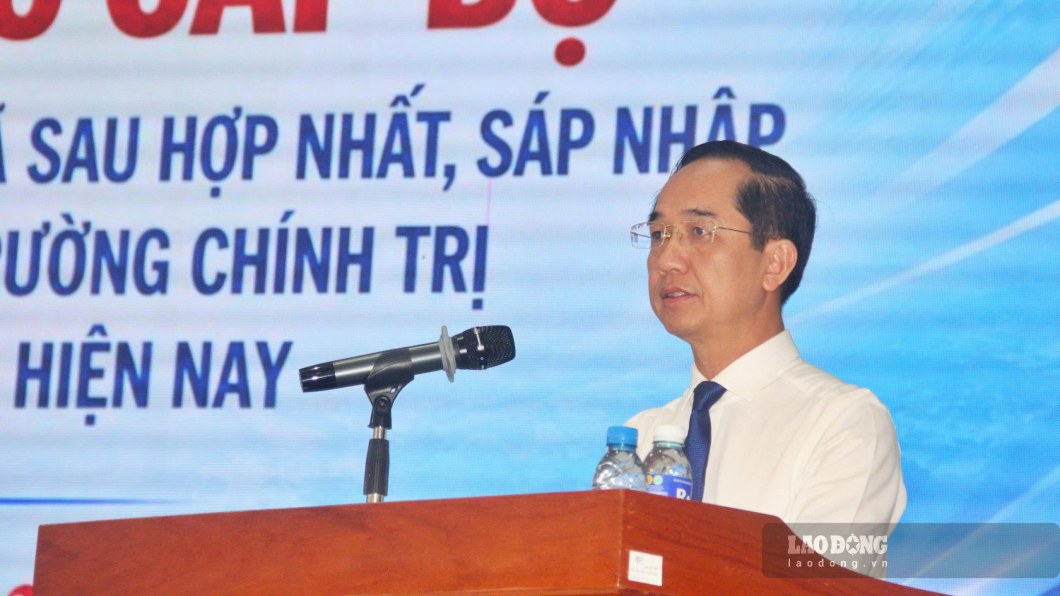
Commune-level officials are the force that directly brings policies and guidelines into life, accompanying people and businesses. Meanwhile, the Mekong Delta is having to cope with climate change, landslides, subsidence, saltwater intrusion, and at the same time promote digital transformation, green economy, marine economy, and regional linkages.
Assoc. Prof. Dr. Hoang Anh - Director of the Department of Science Management, Ho Chi Minh National Academy of Politics - pointed out that commune-level officials after the merger are under a lot of pressure due to increased workload, uneven qualifications, and new requirements for digital management, public finance, land, ethnicity, and religion.
According to Assoc. Prof. Dr. Hoang Anh, if training still runs after degree standards, focuses heavily on theory, and takes the number of courses as a measure, the gap between "being trained" and "doing the job" will become increasingly large.
From this reality, Political Schools need to shift from program-based training to capacity development; from knowledge transfer to practicing execution skills; from providing available knowledge to working with localities to solve new problems arising.
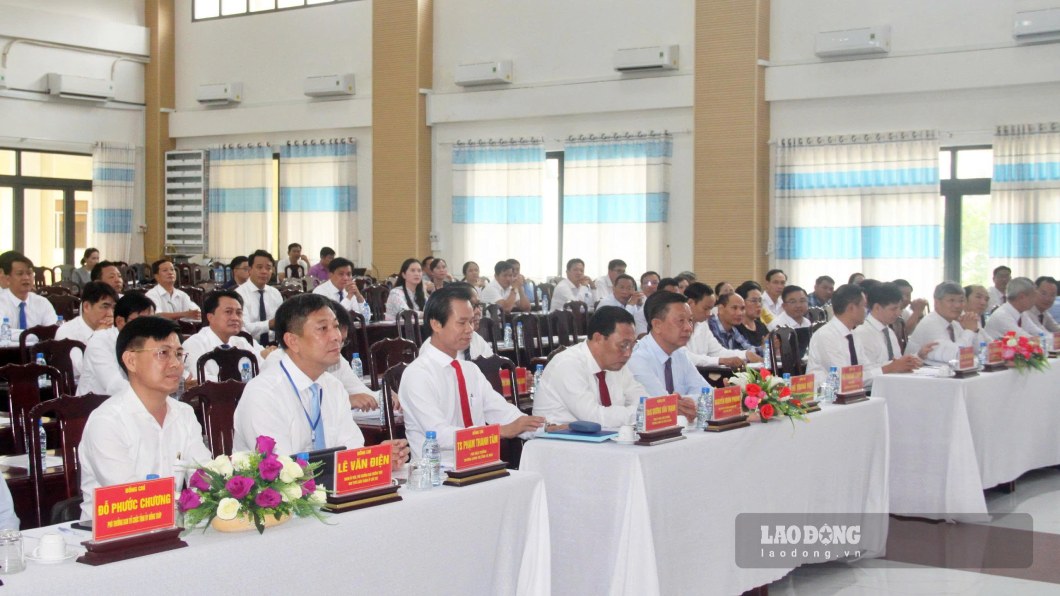
According to Assoc. Prof. Dr. Ngo Tuan Nghia - Director of the 4th Regional Political Academy, the conference selected 80 papers, focusing on the practice of building commune-level cadres after consolidation and merger, new requirements for grassroots cadre capacity and the role of political schools in the Mekong Delta region.
Delegates agreed that building a team of commune-level leaders and managers is a decisive factor in the effective operation of the two-level local government model. Political schools need to innovate the content and methods of training in the direction of developing implementation capacity, meeting new management requirements at the grassroots level.


