
Removing construction site bottlenecks
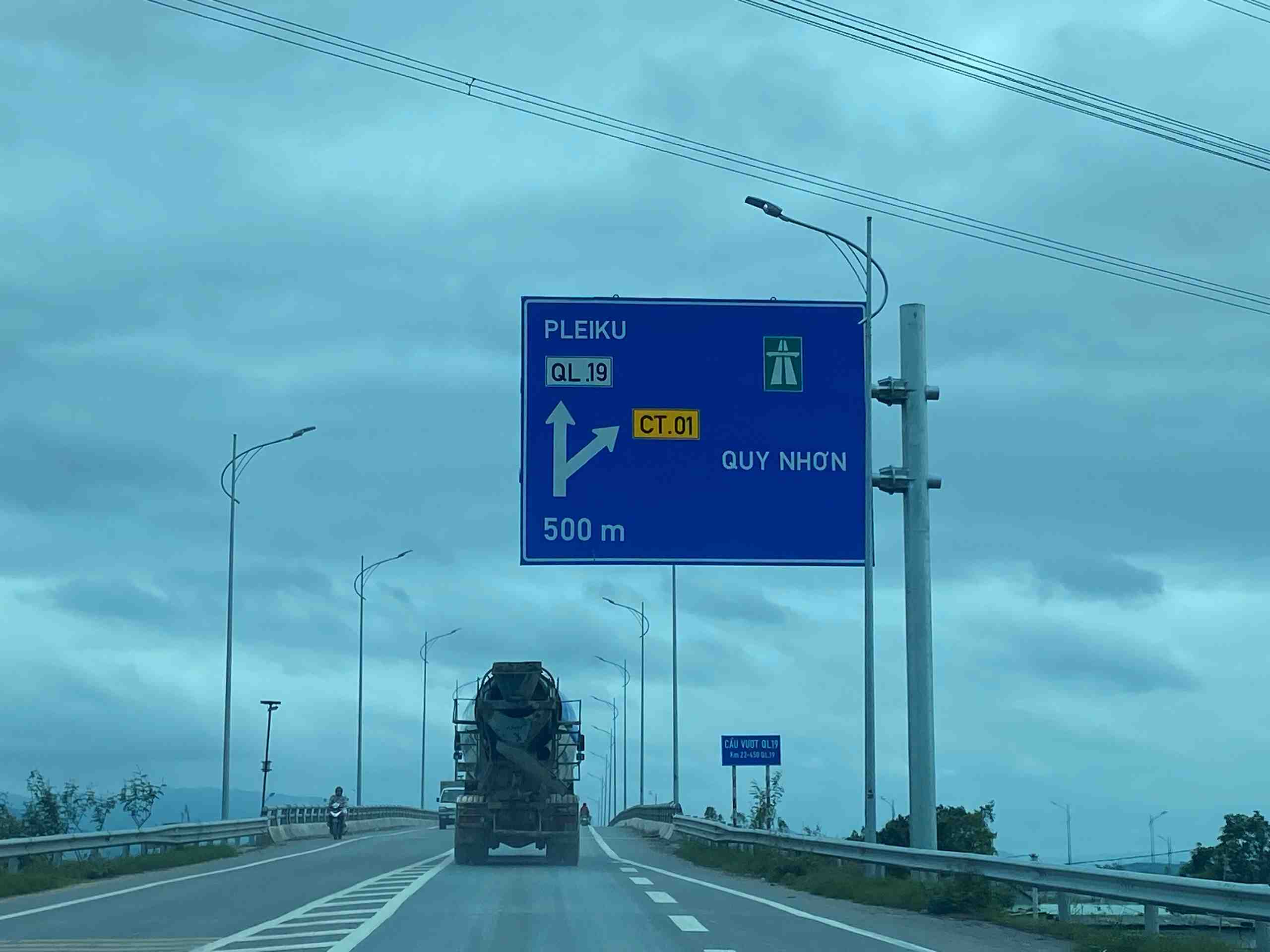
According to a representative of the Gia Lai Provincial Department of Construction, the Quy Nhon - Pleiku expressway project has a length of about 125km, passing through 17 communes and wards of the province with a total investment of more than 43,700 billion VND.
To implement the project, about 942ha of land will be recovered, with compensation, support and resettlement costs estimated at nearly 4,900 billion VND. On the entire route, 473 households affected by housing will be resettled to ensure long-term stability of life.
The biggest difficulty currently is that legal procedures are still slow, while the volume of compensation, support and resettlement is very large. The Provincial People's Committee requests communes to summarize difficulties and obstacles in the implementation process to develop plans to remove and thoroughly handle each specific case.
Mr. Nguyen Tu Cong Hoang - Vice Chairman of Gia Lai Provincial People's Committee - emphasized: "It is necessary to focus on verifying the origin of land; procedures for compensation, support, and resettlement; as well as determining and approving specific land prices to calculate compensation when the State recovers land.
The project is organized for continuous construction. Where the site is handed over, the contractor organizes immediate construction deployment. For component project 1 (Km0+000 - Km22+000), 13 construction teams have been arranged. In which, package XL. 01 mobilized 8 construction teams, focusing on leveling the ground, organic excavation, roadbed construction, drilling piles for An Nhon bridge and preparing for the construction of the North-South expressway overpass.
Package XL. 02 deploys 5 construction teams, focusing on leveling the ground at Song Kon and Ha Nhe bridges; drilling piles, installing concrete mixing stations and processing box culvert components.
Gia Lai province strives to basically complete compensation, support, and resettlement work in the second quarter of 2026; complete component project 1 in June 2028 and put it into operation in July 2028. The expressway is designed with 4 lanes, a roadbed width of 24.75m, and a design speed of 100km/h. After completion, the project will contribute to promoting trade, developing logistics services, transporting agricultural products, strengthening inter-regional connectivity, and creating motivation for socio-economic development in the region.
Adjusting the route direction, saving investment costs
Previously, to ensure the project achieved quality, safety and on schedule, Chairman of Gia Lai Provincial People's Committee Pham Anh Tuan agreed in principle to adjust the route of the Quy Nhon - Pleiku expressway construction investment project, the section through An Khe pass.
Accordingly, from the position Km22+000, the route direction is adjusted to gradually go north, about 1.5km from option 1B, belonging to Binh Khe commune. After that, the route follows the northern mountainside to the An Khe pass area (Km34+500), then follows the mountainside down to the South, about 3.5km from route 1B, in order to gradually increase altitude and reduce vertical slope to Km39+960.
The adjustment of the route direction increases the project length by about 1km and increases the volume of site clearance by about 10ha.
However, the functional agency of Gia Lai province assessed that this option has many advantages: Reducing the number of tunnels (from 2 to 1); reducing the length of bridges with special structures (to 552m compared to 2,148m) and a smaller average slope. Thanks to this, construction costs are reduced by about 1,084 billion VND.
In addition to the Quy Nhon - Pleiku expressway being implemented, some investors in the area proposed to study and invest in the North - South expressway project in the West, Pleiku (Gia Lai) - Buon Ma Thuot (Dak Lak) - Gia Nghia (Lam Dong) section.
The investment in the Western axis expressway is in line with the development orientation of the transport network according to the Central Highlands Regional Plan for the period 2021-2030, with a vision to 2050 approved by the Prime Minister.


