
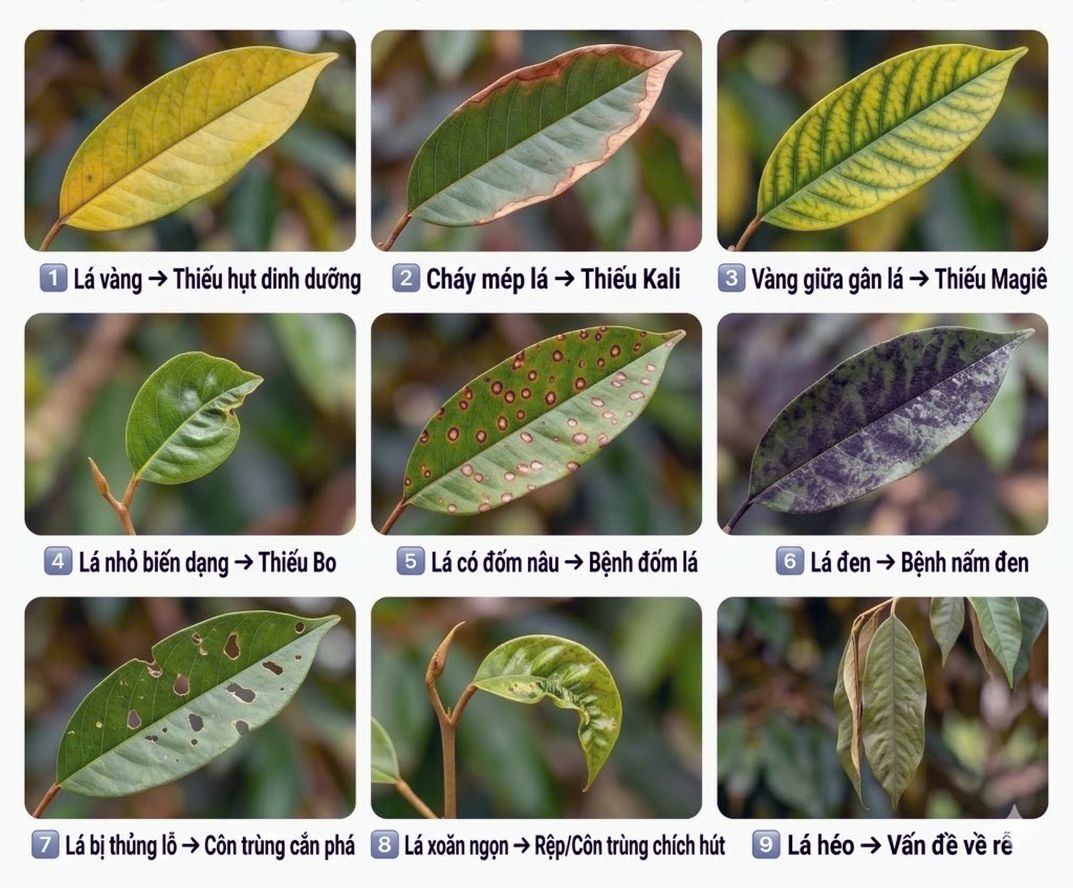
According to M.Sc. Nguyen Phuoc Tuyen, former Director of the Dong Thap Provincial Agricultural Extension Center, durian leaves are like a "mirror reflecting" the nutrition, pests and diseases and health of the plant. Agricultural experts have summarized 9 common symptoms on durian leaves to help gardeners quickly diagnose the condition of the garden to promptly adjust care techniques.
Yellow leaves - signs of overall malnutrition
One of the most obvious manifestations is that the leaves turn completely yellow. This is often a sign that the plant is lacking synthetic nutrients, especially nitrogen or trace elements necessary for photosynthesis. The cause may be poor soil nutrients, unbalanced fertilization, or poor root system function, causing the plant to limit nutrient absorption. When encountering this situation, gardeners need to review the fertilization regime, combining organic and trace elements to improve soil health.
Leaf blight - potassium deficiency plant
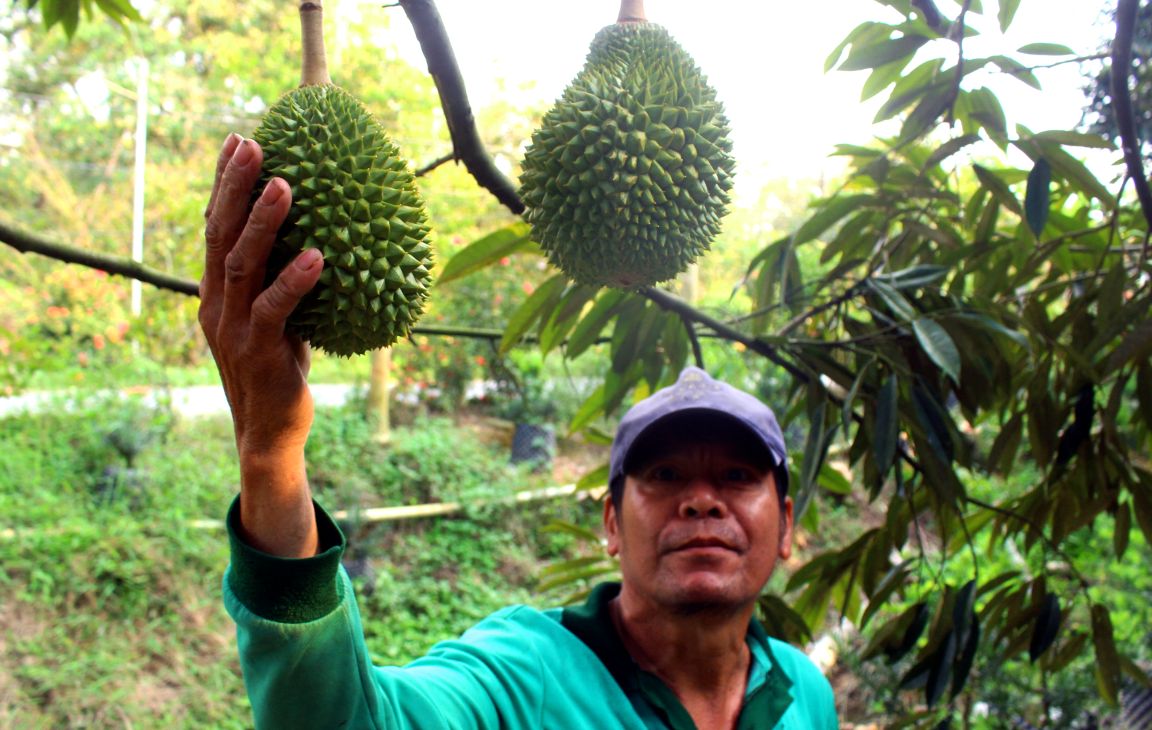
If the edge of the leaf turns brown or burns dry, while the middle part of the leaf is still green, it is very likely that the plant is deficient in potassium (K). Potassium plays an important role in the process of transporting nutrients and regulating water in the plant. Lack of this element makes the edge of the leaf easily damaged, especially in hot or prolonged drought conditions. For durian gardens that are bearing fruit, potassium deficiency also directly affects the quality and size of the fruit.
Gold in the middle of the leaf vein - sign of magnesium deficiency
Another common symptom is that the leaves are yellow but the nerves are still green, also known as the phenomenon of yellow leaves in the middle of the nerves. This is a typical manifestation of magnesium deficiency (Mg). Magnesium is an important component in the chlorophyll structure - a factor that helps leaves perform photosynthesis. When magnesium is depleted, the plant's ability to generate energy decreases, affecting fruit growth and development.
Deformed young leaves - lack of bo
When young leaves are bent, small or deformed, it is highly likely that the plant is deficient in boron (B). Boron is a trace element necessary for cell division and young tissue development. Boron deficiency not only deforms leaves but can also cause flower drop, poor fruit setting or deformed fruit.
Leaves with brown spots - leaf spot disease
If brown round spots appear on the leaf surface, sometimes with dark borders, it may be a sign of fungal leaf spot disease. The disease usually develops strongly in high humidity, dense gardens and poor ventilation. If not treated early, the disease spots can spread, reducing the photopolymerization area of the leaf.
Black leaves - signs of fungal disease
In case the leaves turn black or a black moldy layer appears, the plant may be attacked by fungus, usually related to soot fungus. This type of fungus usually grows on the sweet bile layer sucked by aphids or insects, so when seeing black leaves, gardeners also need to check for the appearance of harmful insects.
Hole-in leaves - insect bites
Holes or bites on leaves are often caused by leaf-eating worms or insects. The level of damage can range from mild to severe depending on the leaf density. If the density is high, the plant may lose a large area of leaves, affecting photosynthesis and growth.
Leaves curly tops - aphids and insects bite
The phenomenon of young leaves wrinkling and deforming at the top is usually caused by aphids or insects biting and sucking. These species suck sap from young tissues, causing leaves not to develop normally. They can also transmit some dangerous viral diseases to plants.
wilted leaves - warning of root problems
If the leaves wither even though the soil is still moist enough, it is very likely that the plant is having problems with the root system. The cause may be fungus causing root rot, waterlogged soil, or damaged root system. This is a serious condition because the root system plays a decisive role in the plant's ability to absorb water and nutrients.
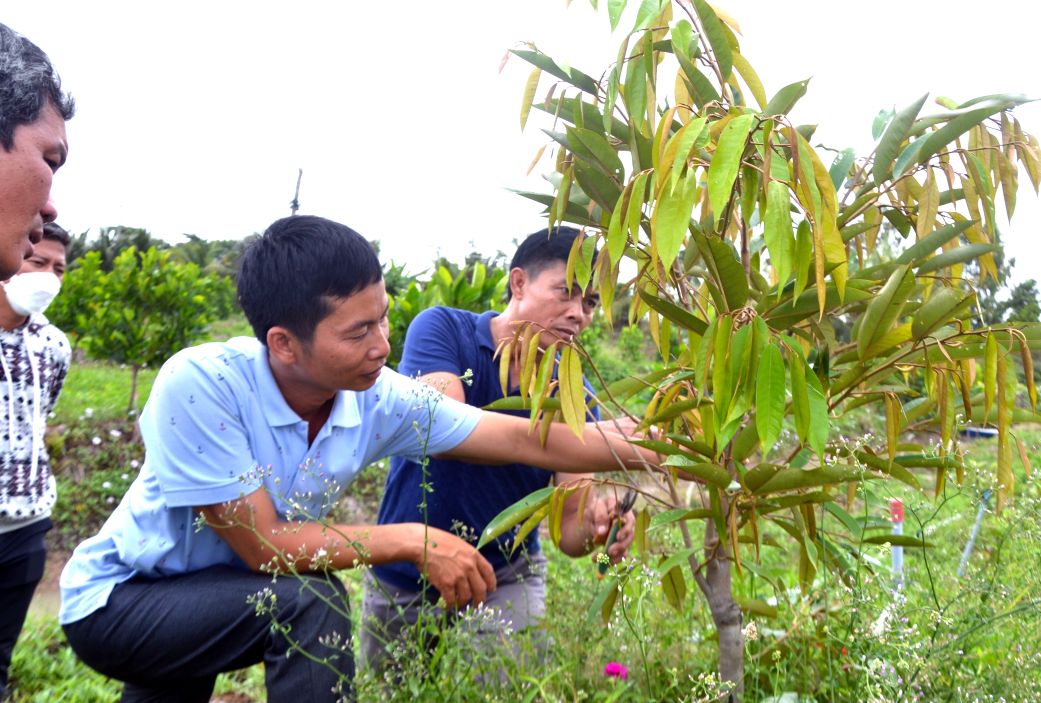
According to MSc Nguyen Phuoc Tuyen, gardeners regularly visiting and observing leaves is a simple but effective method to detect problems in durian gardens early. When correctly identifying symptoms, gardeners can quickly adjust nutrition, improve farming conditions or treat pests and diseases in a timely manner. This not only helps the tree recover quickly but also contributes to maintaining the yield and quality of durian fruit.


