
According to the report of the Department of Agriculture and Environment of Ho Chi Minh City, 14 districts (formerly) were coordinated with about 4,550 tons of garbage/day (equivalent to 443 trips) to Da Phuoc landfill.
The garbage distribution is divided into 2 shifts, the daily shift carries about 1,800 tons (equivalent to 175 shifts) and the night shift carries about 2,750 tons/day (equivalent to 268 shifts).
From December 1, Da Phuoc landfill changed the time to receive waste, which means the entire 1,800 tons of daily shifts were transferred to the whole night shift.
The Department of Agriculture and Environment of Ho Chi Minh City has proposed a number of solutions such as: transferring the volume of domestic waste in some urgent areas that are likely to be congested during the day to the Waste Treatment Complex in Cu Chi district (formerly), about 450 tons/day. Transfer the daily shift to transport the night shift to Da Phuoc processing area about 1,350 tons/day.
Talking to Lao Dong reporter, Dr. Pham Viet Thuan (Director of the Ho Chi Minh City Institute of Natural Resources and Environment Economics) commented that the fact that Da Phuoc landfill only receives waste at night is in accordance with the procedure.
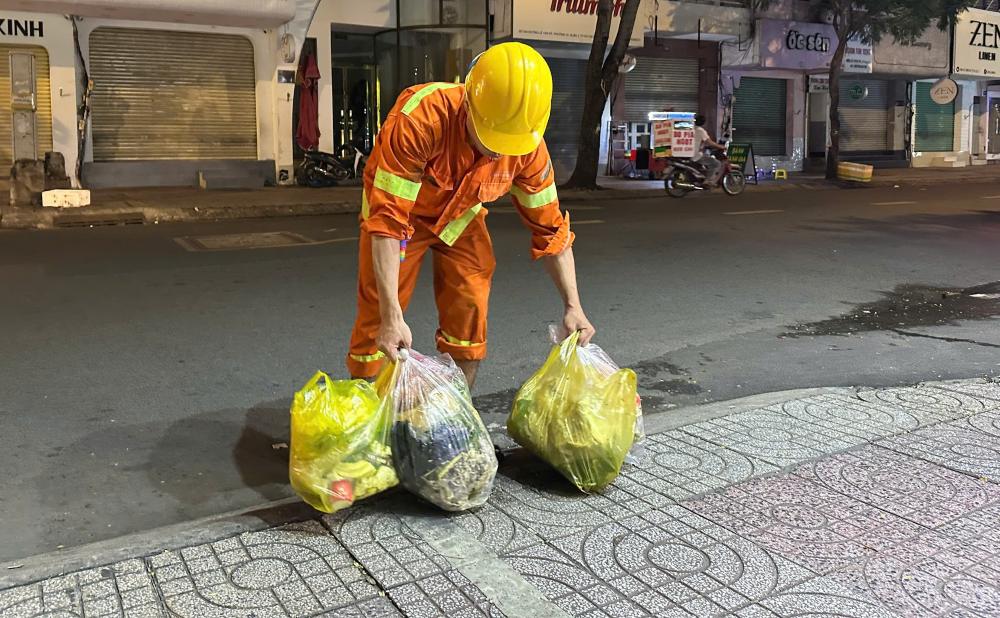
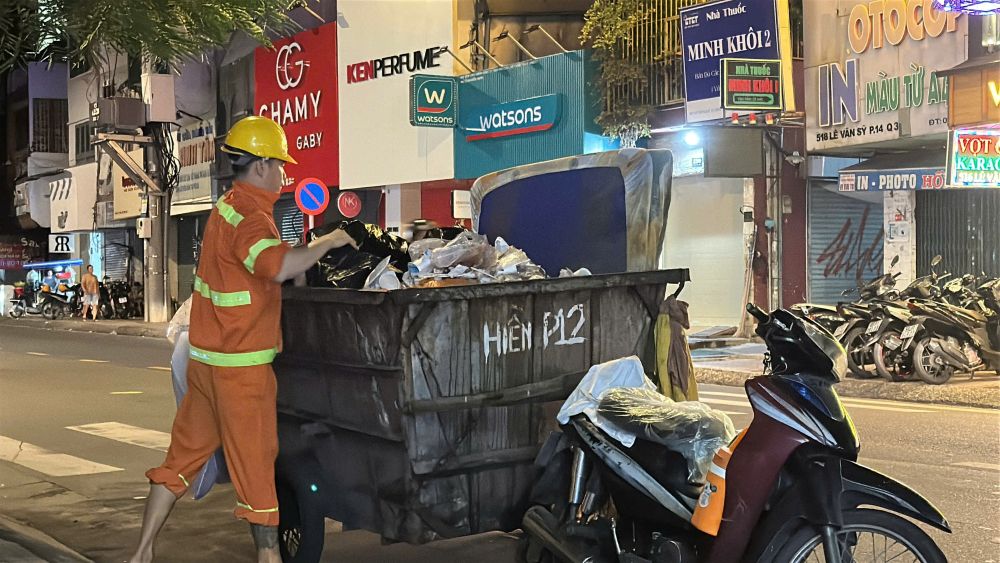
Dr. Thuan said: "In principle, the waste receiving process is at night, from 6pm to 6am is correct. Previously, Da Phuoc received garbage all day, possibly because they wanted to increase capacity".
According to experts, the sustainable solution that needs to be maintained is to bring garbage to the reserve landfill No. 3 at the Northwest onto-Sized Waste Treatment Complex (formerly Cu Chi District).
"My point of view is to have a sustainable roadmap, bringing garbage to Backup Border Area No. 3. The amount of garbage per day (about 1,800 tons) should be brought to the Northwest immediately".
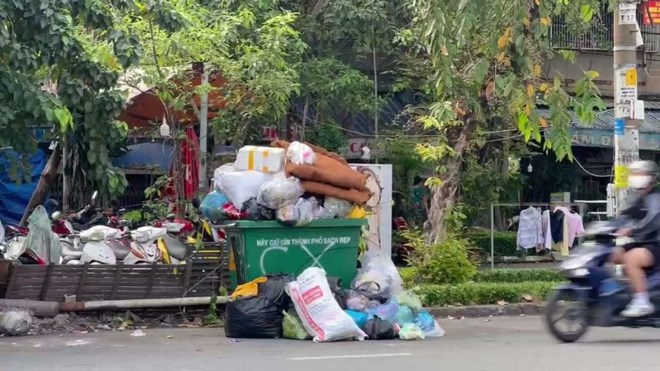
Mr. Thuan said that if Da Phuoc landfill only receives it at night, the city should only allocate a fixed volume according to the contract. This will help solve the congestion problem.
Dr. Thuan also warned that the prolonged congestion, especially when the Lunar New Year is approaching, will lead to two consequences: the city losing initiative and local pollution in waste receiving areas.
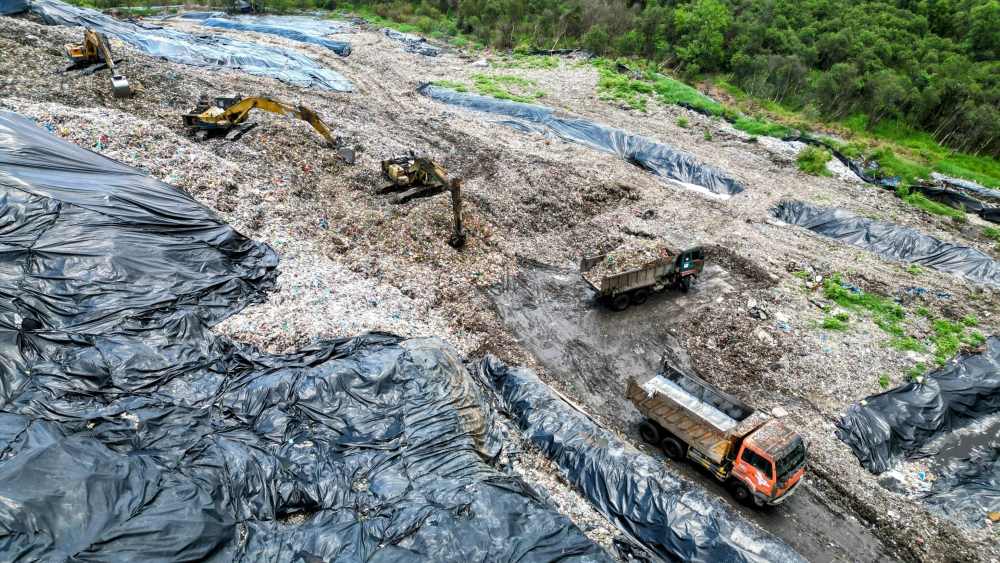
In the long term, Dr. Thuan proposed that Ho Chi Minh City should immediately switch to landfill-free technology, turning waste into clean energy, to reduce landfill and ensure the urban environment.
Every day, Ho Chi Minh City generates about 14,000 tons of domestic waste, most of which is still treated by landfill, while the rate of recycling and incineration of waste for power generation is still limited.
Recently, Ho Chi Minh City is considering investing in upgrading Landfill No. 3 at the Northwest Solid Waste Treatment Complex (formerly Cu Chi district) to increase the capacity to receive household solid waste from 2,000 tons/day to 3,500 tons/day, in order to reduce garbage treatment pressure for the entire city.


