
Solution to cool down cost pressure
Recently, under the impact of the world market, the prices of many types of fertilizers have been maintained at a high level, leading to an increase in agricultural production costs. In specialized rice, fruit, and vegetable growing areas, fertilizers account for a large proportion of the cost structure, so price fluctuations directly affect farmers' profits.
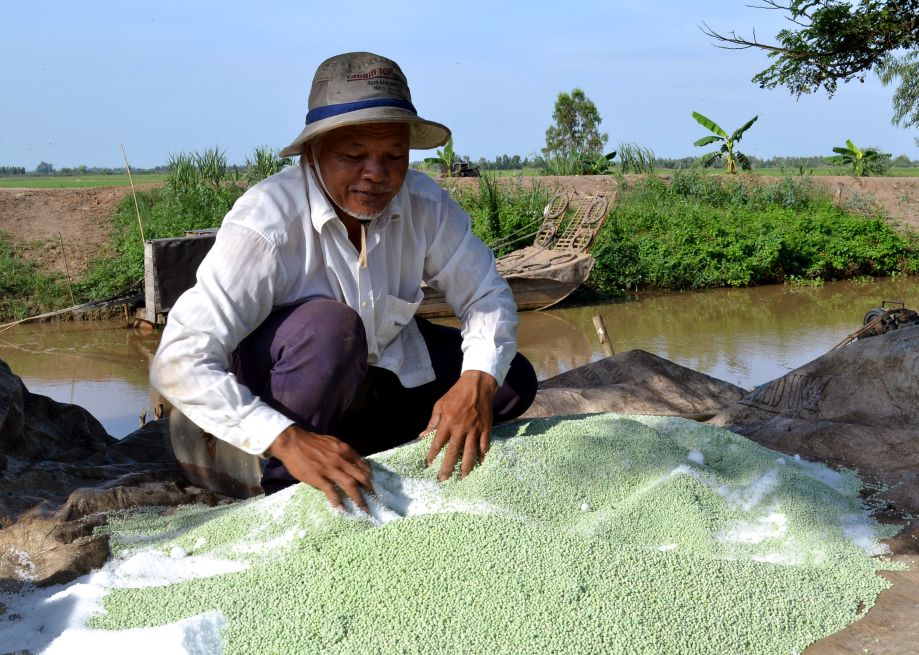
Faced with this pressure, some farmers choose to reduce the amount of fertilizer. However, if reduced incorrectly, crops are prone to nutrient deficiency, poor growth, reduced yield, and even pests and diseases. Conversely, many cases still maintain the habit of fertilizing based on experience, abusing nitrogen fertilizer, causing trees to develop "falsely green", weak stems and leaves, easily fall and create conditions for pests and diseases to occur.
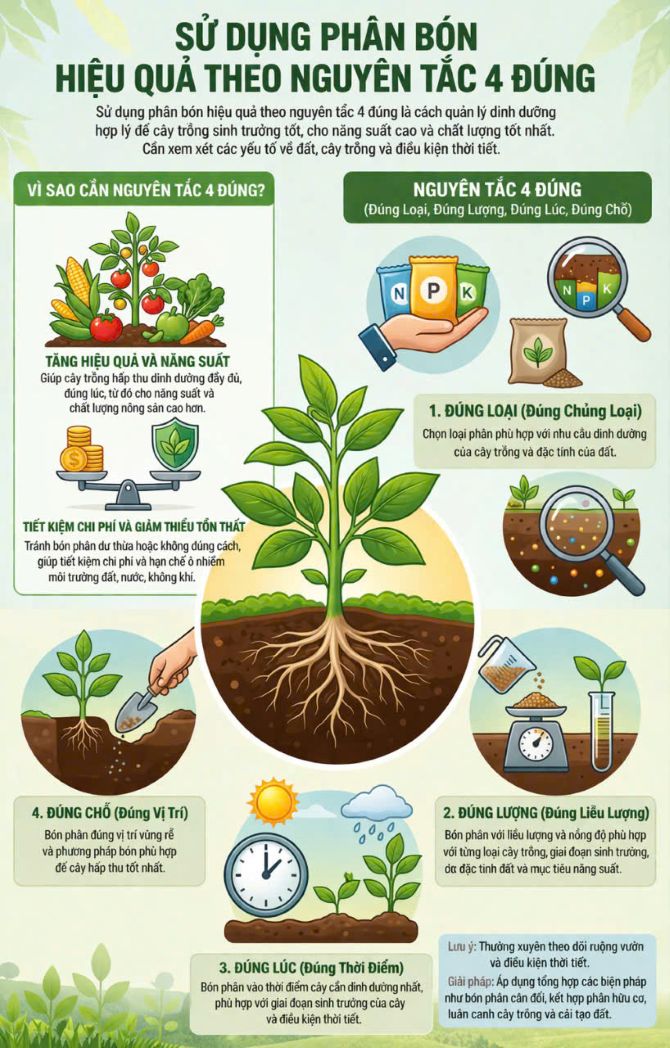
In that context, agricultural experts recommend farmers to switch to using fertilizer according to the "4 right" principle: right type, right amount, right time, right place.
Right type" is choosing fertilizer suitable for crop needs and soil characteristics; "right amount" is fertilizing symmetrically, avoiding excess, especially nitrogen fertilizer; "right time" is providing nutrients at the most needed stages of the plant; and "right place" is fertilizing in the right root position, the right method to limit loss.
According to MSc Nguyen Phuoc Tuyen - former Director of Dong Thap Provincial Agricultural Extension Center, the application of "4 right" is a key solution to help farmers "reduce but not reduce", that is, reduce input costs but still ensure productivity.
Small change, big effect
According to MSc Tuyen, applying "4 right" is not a big change in the way of doing things, but it brings many obvious benefits. First of all, it helps reduce fertilizer costs while maintaining production efficiency. At the same time, crops that are provided with balanced nutrients will develop healthily and increase their natural resistance.
Notably, limiting excess nitrogen helps plants avoid excessive growth of stems and leaves - the main cause of increased pests and diseases. For rice plants, excess nitrogen fertilization can increase the risk of rice blast and brown planthoppers. For fruit and vegetable plants, excess nutrients also create conditions for fungal diseases to develop, affecting yield and quality of agricultural products.
Not only stopping at economic efficiency, reasonable fertilization also contributes to reducing soil and water pollution, towards sustainable agriculture. In the context of fertilizer prices still fluctuating, switching from "abundant fertilization" to "proper fertilization" not only helps farmers reduce immediate cost pressure, but is also a long-term direction for efficient and sustainable agricultural production.
However, according to experts' recommendations, in the context of global integration, in addition to applying the "4 right" principle, farmers need to aim to increase the use of organic fertilizers and microbial fertilizers; combine measures to improve soil and apply technical advances, digital transformation in plant nutrition management.


