
A particularly serious structural damage has just been discovered at Long Bien bridge (Hanoi), forcing the railway industry to blockade the section, adjust transportation and deploy urgent reinforcement measures to ensure the safety of the project as well as traffic.
According to information from Vietnam Railways Corporation, at 6:15 PM on February 2, 2026, Ha Hai Railway Joint Stock Company (the bridge management unit) discovered serious damage at the upper plating steel truss intersection (between Section 10 and Section 11) belonging to span 18. The starting point steel slab was completely sectioned, the upper plating bars were separated at the two upper and lower reaches, directly threatening the safety of the project and traffic safety.
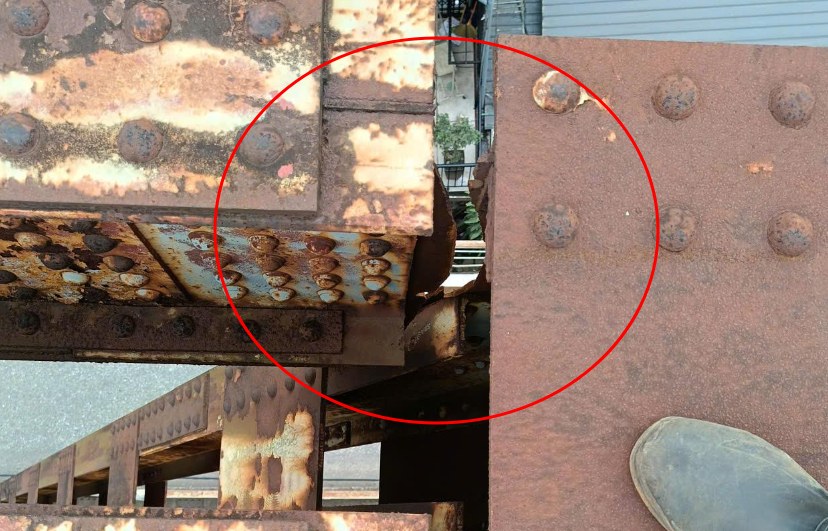
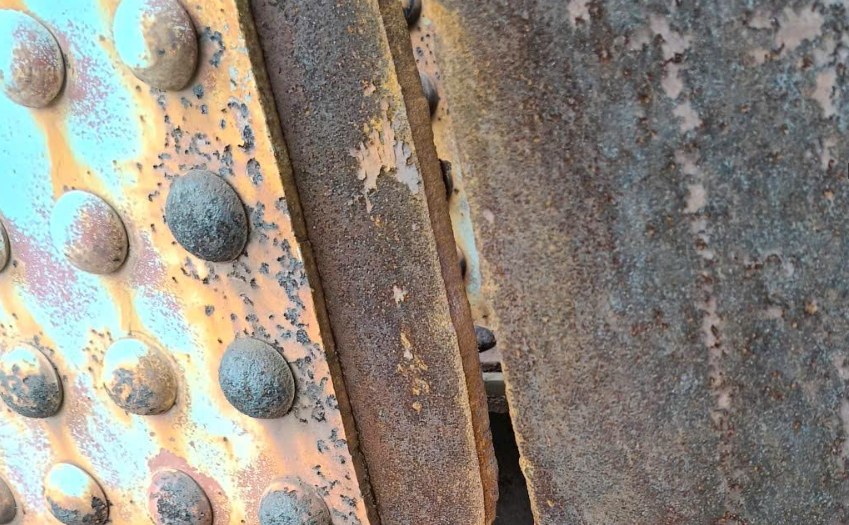
Immediately after recording the incident, the railway industry blockaded the Hanoi - Gia Lam section, and at the same time adjusted the routes of passenger and freight trains through the area. The Hanoi - Hai Phong route was organized to pick up and drop off passengers at Gia Lam station to minimize the impact on passengers.
Along with regulating transportation, functional forces organize surveillance and defense on both sides of the bridge 24/24 hours to ensure safety for people and vehicles passing through. A temporary pillar system made of Palê columns combined with shaped steel has also been installed to support the damaged truss knots.
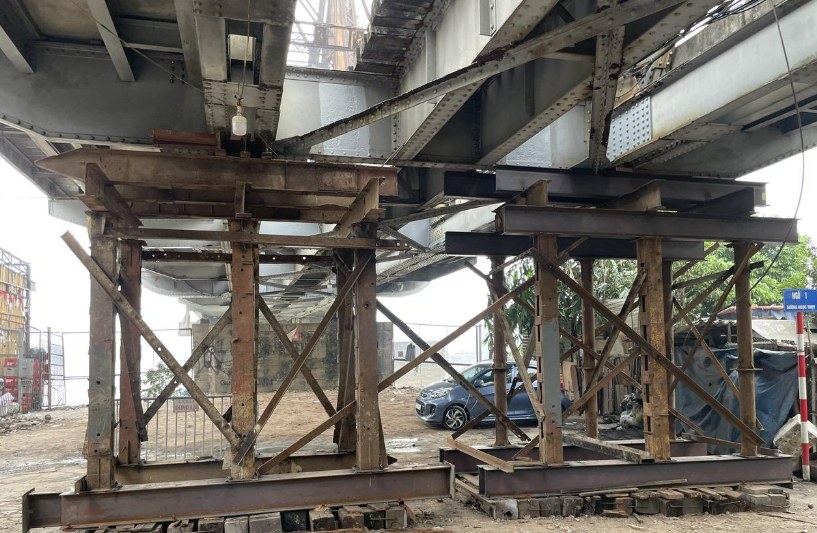
According to Vietnam Railways Corporation, on the night of February 3, functional units conducted load testing according to the current load capacity. The results showed that there was still stress and excess deformation, so the bridge span was not safe enough to allow trains to run again.
Vietnam Railways Corporation has assigned Ha Hai Railway Joint Stock Company to regularly monitor the locations of temporary pillars and damaged platforms to promptly detect abnormal signs.
In the immediate future, an emergency repair plan is being implemented with the replacement of all contact steel plates and reinforcement of the top-plated steel truss node at span 18. This work is expected to be completed on February 11, 2026, after which the bridge will be tested again. If safety conditions are met, the railway industry will consider allowing light trains to pass through the bridge.
In the long term, functional agencies will comprehensively inspect span 18, and at the same time inspect and evaluate the remaining truss spans to early identify similar damage risks and propose appropriate reinforcement solutions.

Long Bien Bridge crosses the Red River, located on the Hanoi - Dong Dang railway line, started in September 1898 and inaugurated in 1902. The project is about 1,700m long, initially consisting of 19 steel truss spans with railways in the middle and two pedestrian paths on both sides.
Through the war, many truss spans have been destroyed and replaced by temporary military beams, maintained for use to this day. Despite being repaired and reinforced many times, the degradation of the steel structure continues globally, with the phenomenon of rust and cross-section wear on the truss bars and joints. Many potential damages are assessed as difficult to predict the level of development, forcing the bridge to operate in conditions of limited load and speed.
Vietnam Railways Corporation said that it has reported to the Ministry of Construction and the Vietnam Railways Authority, and at the same time proposed to proactively organize reinforcement and inspection to accurately assess the load-bearing state of the truss nodes as well as the main truss structure. This is expected to help forecast early risks that may cause similar damage, thereby proposing repair plans to ensure safety for people and vehicles traveling through the bridge.


