
"Going to the market without plastic bags, who would have thought it would be a habit now"
The fairs in the mountainous areas of Lao Cai are familiar with the colorful image of dresses, bustling laughter, and the smell of kitchen smoke spreading to each stall.
But along with that bustle, there are stories that few people want to mention, such as plastic waste, plastic plastic bags flying around the corn field, water bottles rolling at the foot of the slope, foam boxes from the food stall sprinkled with fermentation along the stream.
In a place where everything is associated with mountains and forests, plastic waste carries an unpleasant paradox - small but breaking the landscape, durable but causing long-term damage.
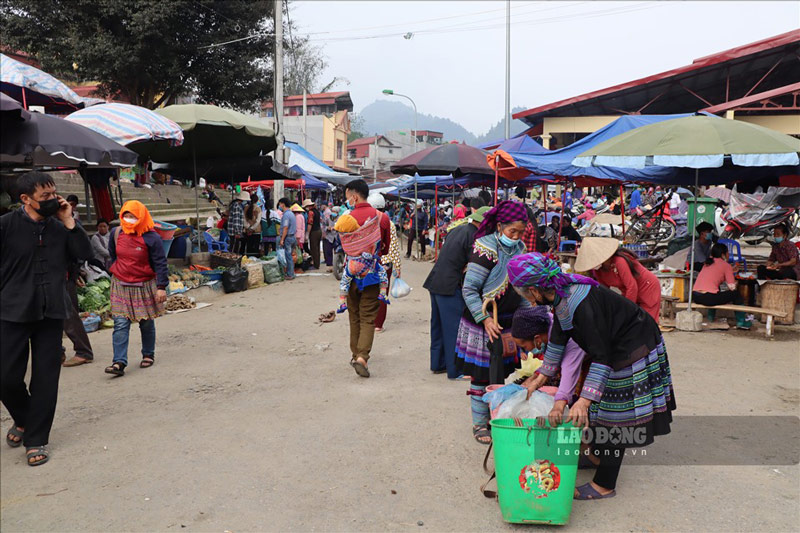
However, in just a few years, many markets have changed. Not having to make noisy changes, nor following the one-sided movement style.
The changes come from very simple stories: a marketwoman uses a lane to change plastic bags, a group of women collects plastic bottles after a session, a propaganda class that makes people understand that plastic takes hundreds of years to decompose for the first time. And from small changes, the community's living style began to change.
One morning at a market in Bac Ha, Ms. Le Thi Yen (a resident of Bac Ha commune) stood in front of a familiar vegetable stall. Before, she did not hesitate to receive a few plastic bags from the seller.
"Whenever it's convenient, you can put all your belongings in your bag. After spending, I throw it away, not thinking much, Ms. Yen said.
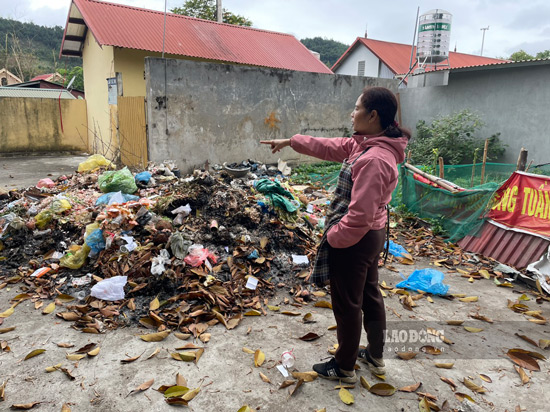
But after several meetings, listening to female officers analyze the harmful effects of plastic bags on soil, water, and health, she was startled.
"Now my family uses glass boxes, safety plastic boxes, and fabric bags. At first, it was a bit awkward, but the more I used it, the more I liked it, the cleaner it was and the less I was attracted to the environment, Ms. Yen happily said.
Then she pointed to the group of women at the end of the market: "Every session, they go to collect plastic bottles and plastic bags. Before, I felt normal, now I feel sorry. I use less to help them ease their hardships.
That awareness and love between people in the community is what propaganda has changed.
Propaganda "pointing work" - a way to touch the lives of people in the highlands
To change the habit of eating deeply for many generations, the Women's Union of Lao Cai province chose to take small but steady steps.
Without shouting a slogan, they go to the village, to the market, talking in familiar language: "Plastic waste cannot be destroyed. Throwing them into the stream, the stream will be sick. If there is an illness, my husband will be ill. That way of speaking sincerely is listened to and believed by the people.
In 5 years, the Women's Union has opened more than 40 training courses, with the participation of nearly 2,000 members, most of whom are ethnic women.
Guidance sessions on how to classify waste right in the yard of the cultural house, practical trips around the market to show what waste can be decomposed, what waste needs to be collected separately... have laid the foundation for change.
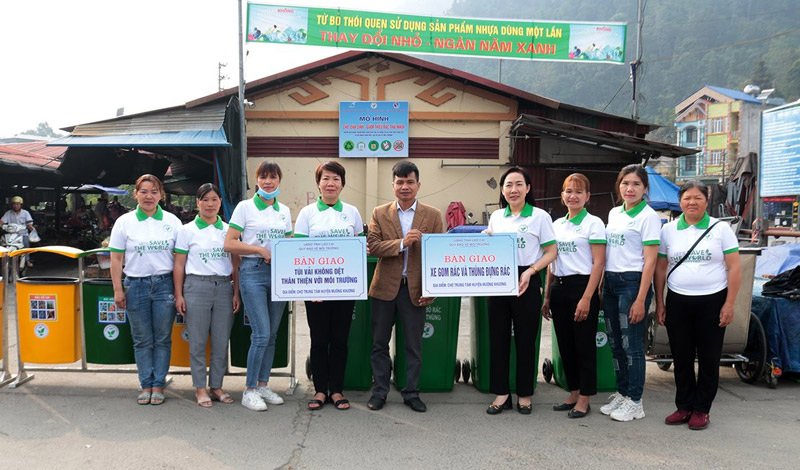
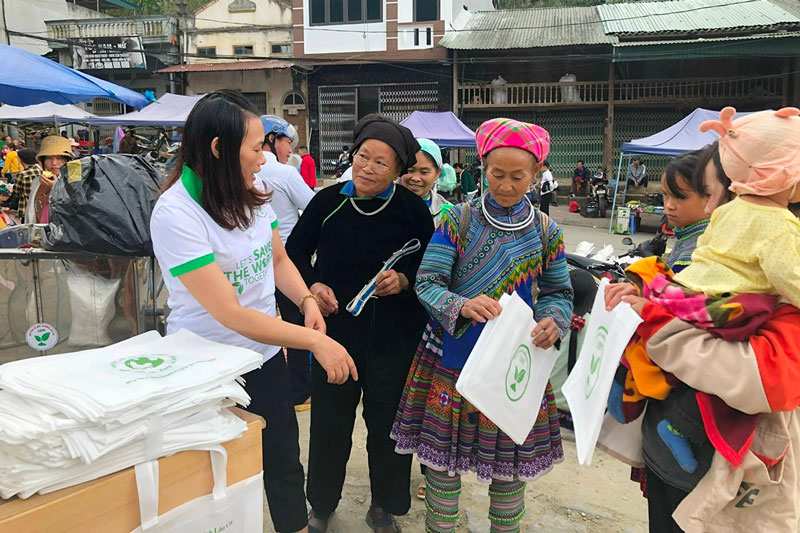
Since then, many models have spread such as "Women go to the market in lanes", "Women say no to plastic waste", "Change garbage for gifts", "Women's group collects and classifies plastic waste".
Those models are not built for beauty, but operated by the needs of the people themselves. Whoever can exchange 10 plastic bottles will receive a gift - usually laundry detergent, salt, cooking oil. Both fun and practical, it helps people understand the value of collecting.
We identify reducing plastic waste not only as a protection of the environment but also a responsibility of women to their families and communities, said Ms. Hoang Phuong Thuy, Vice President of the Women's Union of Lao Cai Province.
According to Ms. Thuy, it is the change from small behaviors in daily life that has created sustainable change.
In Sa Pa, Bac Ha or Muong Khuong, the image of fabric bags, reusable plastic lanes, and glass boxes is gradually appearing more and more.
It is worth mentioning that many traders have started to limit the distribution of plastic bags. Some meat sellers in Bac Ha have prepared several small lanes to "borrow" if customers forget to bring them.
"Before giving out comfortable plastic bags, the market is flooded with garbage. It was only after there were several propaganda sessions that I learned about how toxic plastic waste is. Now when customers say they don't need the bag, I support them immediately," said Ms. Tan De May - a trader in Ban Pho.
After each session, the women's group went to collect garbage. Newspaper bottles, jars, and plastic bags are clearly classified and brought to the gathering place. Thanks to that, the markets have become more neat, the scene of plastic waste flying around the hills has decreased significantly.
When movements become culture
When the movement began to spread, not only women but also young people, students, and even tourists participated strongly. The provincial Youth Union and the Department of Education jointly organized "Green Life Festival", "Recycled Fashion", " plastic-free market". These events turn plastic waste into a familiar, fun story, not a heavy one.
In tourism, many homestays have abandoned plastic straws and switched to bamboo; plastic water bottles have been replaced with glass bottles. Tourists coming to Sa Pa market are now also used to not being given free plastic bags.
Thanks to the synchronous approach, many agencies, units and localities in the province have stopped using disposable plastic products in regular operations.
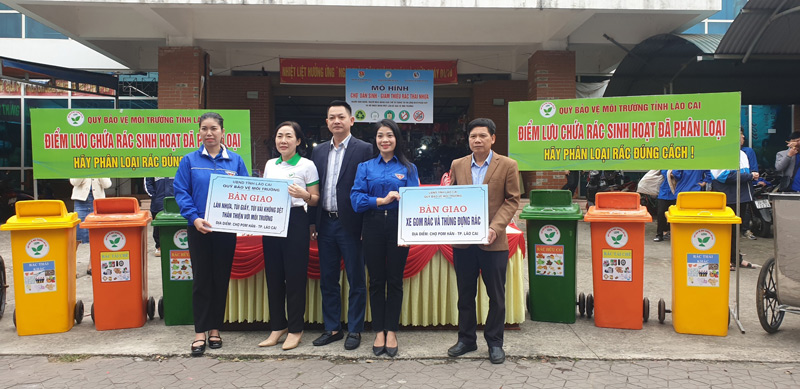
The rate of households in mountainous areas has decreased sharply, using hard-to-decompose bags. The most important thing is that people consider reducing plastic waste as a way of life, no longer a movement of coping.
However, the road ahead is still not easy. In remote areas, waste classification is still confusing. Some models lack maintenance funding. Highly expensive environmentally friendly bags make it impossible for many households to completely convert. The infrastructure for garbage collection in communes far from the center is still limited, making it difficult for many places to fully implement the treatment process even if they want to.
But the local government recognizes that when awareness changes, all remaining difficulties can be resolved.
The habit of using lanes to go to the market, sorting garbage, limiting the reception of plastic bags... has formed in a large part of the people. This is the foundation for the province to continue expanding models, increasing investment in waste collection, treatment and finding sources to support friendly materials.
From a small market to a big goal
From markets on the mountainside, Lao Cai's environmental protection story is gradually becoming a new cultural feature. It is no longer a "state's" matter, but each citizen feels partly responsible.
Ms. Dang Thi Ha (Bao Nhai commune) smiled and said: "I changed from plastic bags to using lanes not because of the movement, but because I found my work really useful. Take away any bag or bag".
Those simple statements are sometimes the clearest proof that proper propaganda, close to life, will create more lasting change than any slogan.
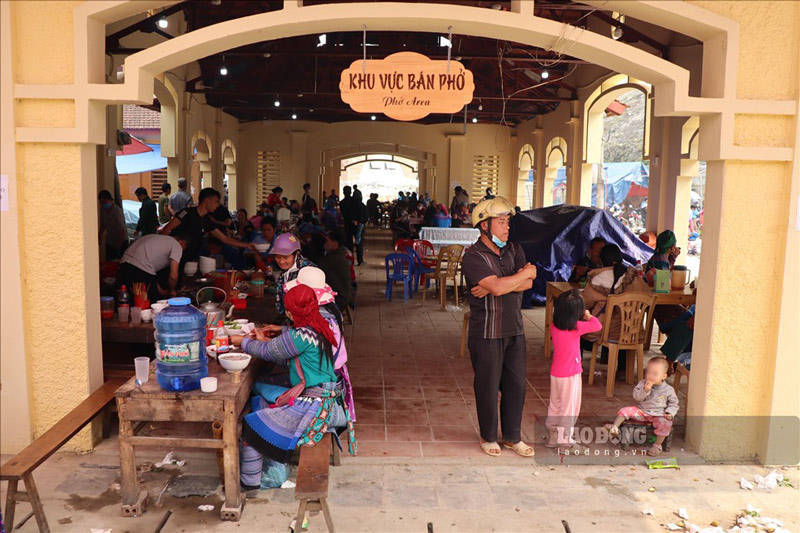
Amidst the brilliant colors of brocade, amidst the bustling laughter of the people, the green color from new habits is gradually appearing.
The highland market, which used to be flooded with plastic bags, has now become a bright spot in Lao Cai's journey to reduce plastic waste. And the most valuable thing is that the change comes from the people themselves, those who are preserving the rhythm of life in the villages on a cloudless back.


