
Currently, traffic connecting the South and the center of Ho Chi Minh City mainly passes through axes such as Nguyen Huu Tho - Kenh Te bridge, Tan Thuan - Nguyen Tat Thanh bridge, Duong Ba Trac, Pham Hung, National Highway 50... However, these roads have become overloaded, leading to frequent congestion.
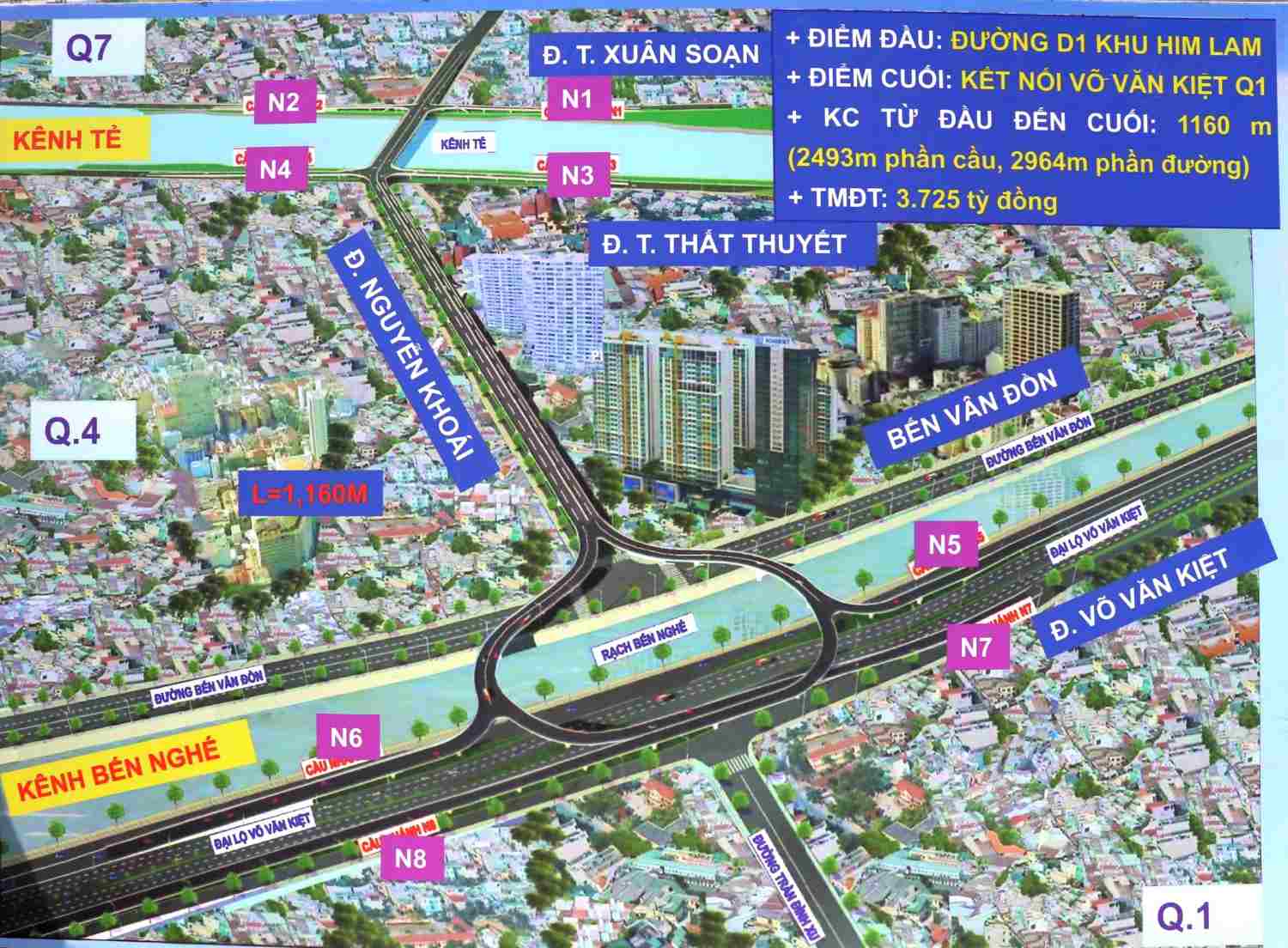
To remove the "bottleneck", the Nguyen Khoai bridge and road project is considered one of the key projects. With a total capital of more than 3,700 billion VND, the project started construction at the end of 2025.
The entire route includes a system of overpasses over the Te canal and Ben Nghe canal, with a total length of more than 2.5 km and a width of 25.5 m.
Nguyen Khoai bridge and road are expected to be completed in the second quarter of 2028, creating an additional direct connection direction between the South and the center.
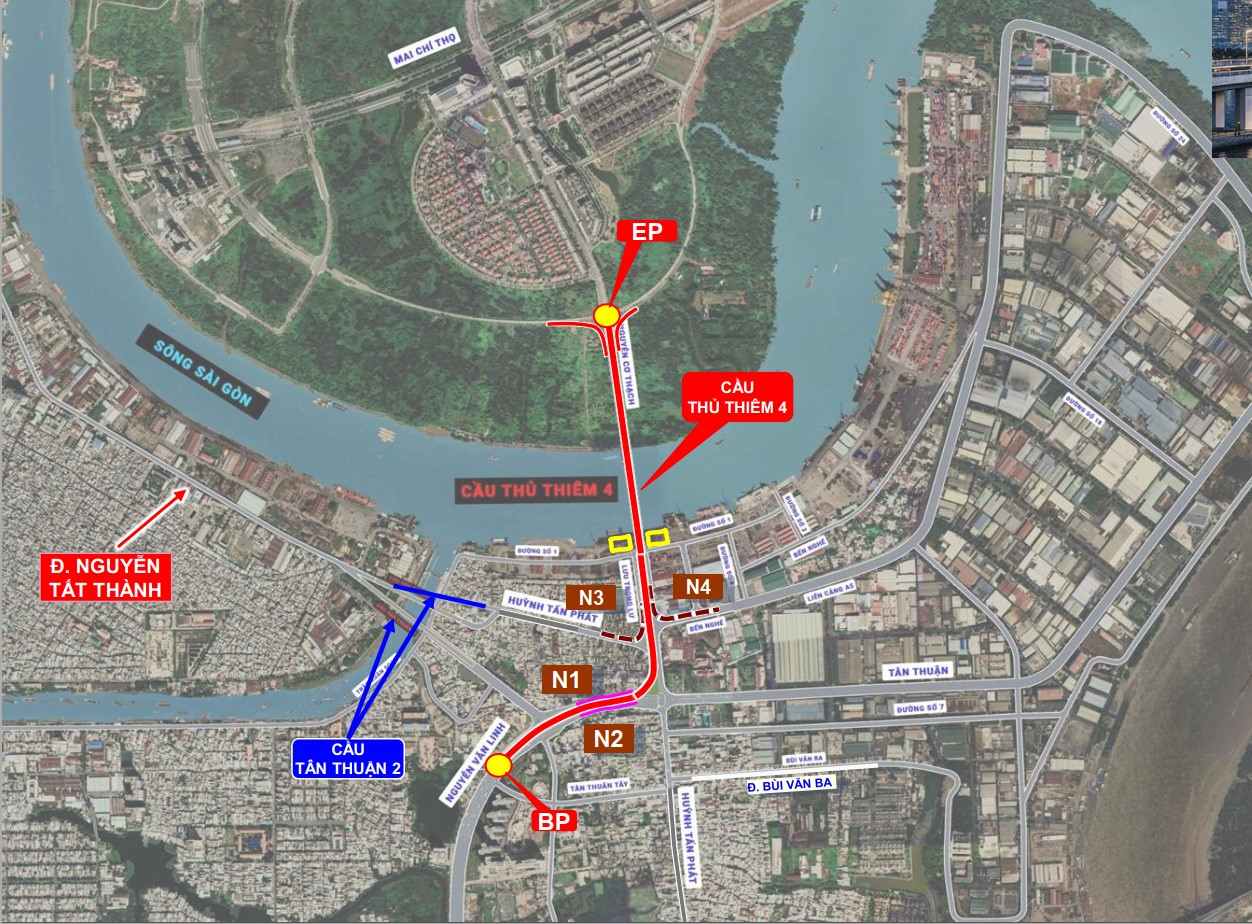
In parallel, Thu Thiem 4 bridge is also being prepared for deployment in 2026, with a total capital of more than 5,000 billion VND.
The project has a total length of about 2.16 km, of which the bridge section is more than 1.6 km long (8 lanes wide), connecting from Nguyen Van Linh street to Thu Thiem New Urban Area.
When completed by the end of 2028, Thu Thiem 4 bridge will significantly shorten the distance between the East and South areas, while reducing pressure on a series of existing routes such as Ton Duc Thang, Nguyen Tat Thanh, Huynh Tan Phat, Nguyen Van Linh...
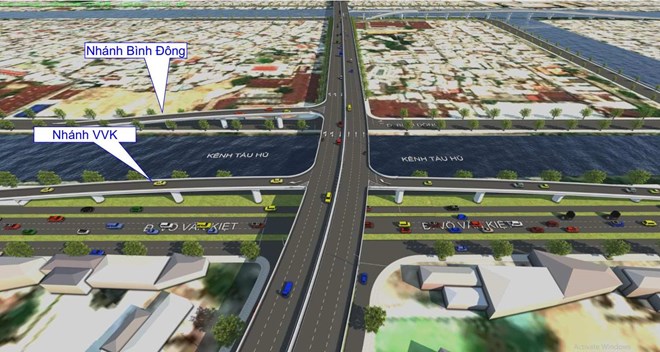
Another notable project that will also start construction this year is Binh Tien bridge and road, with a total capital of nearly 6,300 billion VND. The project includes an elevated road about 3.1 km long, 4-6 lanes wide; the parallel road below is more than 3.3 km long, 2-6 lanes wide.
This route starts from Pham Van Chi street, crosses Tau Hu canal, Doi canal, crosses Nguyen Van Linh and connects to National Highway 50.
When completed in 2028, this will be an important radial axis, contributing to reducing the load on existing roads and increasing connectivity between the center of Ho Chi Minh City and large urban areas such as South Saigon, Hiep Phuoc and Ring Roads 2, 3, 4 in the future.
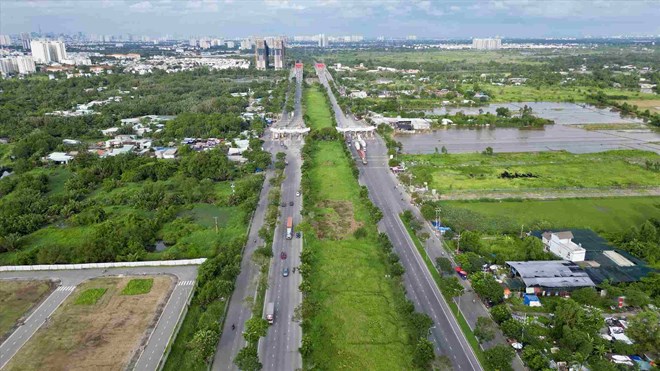
The North-South trunk road (Nguyen Huu Tho road) will also be upgraded and expanded. The section from Nguyen Van Linh to Ben Luc - Long Thanh expressway, more than 8 km long, will be expanded to 60 m, combined with building an elevated road of 6.62 km long.
This elevated route is designed with 4 car lanes, speed of 80 km/h, completely separate from the road system below. Two parallel routes, 3 lanes on each side, will serve local traffic.
With a total capital of nearly 9,900 billion VND in BOT form, the project is expected to start construction in 2026 and be completed in 2028, creating a fast traffic axis connecting the city center with the South Saigon urban area, Hiep Phuoc urban - port...

The common point of the above projects is that they are all connected to Nguyen Van Linh Avenue - the backbone of the South. This road currently has a scale of 10 - 14 lanes, but there are still many level intersections, causing traffic jams and conflicts to occur frequently.
In the future, when the projects are completed, the traffic flow to this place will increase sharply.
In that context, a proposal to build an elevated road along Nguyen Van Linh is being studied in the form of public-private partnership (PPP), BT contract (build - transfer).
According to the proposal, the elevated road will be built along the median strip between the existing Nguyen Van Linh street, with a scale of 6 lanes.
The project also includes 7 grade-separated intersections at important locations: Ring Road 2 (Western branch), Inner Ring Road, Pham Hung, Nguyen Luong Bang, Nguyen Huu Tho streets, National Highway 50 and National Highway 1A. If approved, the project will be implemented in the period 2026 - 2029.


