
Stable income from traditional crafts, raising the level of Mongolian women
Before 2000, the brocade lace weaving profession in Tuyen Quang was at risk of fading away, for many Mong women weaving brocade lace was simply making a traditional outfit to wear. The establishment of Lung Tam Brocade Weaving Cooperative (Quan Ba commune) is an important turning point.
At that time, Ms. Vang Thi Mai - a Mongolian woman in Quan Ba made a risky decision, which was to establish Lung Tam Brocade Weaving Cooperative with the purpose of gathering and creating jobs for many Mongolian women, preserving the traditional profession.
In 2001, Lung Tam Brocade Weaving Cooperative was established with 10 members and only 13 million VND in capital. With an income of only a few hundred thousand/month at that time, the number of members of Lung Tam cooperative has now reached hundreds of women. All of them were Mong women in the area.
Including those working at home, up to now, more than 200 ethnic women in the area have jobs all year round. This is also a very successful craft village model combined with community tourism, helping to change the lives of hundreds of Mongolian women.
Ms. Sung Thi Pa said that as a Mong woman, everyone must know how to weave linen and brocade. I have known how to weave brocade since I was 12 years old, but I only make my own clothes for family members.
"Previously, the villagers still said that only a few flax trees were planted to make fabric, the rest had to be planted with corn and cassava. But since the cooperative was established, seeing that I could make more money, my husband let me grow flax" - Ms. Pa shared.
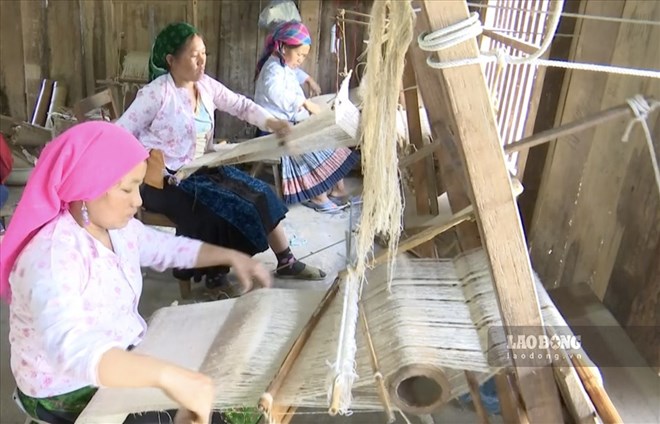
At the headquarters of Lung Tam Brocade Weaving Cooperative alone, there are nearly 30 women who regularly work. In addition, there are still nearly 200 Mong women in neighboring villages and communes who are working at home.
To achieve that is a difficult journey of Mongolian women, especially for artisan Vang Thi Mai - the founder of Lung Tam Cooperative.
Ms. Mai said that the average income of women is about more than 4 million VND/month. Coming to the cooperative helps Mongolian women make their own economy, proactively increase their income, and their position in the family and in society is also improved.
But not everyone understands and listens immediately. Ms. Mai recalled: "At first, it was very difficult to mobilize women to cooperate, they didn't believe in themselves. Then there is the Mong custom of not allowing women to work outside, and husbands do not understand".
Then the first Mongolian women "adventured" to overcome prejudices and long-standing customs to come to Mrs. Mai's house to work. People see products, see income, and think differently.
Artisan Vang Thi Mai shared: "From never agreeing to let my wife participate in social activities, to now, the Mongolian husbands have changed. When there is a fair in the city or below Hanoi, women are given the opportunity to go far all week without causing difficulties".
With those contributions, in 2017, Ms. Mai was honored by Forbes Magazine as one of the 50 most influential women in Vietnam. She is also one of 100 outstanding women who have just been honored at the National Women's Congress.
Mrs. Mai not only changes the fate of the Lychee but also changes the fate of the Mongolian women. She attracts poor, unemployed women, orphans, and skilled elderly people to teach the profession.
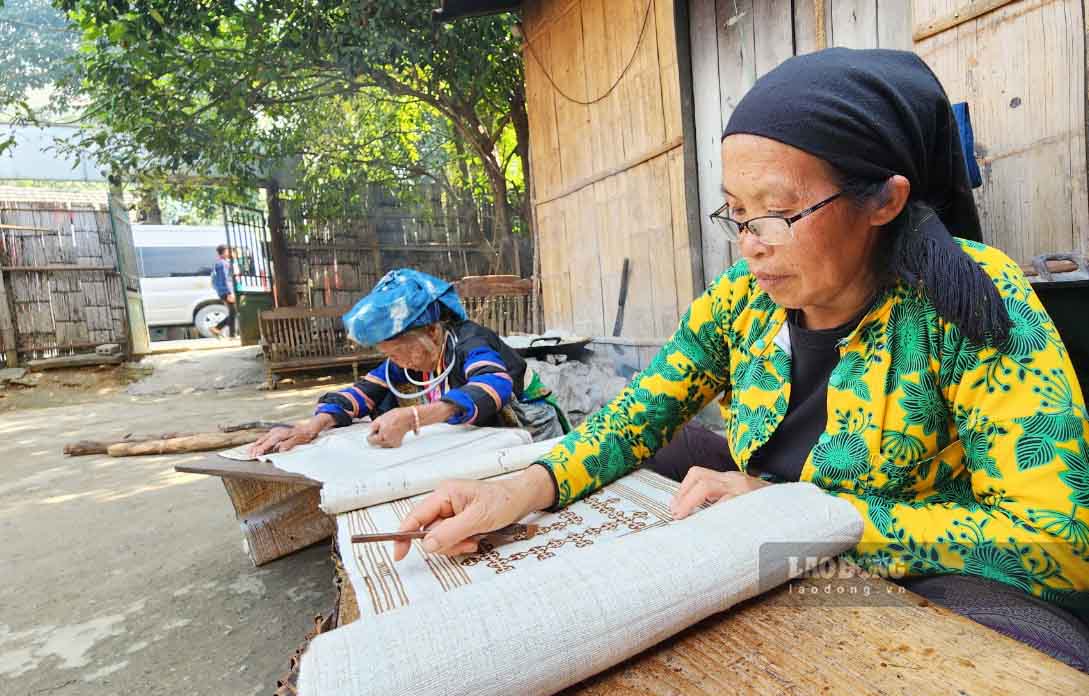
The average annual revenue of Lung Tam Cooperative is about 1.5 billion VND with 140 members and 9 production teams. The members have an average income of 4 - 6 million VND/month.
Ms. Mai Xuan Minh - Vice Chairman of Lung Tam Commune People's Committee said that Lung Tam Cooperative has contributed to significantly solving employment and increasing income for people, always a solid support for Mong women in the locality.
"Thereby, gender equality is also promoted, domestic violence is reduced, women have more roles and positions in the family and society. At the same time, it arouses the inherent potential of women, this is also an opportunity and resource for the development of particularly difficult areas and ethnic minority areas," said Ms. Minh.
Bringing traditional Mong brocade to the world
Ms. Mai recalled: "The first time brocade products were brought to Europe was in 2010. At that time, people from the French Embassy in Vietnam visited the Weaving Cooperative and admired the uniqueness of brocade products. They invited me to bring the product to France to introduce to the exhibition spaces".
In 2012, while attending the Ao Dai Festival in Hue, designer Minh Hanh met Ms. Mai to talk about the idea of bringing Lung Tam brocade weaving products to the world as well as promoting the beauty of the costumes and culture of the Mong people.
In 2013, designer Minh Hanh and a group of European experts went to Ha Giang to live and work with cooperative members for 7 consecutive days to witness the entire process of making traditional brocade weaving products.
Ms. Mai recalled: "European experts are very demanding, they love Mong brocade weaving products because they know they are made entirely from natural materials, environmentally friendly and created by the hands of Mong women. Therefore, they require very strictly the natural elements of the product".
After that, orders from many markets such as Sweden, France, Italy... were continuously received, the cooperative operated almost all year round without stopping work.
However, the road to bring traditional brocade to Europe is not easy. When customers have accepted the quality, another problem arises in the customs clearance of shipments at foreign customs.
"They request a certificate of legal origin confirmed by the government with the signatures of the 105-year-old artisans.
Then there is the challenge of managing a cooperative with hundreds of people," Ms. Mai shared.
This is also one of the requirements of the European side that managers must meet. So Mrs. Mai works and learns at the same time. In 2015, the cooperative's products were displayed at the World Parliamentary Union (IPU) General Assembly held in Hanoi.
From here, traditional weaving products of the Mong people are known, cared for and ordered as gifts by delegates of many European Parliamentares.
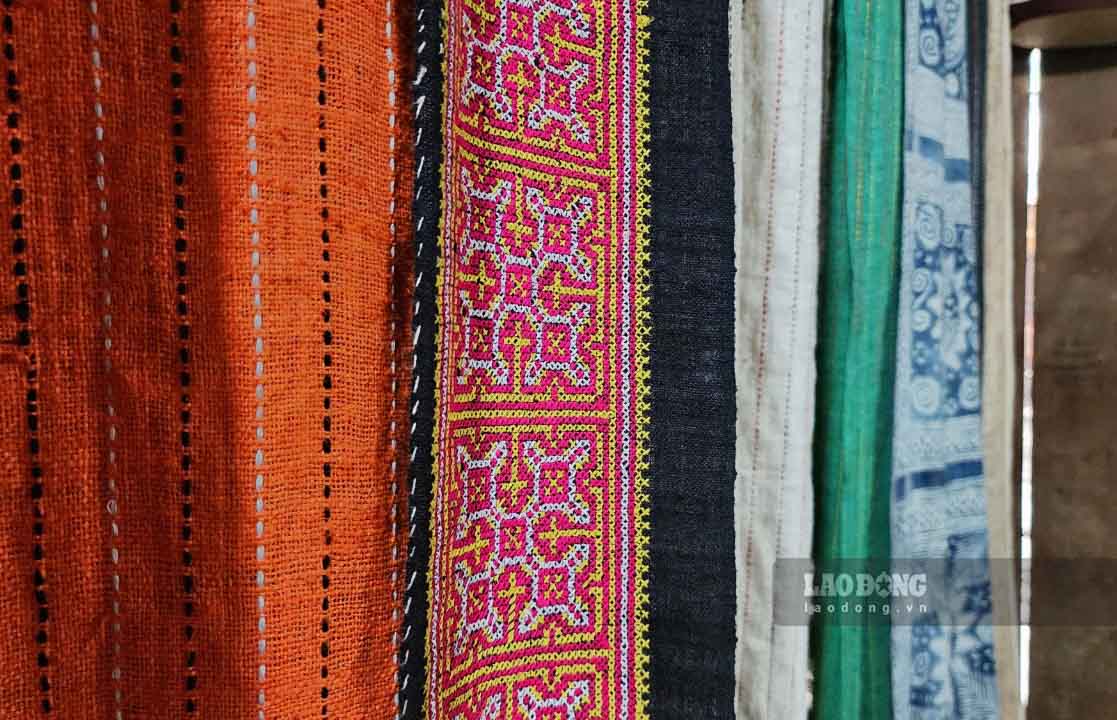
Ms. Mai excitedly said: "Currently, Lung Tam brocade weaving products are still on display at Nikko Hotel, Hilton (Hanoi). I am even more proud that at the headquarters of the European Commission and the headquarters of the United Nations, there is also a dedicated space to display cooperative products".
However, the female artisan still has hundreds of years left because to get a traditional brocade flax product, it has to go through 41 manual stages, so the cost is quite high, so it is mainly limited to reaching foreign and domestic customers.
Despite the difficulties, the female artisan still maintains her belief in the profession: "Although it is difficult, we must still keep the profession that has existed for generations, keep the good culture of our ancestors and leave it to our children and grandchildren to contain in the linen weaving woven by the Mong women themselves".
Sharing about the future direction, Ms. Mai said that the development direction of the cooperative is to not only develop traditional products of her ethnic group, but also focus on diversifying new product designs to suit the times and preferences of customers.
"I am spending a lot of time training the next generations to preserve and maintain this traditional brocade weaving craft as well as develop the cooperative to be larger. I am also very happy that currently, the cooperative also has many young artisans with very high skills," said Ms. Mai.


