
On May 18, the Steering Committee for searching, gathering and identifying martyrs' remains of Quang Ngai province coordinated with the Steering Committee for searching, gathering and identifying martyrs' remains of Military Region 5 to organize a ceremony to offer flowers, incense and take biological samples of martyrs' remains at Nghia Trung Martyrs' Cemetery, Tu Nghia commune.
This is the first sampling of the province within the framework of the "Operation 500 Days and Nights" to search, collect and identify martyrs' remains.
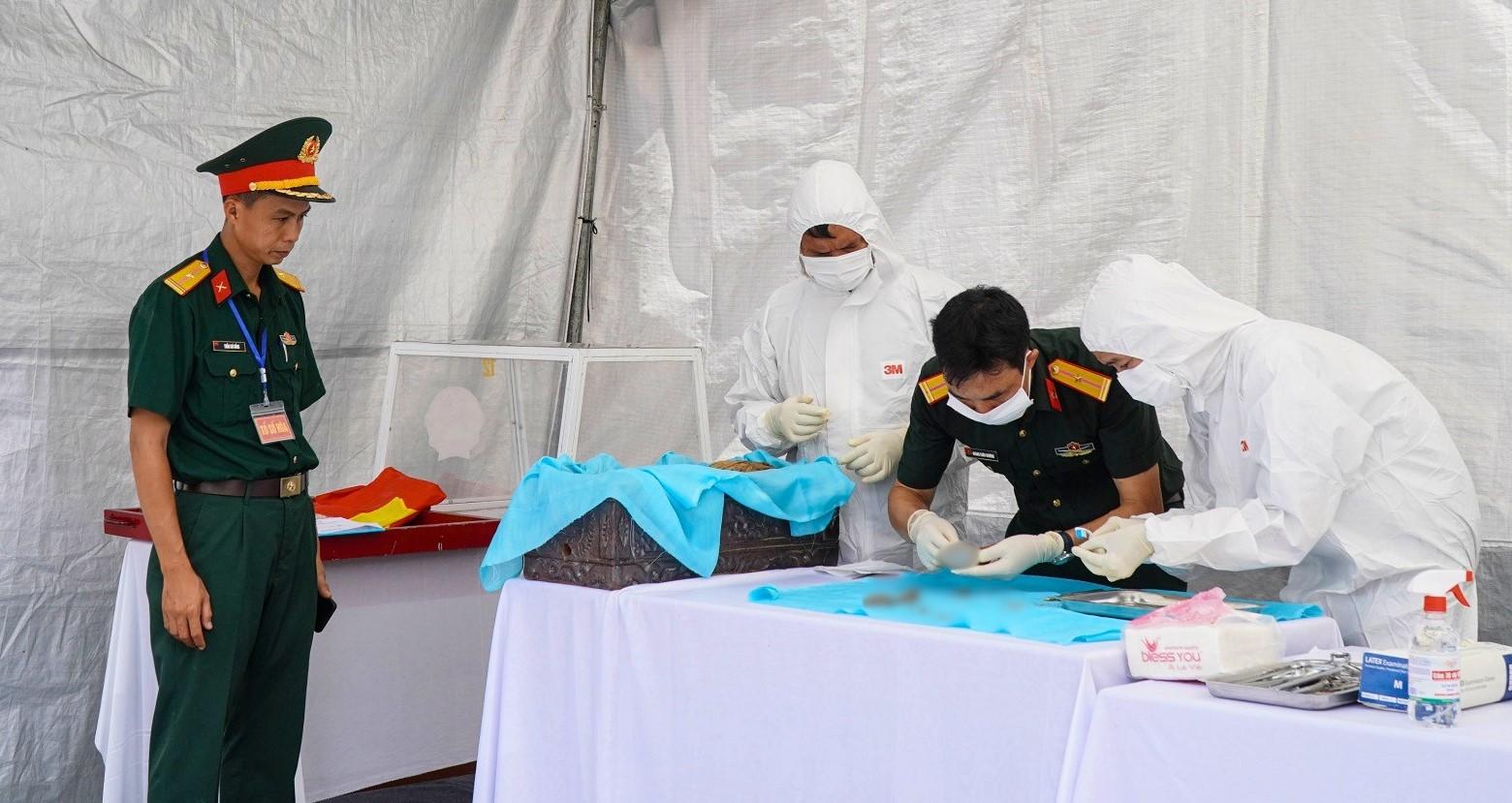
After the memorial service, specialized forces conduct excavations and take biological samples for the graves of martyrs whose identities have not been identified.
According to professional procedures, sampling is carried out synchronously through 8 steps, from determining the location of the grave, approaching the remains, assessing sampling standards, creating identification codes, sampling, packaging, sealing to completing dossiers, preserving and handing over samples.
The samples are prioritized for selection from intact teeth and bones, with good firmness to ensure DNA testing quality.
The entire excavation, sampling, packaging, transportation and storage process are strictly carried out according to the technical procedures of the Ministry of National Defense, ensuring accuracy, objectivity and expressing respect for heroic martyrs.
Currently, Nghia Trung Martyrs' Cemetery has 74 graves of martyrs who are soldiers from many localities who fought and sacrificed in Tu Nghia commune through the resistance periods. Among them, there are 34 graves whose identities and hometowns have not been identified.
The "500-day and night campaign" to search, repatriate and identify martyrs' remains is being implemented from March 15, 2026 to July 27, 2027, with the goal of promoting the search, taking DNA testing samples of about 18,000 remains and repatriating about 7,000 martyrs' remains, gradually returning the names of heroic martyrs who sacrificed for the independence and freedom of the Fatherland.
Currently, Quang Ngai province has 127 martyrs' cemeteries with nearly 38,000 martyrs' graves. Of which, nearly 14,000 graves do not have complete information, and it is necessary to continue verifying, comparing and DNA testing to identify their identities.
In the afternoon of the same day, Military Region 5 and Quang Ngai province held a meeting to evaluate and draw experience from the work of taking samples and handing over samples of martyrs' remains in order to continue to deploy synchronously and effectively at martyrs' cemeteries in the province in the coming time.


