
streamlining the apparatus, promoting digital governance
In Directive No. 21/CT-TTg, the Prime Minister requested that before June 30, the People's Committees of provinces and cities direct the People's Committees of communes to develop a project to arrange villages and residential groups; organize to collect people's opinions in accordance with regulations; submit the project to the People's Council of communes for approval, ensuring publicity, transparency and creating consensus in the implementation process.
The Government has issued Decree No. 185/2026/ND-CP stipulating the organization and operation of villages and residential groups and regimes and policies for non-specialized workers in villages and residential groups.
Talking to Lao Dong Newspaper, Dr. Doan Van Tinh - Deputy Head of the Faculty of Human Resource Management, Academy of Public Administration and Management (Ho Chi Minh National Academy of Politics) - said that increasing the scale of households in villages and residential groups according to Decree No. 185/2026/ND-CP is a step in line with the requirements of innovation in local governance.
According to Dr. Doan Van Tinh, Decree No. 185/2026/ND-CP has officially legalized new criteria on household size for villages and residential groups.
He said that, from the perspective of modern public administration, this adjustment brings many benefits.
First of all, this is an inevitable step to streamline the apparatus and restructure institutions at the grassroots level. Increasing the scale of households helps reduce the number of management focal points, overcoming the fragmentation in local management.
In addition, increasing the scale of villages and residential groups also contributes to optimizing public resources in the context of implementing the two-level local government model.
According to Mr. Tinh, this helps save operating costs for the apparatus, creating room to invest more in essential infrastructure and social security fields.
Another benefit is to create a premise to promote digital governance. When the population size and number of households are larger, manual management methods will no longer be suitable. This is a motivation for localities to promote the application of information technology, data digitization and build modern governance systems, improving the efficiency of public service provision.
Mergers are not just mechanical additions
Assessing the principles of arranging villages and residential groups proposed by the Ministry of Home Affairs, which requires the establishment, arrangement, reorganization, dissolution, naming or renaming to be consistent with natural conditions, socio-economics, population characteristics, customs, habits and aspirations of the residential community, Dr. Doan Van Tinh said that this is a correct approach, putting people at the center.
According to him, merging villages and residential groups is not simply adjusting boundaries or increasing the number of households, but also a process of cultural and community harmony.
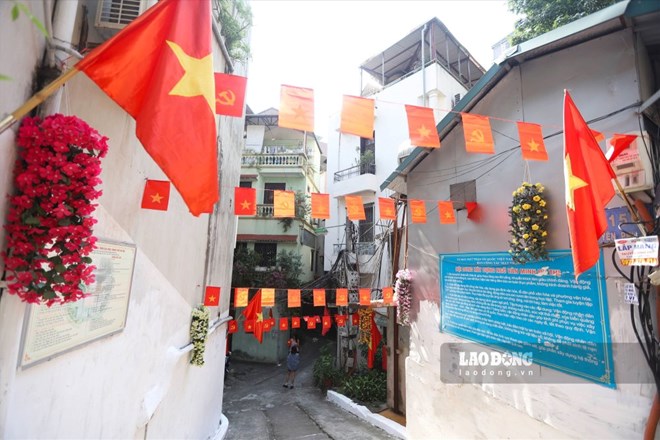
Villages and residential groups are cultural living spaces with very high community self-management, places that preserve customs, habits and traditional values of the people. Therefore, mergers are not just mechanical additions in terms of administration" - Dr. Doan Van Tinh emphasized.
He believes that allowing the retention of traditional names such as village, hamlet, village, village... for areas with specific historical and cultural elements is necessary. This approach both ensures modern management requirements and contributes to preserving local identity, limiting psychological impacts that may arise in the process of arranging population units.
According to experts, for the merger to be effective, it is important to organize the full collection of opinions from the people. When receiving high consensus, the policy of the government will become a common aspiration of the community, thereby ensuring democracy, publicity and transparency in the implementation process.


