
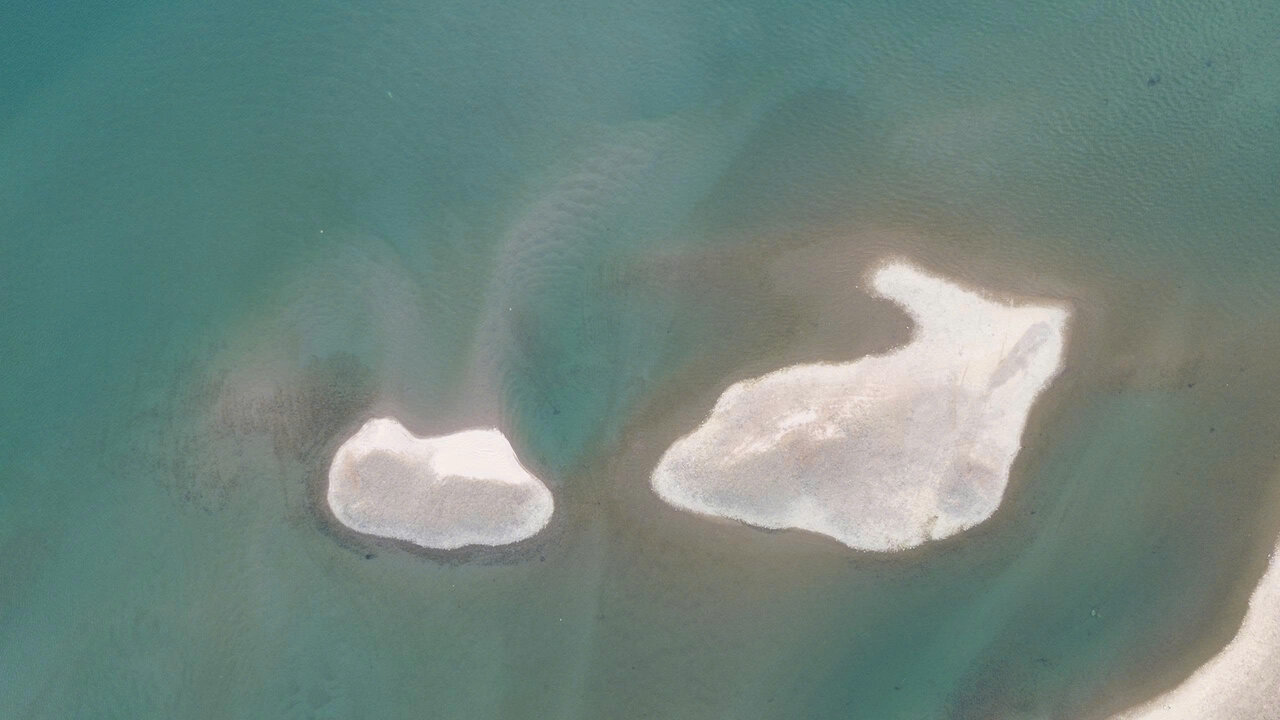
In the afternoon of March 1st, Lao Dong Newspaper reporters recorded at the Da River section in Tan Hoa ward, Phu Tho province (a few kilometers from the dam foot) that the river surface has narrowed significantly, the flow is divided into many small lakes winding around the sand dunes.
Contrary to the image of the rainy season when the water rises, the downstream Da River section here is shallow to the bottom, with clear underground rocks and pale yellow sand exposed.
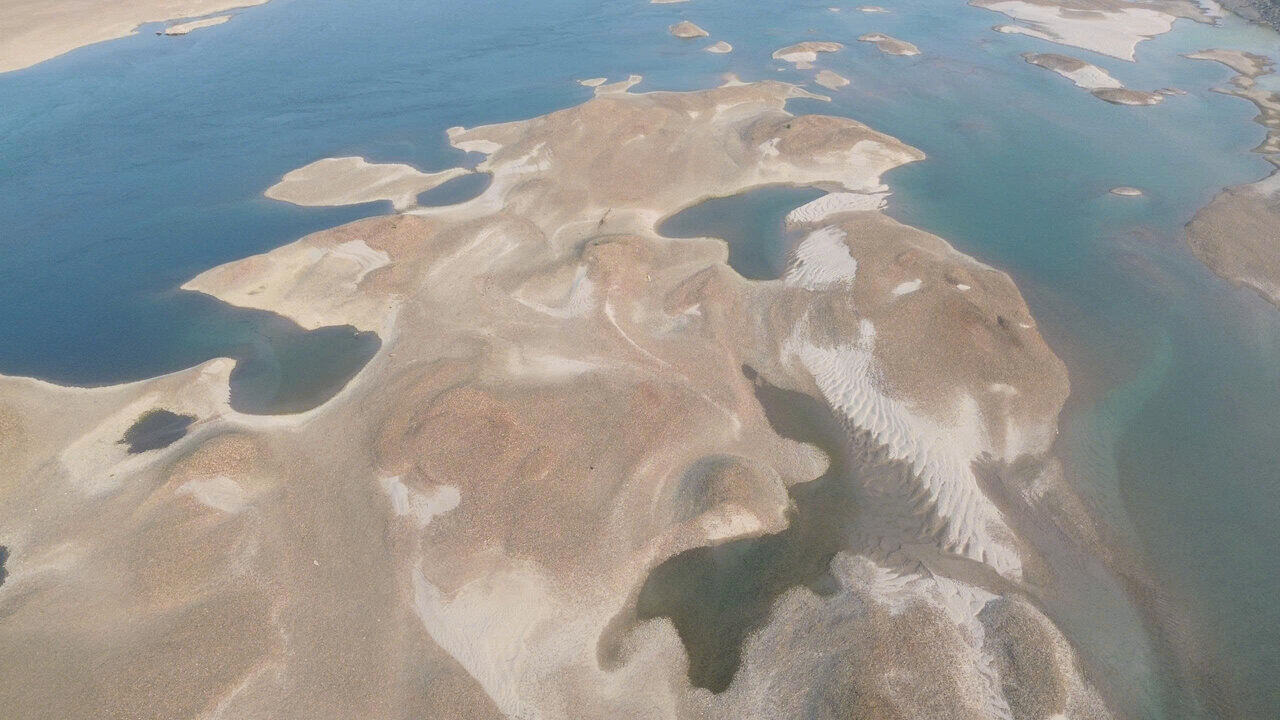
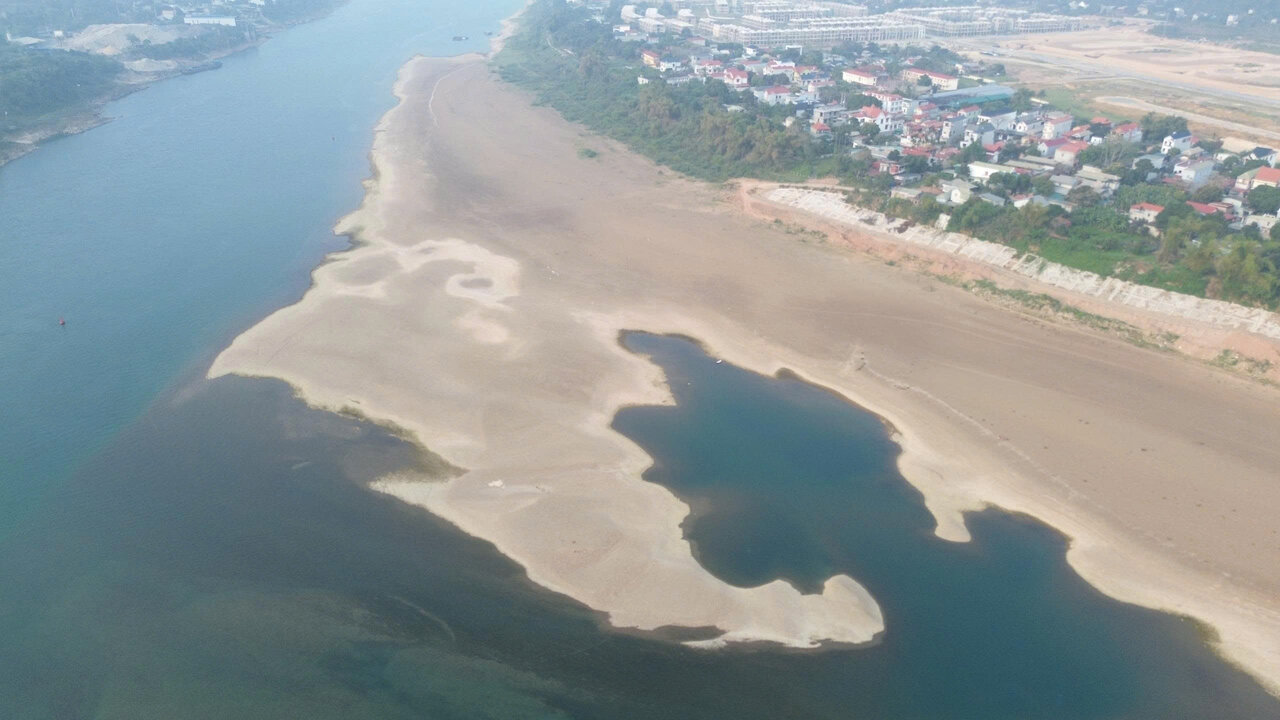
From above, the riverbed reveals clear contrasting patches of color between water and sand. Some sand dunes stretch tens of meters long, forming a floating strip in the middle of the stream, forcing waterway vehicles to move slowly and choose deeper channels.
Sharing with PV, Ms. Bui Thi Huong (36 years old, residing in Tan Hoa ward) said that this phenomenon appears when the water recedes sharply due to hydropower reservoirs limiting water discharge or increasing power generation through generating units without opening spillways.
According to Ms. Huong, when the water flow to the reservoir is lower than the power generation flow, the downstream water level can fluctuate rapidly.
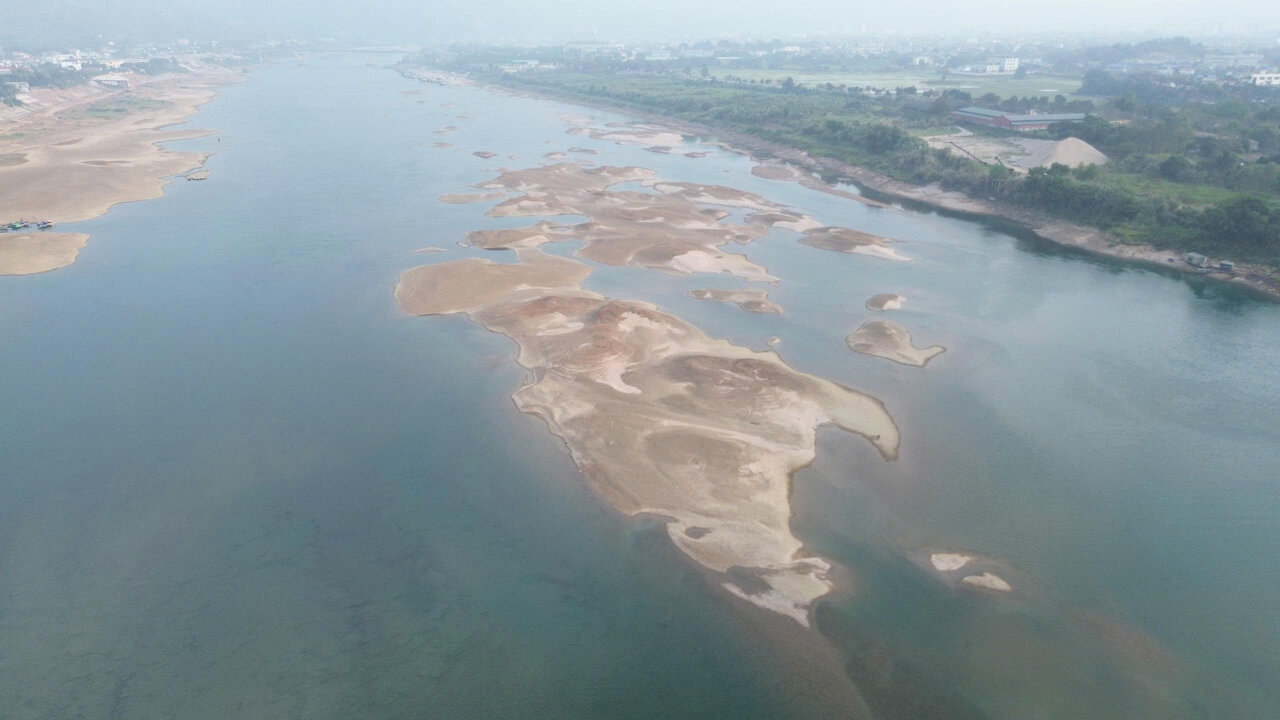
Mr. Bui Minh Quan (24 years old, residing in Hoa Binh ward) informed that this image rarely appears, only when the hydropower plant closes its discharge gate, when the water level drops low, do the sandbanks that are deep under the river surface become visible.
Mr. Ngo Van Thong - Head of the fishing village at the foot of Thong Nhat bridge (commonly known as Hoa Binh 3 bridge) - shared: "Compared to September-October 2025, when Hoa Binh Hydropower Plant discharged floodwater, the current river water level is nearly 25-30m lower.
Also according to Mr. Thong, the reduction is quite large, causing many areas of the riverbed that were originally deeply flooded to now become wide sand dunes, clearly visible in the middle of the flow that can be observed with the naked eye.
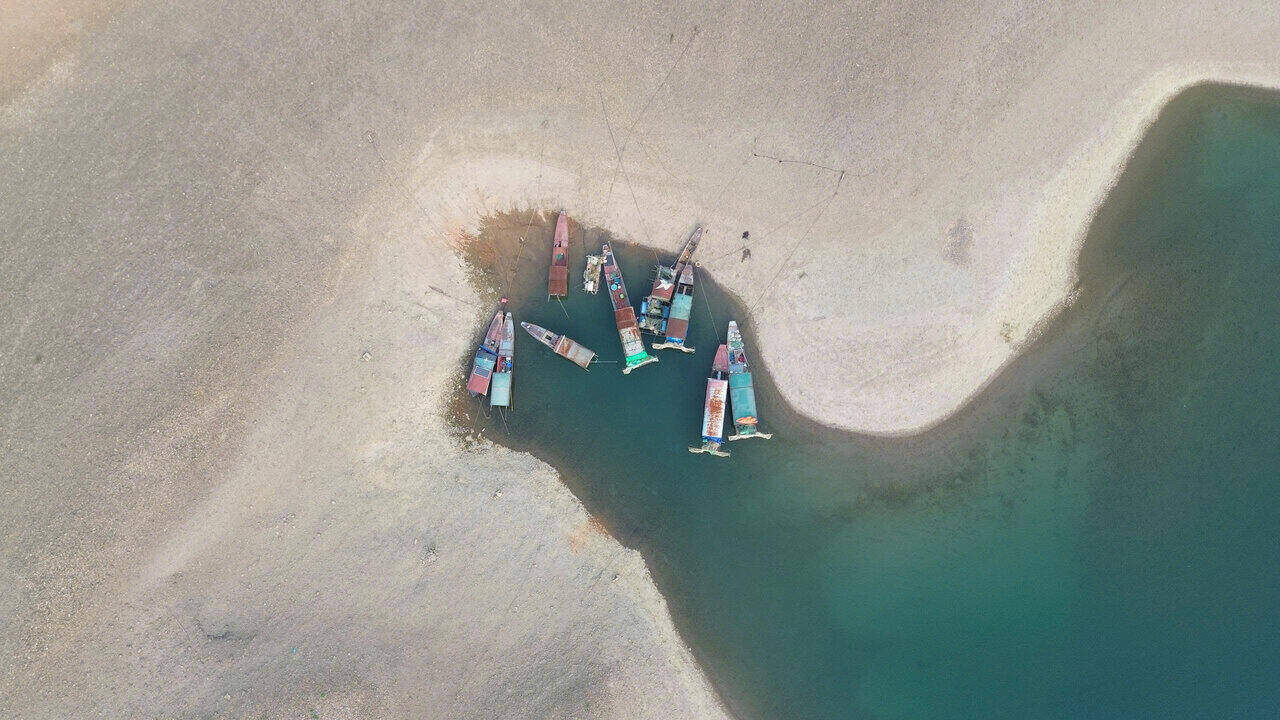
The low water level currently does not have a major impact on the lives and production of fishermen. People still maintain relatively stable fishing and cage fish farming activities.
Only in cases where the water level drops too deeply, making it difficult for boats to circulate, or when the water rises quickly and suddenly, difficulties arise," Mr. Thong added.
According to operating data from Vietnam Electricity Group at the end of February 2026, the upstream water level of the reservoir is lower than the normal water level by more than 4m. The inflow to the reservoir reached 134m3/s, while the total discharge through the generating unit reached 1,227m3/s.


