
The old house has been dismantled, the new house is not finished yet
One late afternoon at the end of the year, the biting cold creeps through every gap of the corrugated iron house temporarily built on a small mound of land, right next to the Dong Dang - Tra Linh expressway under heavy construction.
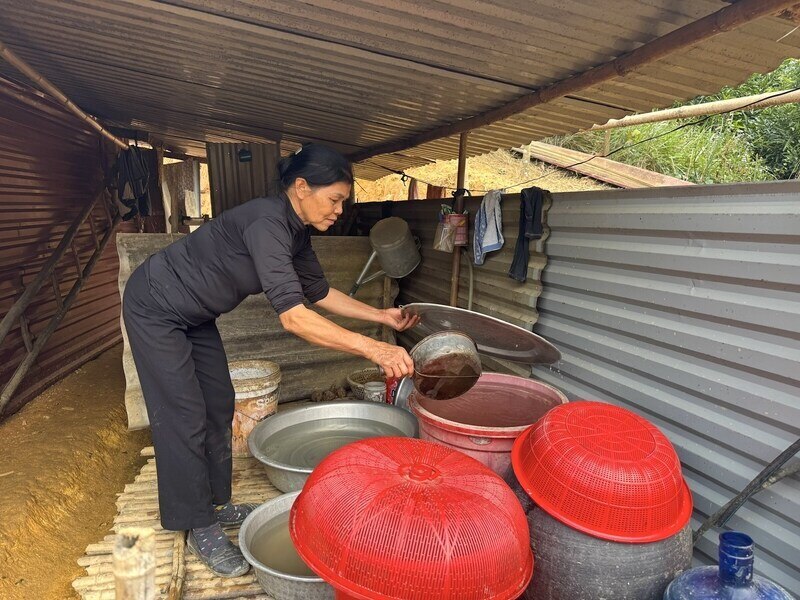
In the bustling space, Mrs. Hoang Thi Toi diligently prepares dinner for her family.
In the temporarily corrugated iron-roofed kitchen, a woman over 50 years old bowed down and scooped up each cup of cloudy water under the basin, and filtered it to use for meals.
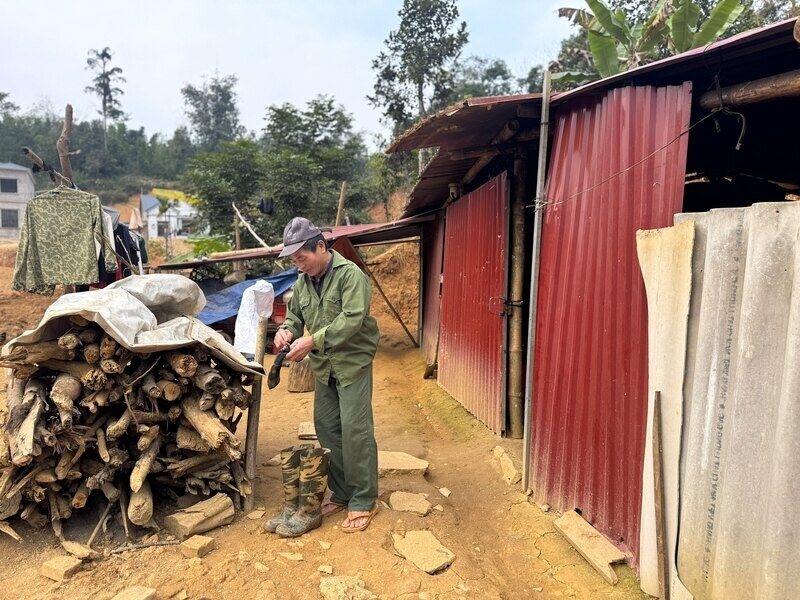
When we (PV) arrived, it was also when Mr. Nong Van The - Mrs. Toi's husband - hurriedly put on boots, put a knife on his back to reconnect the water pipe nearly a kilometer away.
Hurriedly repairing the pipe before it was completely dark, Mr. The sighed: "At least once a day. Every time the connection is completed, the expressway construction vehicle passes by, it gets damaged, and has to be repaired again.
Before the expressway passed, the family of six lived stably in a space of more than 400 m2, including a small house, with gardens, barns and adjacent fields.
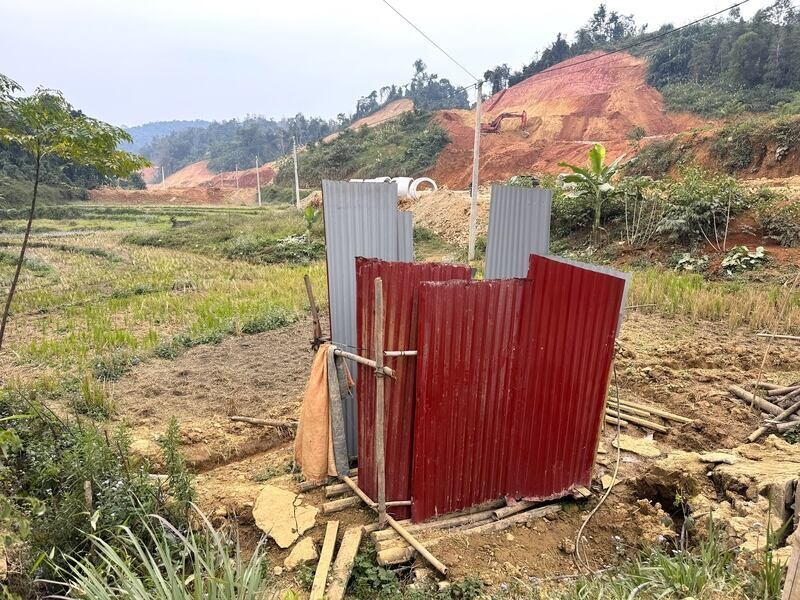
When the project was implemented, the entire land area was in the area of site clearance. The family complied with relocation and received compensation according to the approved plan.
The compensation amount is more than 800 million VND. My family found and bought a land plot of more than 100 m2 to build a new residence, but things did not go as planned. The land plot is garden land, we have to wait to change the land use purpose to residential land.
The dossier has been submitted many months ago but has not been completed yet. Meanwhile, the location of the temporary house is in a low-lying land area, and was dumped by soil from the highway construction site, so my house has to be moved up here," Ms. Toi said sadly.
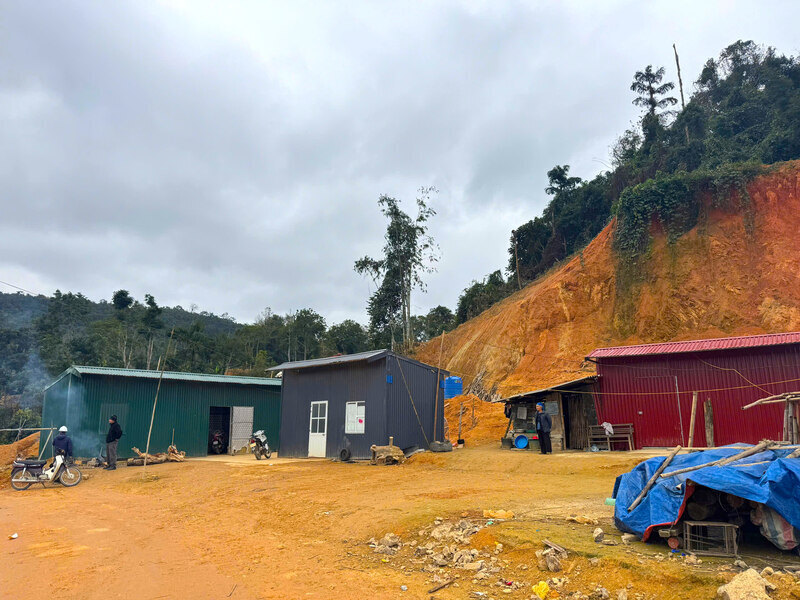
In the middle of a low-lying land along the highway, a temporary house with red corrugated iron roof was hastily built with bamboo and wood, without foundation or foundation.
Inside, there are only enough two beds, a few pots and pans and a wood stove. The ancestral altar is also temporarily placed on a wooden table placed in the middle of the house.
Not only lacking housing, the family's livelihood is also heavily affected. The remaining rice field area is only about two sao, not enough food for 6 mouths to eat.
Adults go to work seasonally, whoever hires them does whatever, income is precarious. Young children have to cross slippery dirt roads every day to school, close to trucks carrying soil from the construction site continuously in and out.
“Previously, when the land was not yet recovered, I could still grow a few vegetables, raise chickens and ducks to take to the market to sell and buy food. Now that there is no land left, the fields are swept away by rain and floods, completely lost. Even rice to eat must be bought.
Money is not earned, just gradually'bit' the compensation money. If it continues like this, it will be gone soon. Tet is approaching but so many things are still busy. This year, we have to celebrate Tet in this temporary house," Mrs. Toi whispered.
Also according to Ms. Toi, currently Coong village still has 20 temporary houses, currently only 1 house has been built solidly.
Longing for a place to settle down on time
According to reporters' records, not only Ms. Toi's family, along the highway under construction, many households are also in a similar situation.
Old houses have been dismantled, land has been handed over, but the resettlement area is not completed, the ground is not ready, and land procedures are prolonged.

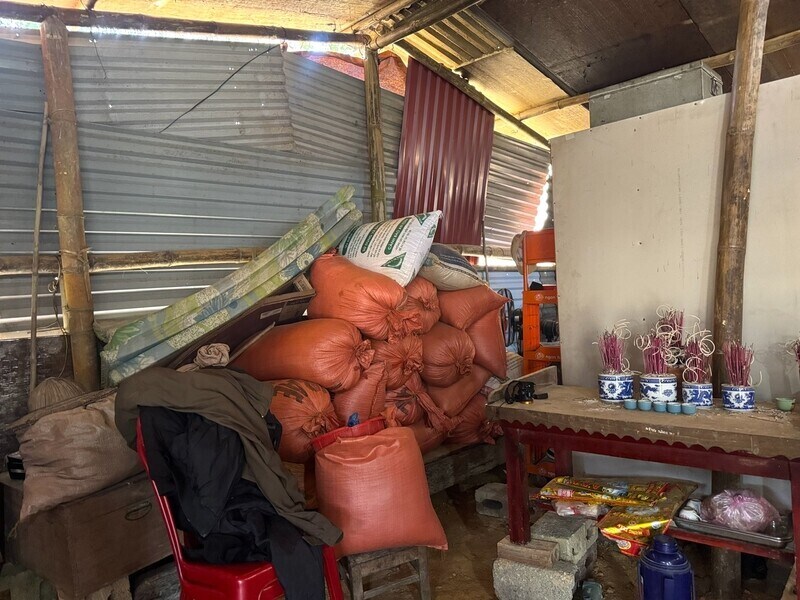
While the expressway construction site is being constructed day and night to keep up with progress, right next door, temporary houses are still struggling to withstand rain and sun.
Ms. Loc Thi Sen (Coong village, Trang Dinh commune) shared: "People do not object to the policy of building roads, nor do they demand to exceed regulations.
We only hope that the initial commitments on resettlement infrastructure, support for leveling, and site stabilization will be implemented on schedule so that life can stabilize soon. Tet is also approaching.
Talking to reporters, Mr. Ma Chi Mac - Vice Chairman of Trang Dinh Commune People's Committee - said that currently, for households not registered for concentrated resettlement, the commune has guided people to complete procedures to apply for the conversion of the land use purpose of a part of the family's land that has not been recovered or purchased land to residential land for building houses.
For households that have submitted dossiers but have not been converted to land use purposes, the commune requests people to continue to supplement papers, coordinate to complete procedures to support conversion as soon as possible, contributing to stabilizing people's lives.


