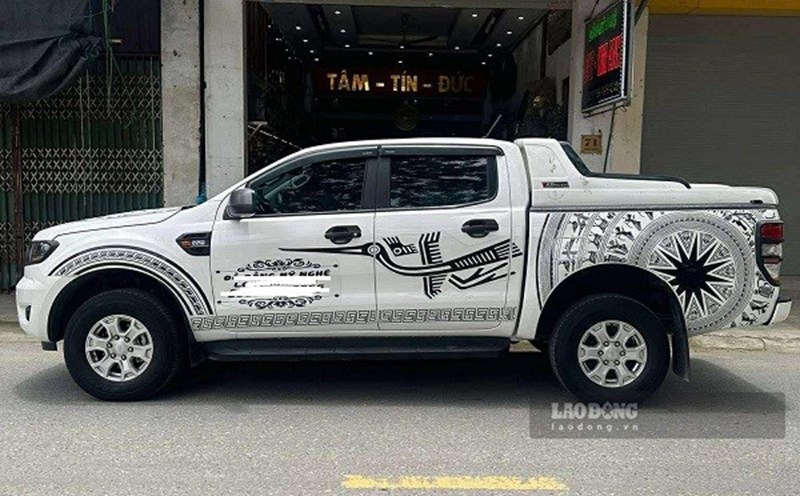
Vietnam's pickup truck market is showing remarkable movements. In July 2026, pickup models sold a total of 1,887 vehicles, down 9.7% compared to the previous month. Ford Ranger returned to the leading position with 973 vehicles, while Toyota Hilux ranked behind.
Although sales have not created strong growth, pickup trucks are still one of the groups with relatively stable customer base. More notably, competition in the segment is beginning to emerge with new factors when hybrid technology and electric vehicles are introduced into pickup truck models that have long mainly used diesel engines.
This change is not only in the transmission system. As consumers are increasingly concerned about fuel consumption and usage costs, the saving ability of electrochemical systems can become a new competitive factor besides traction, cargo handling or operation on difficult terrains.
Ford Ranger is still the most prominent name in the segment. In July, this model sold 973 units, up 14.2% compared to the previous month and regained the leading position from Toyota Hilux. However, the entire segment decreased by nearly 10%, showing that the race is taking place in a market that is no longer easy.
Meanwhile, in foreign markets, externally charged hybrid pickup trucks have begun to be developed more strongly by manufacturers. Ford Ranger PHEV is an example, showing that the trend of electrification is gradually being introduced into a car line that has high requirements for traction and operation.
A noteworthy point is that electrified vehicles do not necessarily require immediate replacement of internal combustion engine pickup trucks. For groups of customers using vehicles to transport goods, go to construction sites or frequently move on complex terrains, operating capacity, tonnage and durability are still important criteria.
However, as battery and electric motor technology is improved, electrification pickup trucks can expand more options for customers who mainly use vehicles in urban or rural areas. At that time, fuel consumption and operating costs may become new competitive advantages.
The change may also force car manufacturers to adjust their market approach. If previously the pickup truck race mainly revolved around diesel engines, power, cargo box size and off-road capability, criteria such as fuel economy, ride-assisted technology and electricity level will increasingly be noticed.
In Vietnam, this trend also has another noteworthy factor, which is the appearance of electric pickup models. VinFast is said to be preparing to bring the first commercial pickup model to the market at the end of 2026, although the powertrain of the commercial version has not been officially confirmed.
If electric or hybrid pickup trucks appear with suitable products, the segment, which is considered quite specific, may enter a new competition. At that time, customers will not only choose between diesel engine pickup truck models but also have more electrification options.
However, the conversion process will not take place immediately. Pickup trucks still have their own characteristics in terms of load, traction and operating ability in harsh conditions. These are also factors that make the electrification of this car line more complicated than sedans or urban SUVs.
Therefore, in the near future, competition in the pickup segment is likely to take place on two fronts: maintaining the traditional advantages of internal combustion engine vehicles and gradually bringing electrochemical technology into products.
For buyers, this change brings more choices. As for car manufacturers, this may be a decisive stage in how the pickup segment adapts to the electricization trend taking place in the auto market.