
On the afternoon of March 27, news from Can Tho Central General Hospital said that doctors had just received and treated 3 consecutive cases of pufferfish poisoning (also known as jackfruit snakehead fish) in just 2 days.
At 8 pm on March 25, the hospital received 2 male patients T.V. T and N.V.G (both born in 1962, residing in Phung Hiep commune, Can Tho City) transferred from Nga Bay General Hospital in a state of numbness in the tongue and limbs after eating pufferfish.
According to the story, these fish were caught in the home garden, only washed and cooked into sour soup, without preliminary processing; 4 people ate together, of which each person ate from 3 - 6 fish.
About 1 hour after eating, the patients began to show symptoms of numbness in the lips and fingertips, progressing gradually, so they were taken to the emergency room, initial treatment and transferred to another hospital.
Until dawn on March 27, the hospital continued to receive the 3rd patient, Mr. D. H. P. (born in 1989, from the same locality) with similar symptoms after eating pufferfish for about 5 hours.
After being admitted to the hospital, all 3 patients were actively treated at the Emergency and Intensive Care - Poison Control Department.
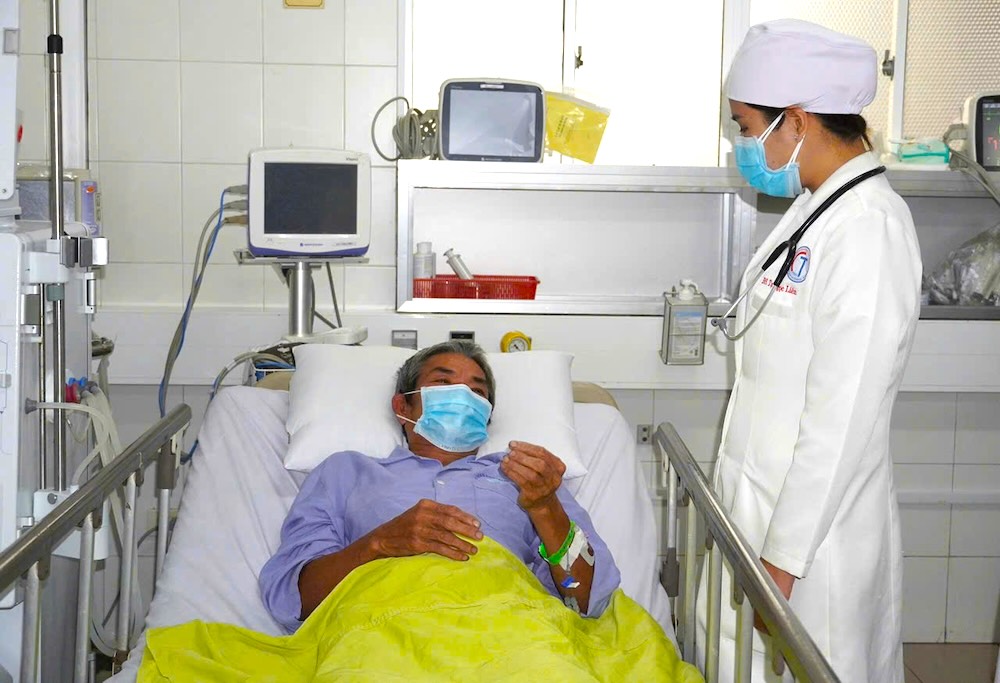
In the morning of the same day, his health condition stabilized and he was transferred to the Department of Gastroenterology - Clinical Hematology for monitoring.
Notably, patients said that they had eaten this type of fish many times before without health problems. The fish are small in size, smooth skin, brown or dark blue in color, with patterned spots, often called jackfruit snakehead fish by local people, living in ponds, ditches, and canals in the Mekong Delta region.
However, according to experts, this is a type of pufferfish - a fish species containing extremely strong toxin Tetrodotoxin. This toxin directly affects the nervous system, causing muscle paralysis, especially respiratory muscles, and there is currently no specific antidote.
Vietnam has recorded more than 70 species of pufferfish, many of which are highly toxic. Especially during the breeding season (from December to March), toxins are concentrated in the ovaries and liver, increasing the risk of serious poisoning.
According to BS.CKII. Duong Thien Phuoc - Head of the Intensive Care - Poison Control Department of the Hospital, pufferfish poisoning can start very quickly, only 10 minutes to a few hours after eating.
Doctors recommend that people absolutely do not eat pufferfish in any form; do not use fish of similar shapes, including small-sized fish, to prepare food.
When suspecting someone has poisoning after eating fish, it is necessary to quickly induce vomiting if the patient is still conscious, activated carbon (if any) can be given and urgently taken to the nearest medical facility for timely emergency treatment.
Absolutely do not self-treat at home because Tetrodotoxin toxin can cause very rapid death and there is currently no specific antidote.


