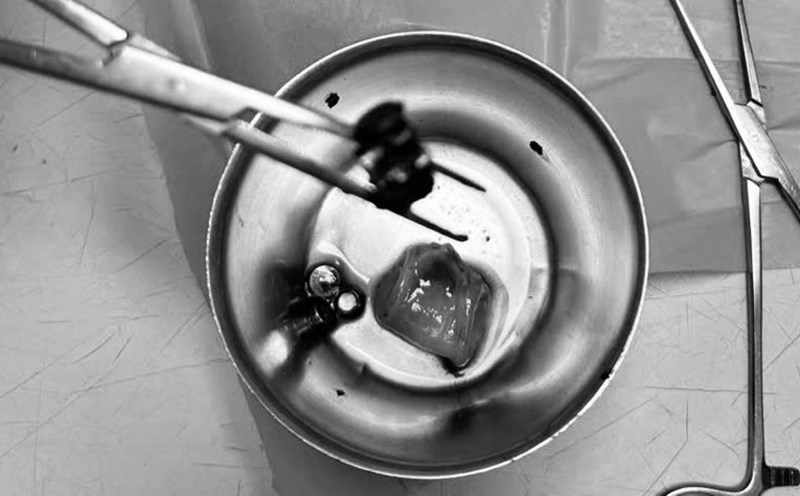
On the afternoon of March 26, information from Can Tho Central General Hospital (DKTW) said that doctors of the Department of Endoscopy had just successfully performed the reverse endoscopy of the gallbladder and pancreas (ERCP) technique to remove a foreign object, a fish bone.
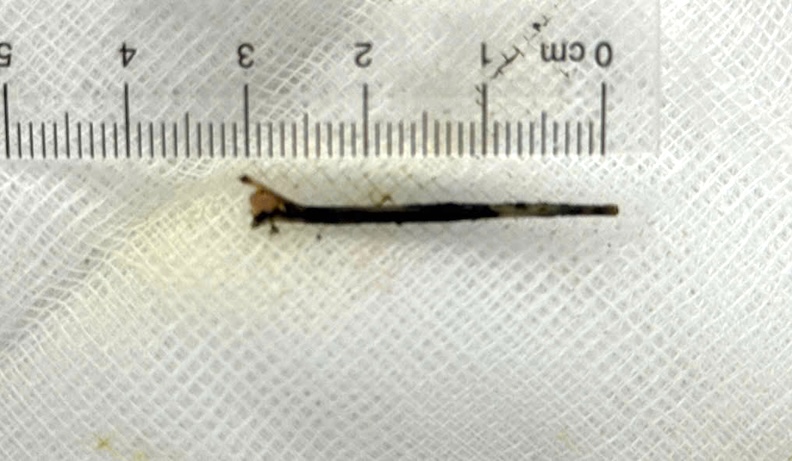
This bone is about 3cm long, piercing through the stomach wall into the bile ducts, disrupting bile flow and leading to bile duct inflammation and prolonged abdominal pain.
Previously, male patient D.N. H. D. (45 years old, residing in Vinh Thanh commune, Can Tho city) was admitted to the hospital on March 16 in a state of pain in the upper and lower right ribs, accompanied by jaundice and yellow eyes. The patient said that this abdominal pain had lasted for many months, and had not been cured after examinations in many places.
At the hospital, patients are received, monitored and treated at the General Surgery Department.
Through examination and performing paraclinical tests, doctors recorded dilated bile ducts in the liver, abnormal bile ducts in the liver umbilical region, and stenosis of bile ducts from two liver branches to the common liver canal.
Computer scan images showed a luminescent foreign object about 2.9cm long in the liver umbilical region, suspected to be the cause of bile blockage.
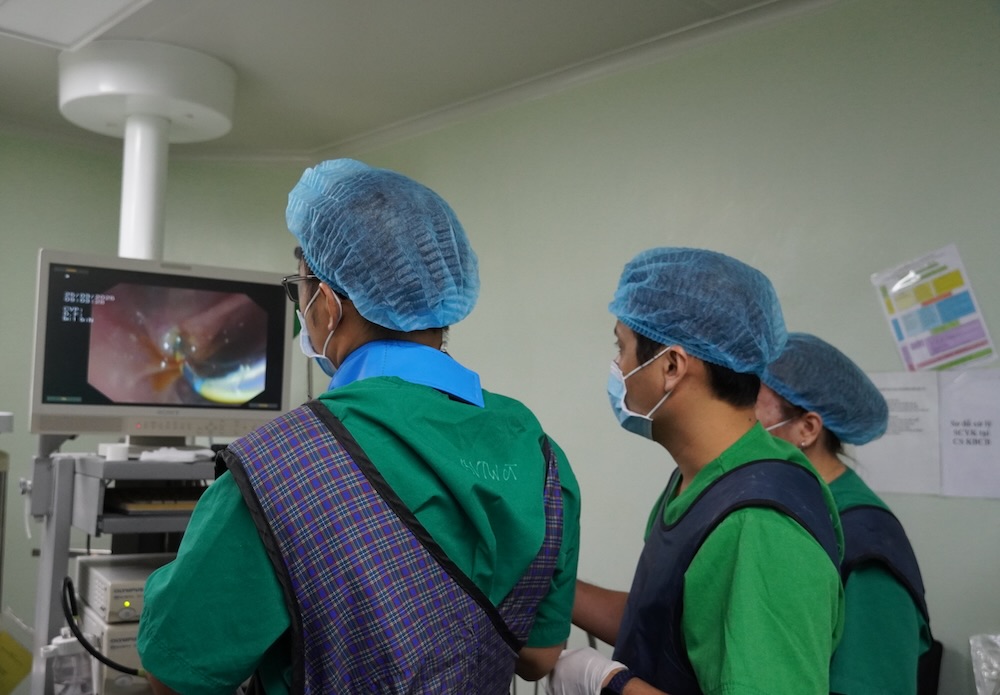
After a consultation with many specialties: general surgery, gastroenterology, endoscopy, anesthesia and resuscitation, the team decided to perform ERCP technique (reverse pancreatic biliary endoscopy) to survey and intervene to remove foreign objects. BS.CKII. Nguyen Thi Quynh Mai - Head of the Department of Endoscopy performed endoscopy into the bile ducts, found that the common liver canal had a fish bone pierced from the outside, creating stones stuck right in the bone above.
Doctors successfully removed the foreign object, a fish bone about 3cm long, under the guidance of the Spyglass endoscope, and placed a stent in the right liver branch to help relieve bile duct obstruction. After 2 hours of procedure, the patient was safely transferred to the General Surgery Department for monitoring and treatment.
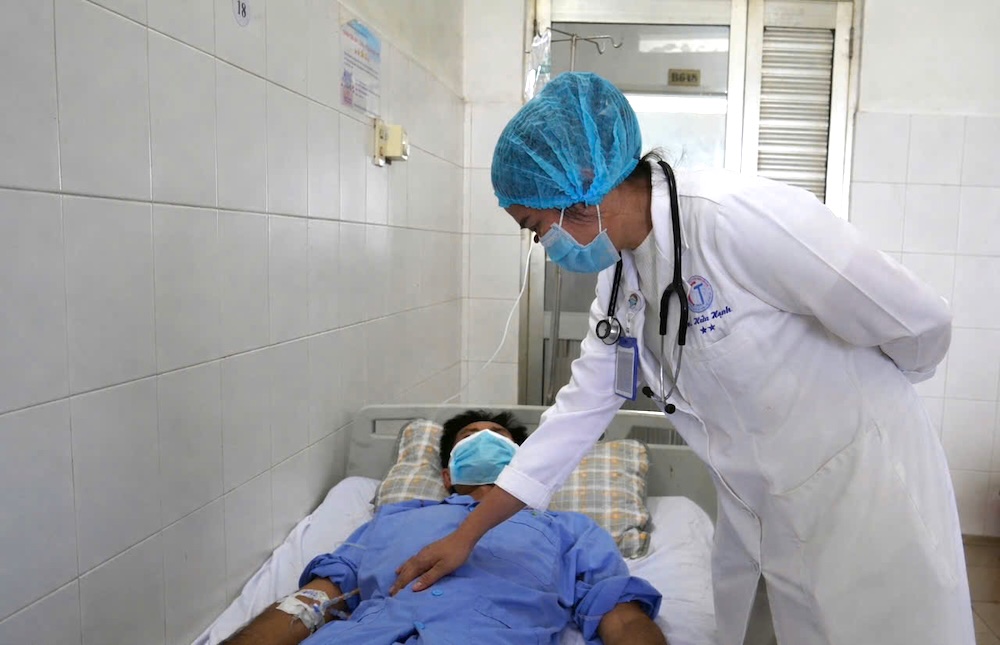
Currently, the patient is awake, has good contact, the abdominal pain condition has improved significantly, jaundice has subsided, and is expected to be discharged from the hospital in the next few days.