
Fundamental, frugal is enough to live
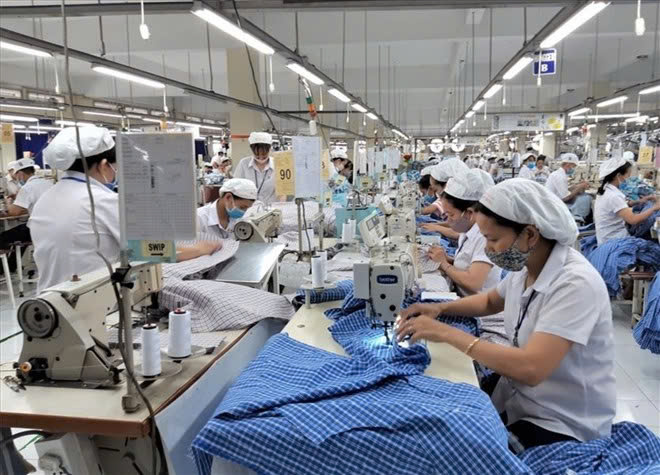
Ms. Nguyen Thi Hanh (from Nam Dinh ward, Ninh Binh province), a worker at a garment company in Gia Lam commune (Hanoi) said that after deducting rent, electricity, water, food and daily living expenses, she almost has no money left to save each month.
The rent of the rented room where I rented has not increased, but the landlord announced that there will be a rent adjustment in the second quarter of 2026 right after Tet. Currently, I am facing pressure from rising food prices, rising gasoline prices while my salary is still at 9 million VND/month, so some minimum living needs must be adjusted. If there is a place that pays a salary higher than 1 million VND/month, I am willing to change jobs to be "easier to breathe", Ms. Hanh said.
Not only workers, many workers in service and commercial industries are also under similar pressure. For those working in restaurants, supermarkets or retail establishments, the common salary is only from 7–9 million VND/month. Meanwhile, living costs in Hanoi are increasingly high, forcing many people to carefully calculate each expense item.
Mr. Thai Van Hong (from Muong Dong commune, Phu Tho province) said that he is working at a company specializing in organizing events with the position of stage installation staff. With a salary of 9 million VND/month, Mr. Hong was quite satisfied because the job was not too stressful, only working according to the schedule of events the company signed. However, recently, with a fixed salary, Mr. Hong feels very stuck in spending.
I don't have a family yet, so renting a room is simpler. Currently, I rent together with 2 friends, dividing each person about 2.5 million VND/month for rent and electricity and water. The biggest expense is food money. Because of the nature of the job, we don't cook, going out to eat is often expensive and "excessive" compared to the expected spending amount. The gasoline price increase in recent days is also a pressure because I often have to travel a lot to event venues...", Mr. Hong said.
Also according to Mr. Hong, he is considering finding a new job to be able to increase his income to a minimum of 11 million VND/month because as he said: "Only then will I have less headaches because of balancing spending in the current context.
Reality shows that economic pressure makes the trend of job hopping in a part of the labor force increasingly clear. Many people are willing to leave their current jobs to seek higher income opportunities, although the gap is not too large. This creates certain personnel fluctuations in some businesses, especially in industries that use a lot of unskilled labor.
Increase welfare to retain labor
Mr. Ngo Duc Hanh - director of a business specializing in supplying and producing materials for an electronic component manufacturing company in Quang Minh commune (Hanoi) said that in recent years, the situation of workers quitting their jobs to move to other places with higher salaries is quite common.
At one point, we had just recruited dozens of workers, but after only a few months they switched to another company. Sometimes, just because of the salary difference of a few hundred thousand VND, workers also decide to change jobs," Mr. Hanh shared.
According to Mr. Le Quang Trung - former Deputy Director in charge of the Department of Employment, the increase in living costs is one of the important factors affecting workers' job decisions. When income does not keep up with living standards, workers are forced to seek better choices to improve their lives.
Wages are still an important factor, but not the only one. I think businesses can retain workers in many other ways such as improving the working environment, improving welfare, supporting housing or organizing programs to care for workers' lives," Mr. Trung said.
Mr. Tran Duc Anh - Director of Tri Viet Human Resource Supply Company (Ha Dong ward, Hanoi) said that to reduce job hopping pressure and stabilize the labor market, synchronous solutions are needed. Besides efforts from businesses, policies to develop social housing for workers, control living costs and improve labor productivity also play an important role.
In the long term, improving skills for workers and shifting to higher value-added industries is also considered a necessary direction. When productivity and labor skills are improved, income has the opportunity to increase, thereby contributing to reducing economic pressure and limiting job hopping," said Mr. Duc Anh.


