
On the afternoon of March 27, at Luong Van Tuy High School for the Gifted (Ninh Binh), the Military Medical Academy organized a program of counseling, propaganda, and career guidance for military enrollment for students in the area.
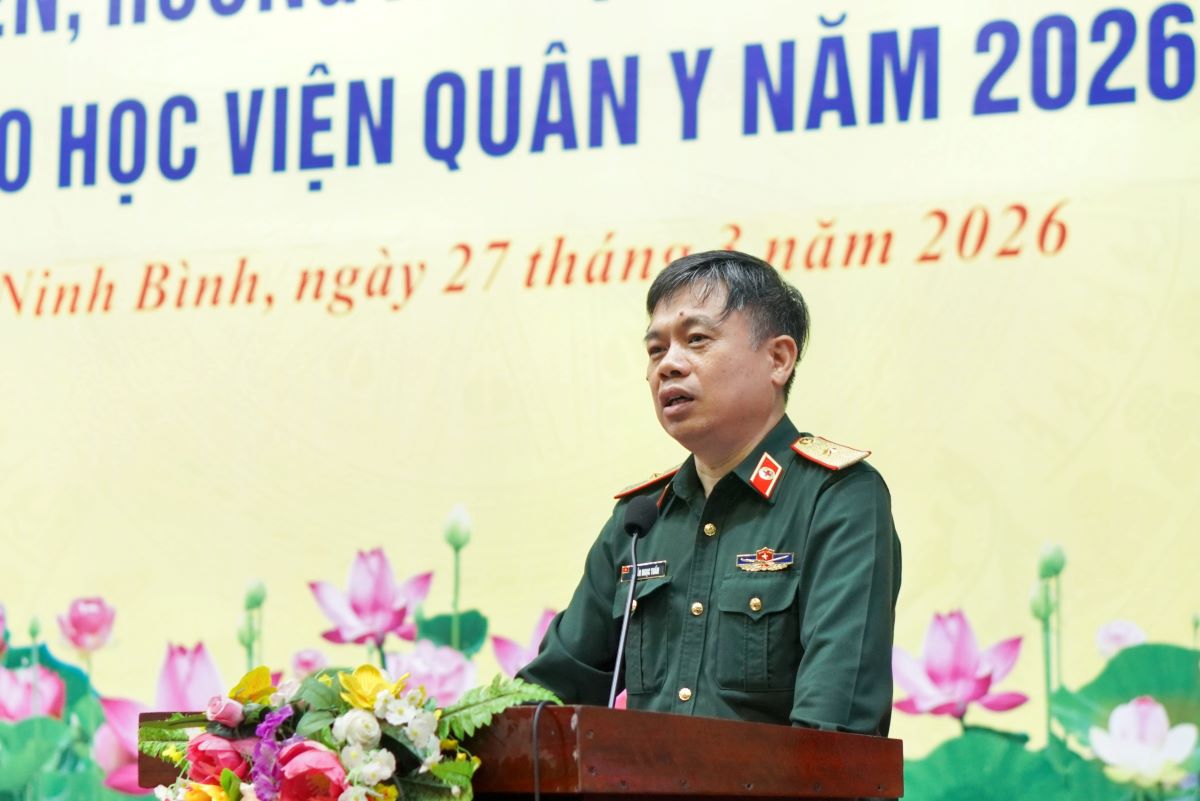
Sharing at the program, Major General, Assoc. Prof. Dr. Tran Ngoc Tuan - Deputy Director of the Military Medical Academy - introduced the history of development and the heroic tradition of the academy. At the same time, he sent wishes for students to study effectively, choose and pass their desired aspirations.
Colonel, Assoc. Prof. Dr. Pham Ngoc Hung - Deputy Head of Training Department, Military Medical Academy - provides information on the main contents in the 2026 military enrollment of the academy.
Curriculum, targets and enrollment methods
According to Colonel, Assoc. Prof. Dr. Pham Ngoc Hung, in 2026, the Military Medical Academy will enroll in the military system according to the regulations of the Ministry of National Defense, with a quota of 10% female enrollment. The military system has 4 admission methods. Among them, there is an admission method based on the results of the competency assessment test organized by the Ministry of National Defense.
Military Medicine major enrolls 140 quotas and stops enrolling Pharmacy major in the military system.
To apply for the military system, candidates must pass the preliminary round, which takes place from February 10 to the end of April 15.
The enrollment quota for the civilian system is 250. Of which, the medical major is 200 quotas and the pharmacy major is 50 quotas.
The civil system has 3 admission methods: Direct admission, priority admission; Admission from the competency assessment exam results of Vietnam National University, Hanoi and Vietnam National University, Ho Chi Minh City; Admission from the high school exam results.
Preferential regimes, working positions of trainees after graduating from the military system.
According to Colonel Pham Ngoc Hung, for the military system, 5% of the total enrollment target each year is sent for university training in some countries such as Russia, Cuba, China, and India.
In addition to tuition fee exemption, students are subsidized from 1.4 - 2.5 million VND per month, gradually increasing according to the school year and military rank. At the same time, they are supported with food, accommodation, living expenses, learning materials, and personal military equipment.
About 10-15% of students who are eligible to take the entrance exam and pass the resident doctor exam will have the opportunity to study for a master's or doctorate abroad.
In addition, the trainees are assigned by the Ministry of National Defense to work at the final-line hospitals of the army and units throughout the army.

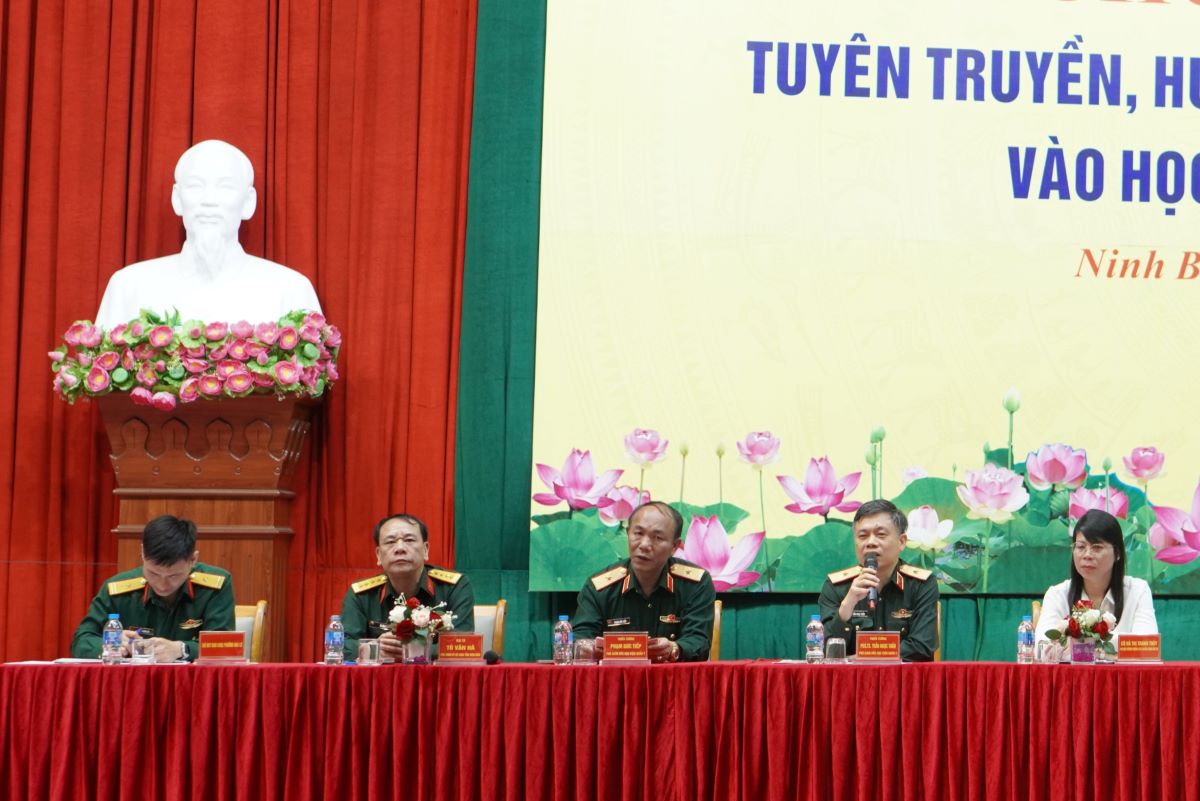
In the exchange session, the Military Medical Academy answered students' questions about preliminary selection work in communes, regulations on bonus points, priority points and differences between military and civilian systems.
Major General, Assoc. Prof. Dr. Tran Ngoc Tuan said: "The civilian system will be similar to the programs of schools such as Hanoi Medical University, training for 6 years with medical majors. However, the academy will have stricter management compared to other schools.
As for the military system, there will be additional content on military and military medicine. Therefore, the training time is 6.5 years”.
Also at the program, military doctors who are exemplary alumni of Ninh Binh province shared their journey of studying and working, and motivated students who wish to enter the Military Medical Academy and become doctors in the future.


