
2026 overcomes difficulties, breakthrough in the 2027-2030 period
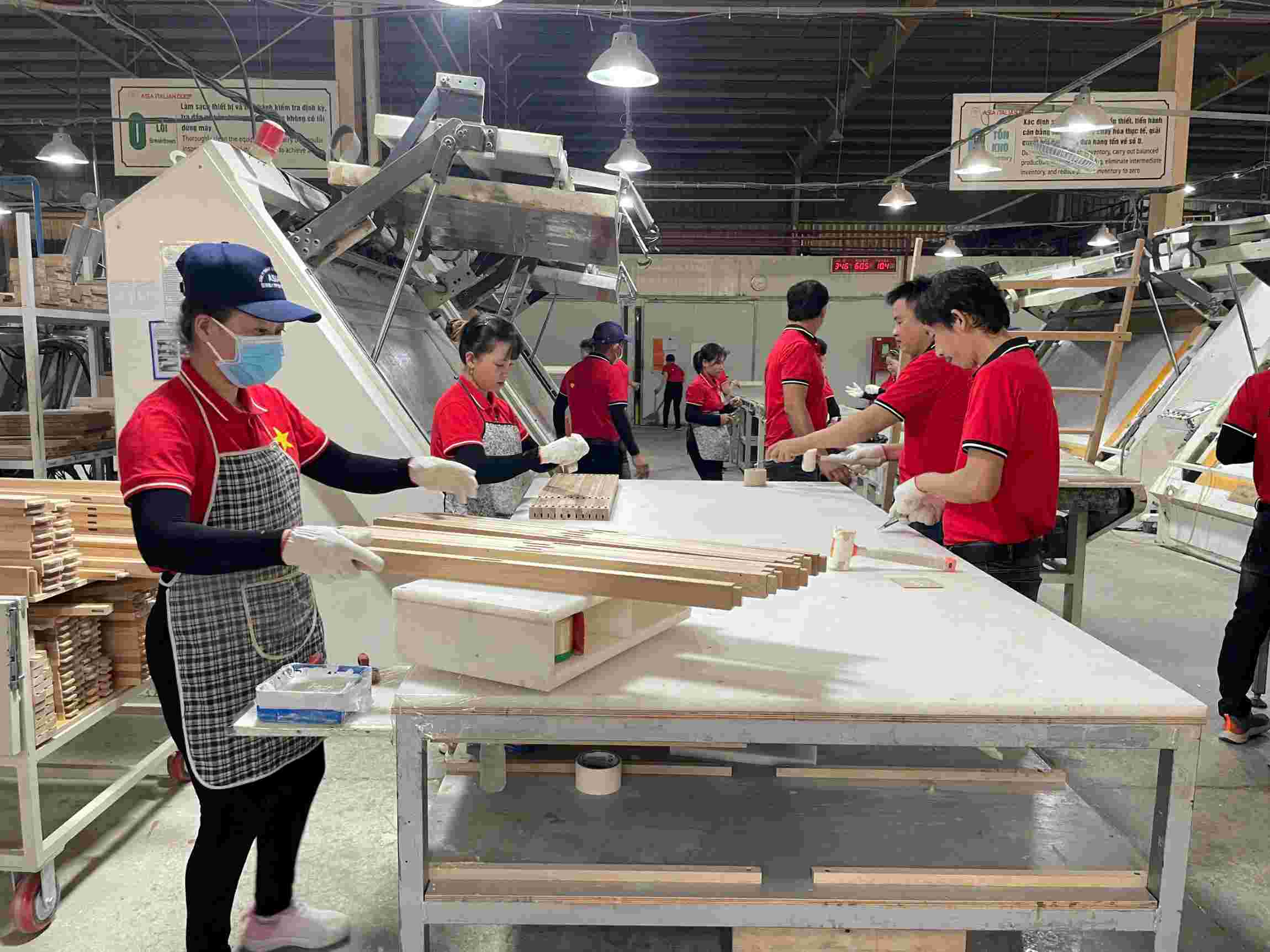
Although logistics costs are increasing and the international market continues to fluctuate, the export activities of C&D Import-Export Co., Ltd. still maintain stable growth thanks to maintaining orders for peeling wood and pressed wood for export to India. Mr. Nguyen Tran Luat - Chairman of the Board of Directors of the company - said that the company is actively expanding its market, targeting European countries such as Italy, Belgium, Spain, Poland and even Honduras to diversify outputs. In particular, the plan to invest in building a raw material drying factory in the second half of 2026 is part of a strategy to improve production capacity and create a solid foundation for long-term growth.
C&D's story reflects the overall picture of the Vietnamese economy in the first quarter of 2026: Positive growth but still facing challenges from input costs and international fluctuations.
Data from the Statistics Office (Ministry of Finance), in the first quarter of 2026, Vietnam's economy recorded an estimated GDP growth rate of 7.83%. This data also shows: To achieve the growth target of 10% for the whole year 2026, the last three quarters of the year must accelerate traditional drivers and strongly promote the "penetration" of new growth drivers in the economy.
Facing objective challenges, Conclusion No. 18-KL/TW continues to affirm the goal of double-digit growth in the period 2026-2030. The conclusion states: "Determined to successfully implement the Resolution of the 14th Party Congress, resolutions and conclusions of the Central Government, the Politburo, and the Secretariat to strive to achieve the goal of "double-digit" growth associated with macroeconomic stability, inflation control, and ensuring major balances of the economy. Firmly aim for goals, act decisively and effectively; closely assess the situation, and flexibly consider solutions to overcome difficulties in 2026 and break through in the period 2027-2030".
Conclusion 18 not only talks about economic development in a technical sense, but also clearly emphasizes that this is a key political task, which must be concretized into annual programs and plans, with products, with results, and with the responsibility of the head.
A very noteworthy point is that the Central Government does not stop at requiring "determination", but requires inspection, supervision, and evaluation based on the criteria of implementation results. Meaning that management thinking must shift strongly from a management style that is heavily focused on procedures and processes to management based on output, based on actual efficiency. This is a very big change.
The group of solutions considered the most important in the conclusion is to improve institutions, remove legal bottlenecks and administrative reform. The document emphasizes the requirement to build a synchronous institution to build development, promptly and thoroughly remove bottlenecks; and at the same time strongly shift from "pre-inspection" to "post-inspection", associated with building standards, regulations, economic-technical norms and strengthening supervision.
Referring to the contents of Conclusion 18, at the first session of the Central Emulation and Commendation Council for the 2026-2031 term, Prime Minister Le Minh Hung clearly stated that to contribute to double-digit growth, it is necessary to drastically reform administration, cut down on business conditions, and improve the business environment, which will help cut a lot of time and compliance costs for people and businesses, making a great contribution to growth.
Conclusion No. 18-KL/TW has requested ministries and agencies to continue to review and further reduce 30% of conditional business lines currently available (equivalent to cutting about 60 business lines), and at the same time reduce 100% of unnecessary business conditions. Along with that, reduce 50% of implementation time, 50% of administrative procedure compliance costs; the ministry level only implements no more than 30% of the total number of administrative procedures under management.
To meet this requirement, the Prime Minister requested that by April 20, ministries must propose plans to cut and reform administrative procedures, business conditions, and conditional business lines. In particular, the Prime Minister also emphasized the requirement to promote thrift and combat wastefulness, in which saving at least 10% of regular expenditures in 2026 (equivalent to about 170,000-180,000 billion VND to allocate more resources for priority tasks), while saving energy, saving electricity, and saving gasoline with specific quantitative indicators to contribute to growth.
Overcoming challenges
Talking to Lao Dong Newspaper, in the context of many difficulties and challenges, the double-digit growth target set out in Conclusion 18 as well as the Government's directions can still be achieved.
Mr. Shantanu Chakraborty - Country Director of the Asian Development Bank (ADB) in Vietnam - assessed that the Vietnamese economy still maintains its solid resilience in the context of global challenges."The Vietnamese government has reacted quickly to the disruption of energy supply caused by the conflict in the Middle East.Timely fiscal measures, including tax cuts, using the stabilization fund, combined with flexible price management and strengthening coordination to ensure supply, have contributed to curbing inflationary pressure in the short term and supporting growth" - Mr. Chakraborty said.
Referring to the issue of achieving a growth target of 10% for the whole year 2026, Assoc.Prof. Dr. Nguyen Thuong Lang - economic expert - said: "The last three quarters of the year must accelerate traditional drivers and strongly promote the "penetration" of new growth drivers in the economy.
For the processing and manufacturing industry sector, policies need to focus on supporting businesses to improve localization capacity and reduce dependence on input imports.
On the demand side, domestic consumption needs to be stimulated more strongly through flexible fiscal policies such as tax reduction, increased targeted public spending and expansion of programs to support people. Public investment continues to play the role of "bait capital", but it is necessary to accelerate disbursement progress associated with improving project quality, avoiding spreading to create a spillover effect to the private sector" - Mr. Lang said.
According to Assoc. Prof. Dr. Nguyen Thuong Lang: The decisive factor to achieve the double-digit growth target lies in promoting new growth drivers to become substantive. Over the past time, science and technology, innovation and digital economy have made progress but are still mainly at the level of support, not yet becoming a driving force. Therefore, in the last three quarters of the year, there need to be breakthrough policies to accelerate this process.
Hanoi cuts procedures and costs for businesses
On the morning of April 16, Member of the Party Central Committee, Chairman of Hanoi People's Committee Vu Dai Thang chaired the Dialogue Conference with Small and Medium Enterprises in the city in 2026. At the conference, Ms. Nguyen Minh Thu - Deputy Secretary General of Hanoi Association of Small and Medium Enterprises, Deputy Director of APEC Business Research and Training Institute - proposed that the city continue to maintain and improve the effectiveness of dialogue with businesses; establish a unified focal point for receiving and processing recommendations according to an inter-agency mechanism.
And Vice Chairman cum General Secretary of Hanoi Young Entrepreneurs Association Tran Van Minh proposed that the city study a mechanism to allow businesses to use land lease rights to pay annually as collateral to borrow capital, or build specific credit guarantee programs for medium and long-term loans to serve technology investment. At the same time, it is necessary to continue to maintain and expand the policy of supporting land rent prices (reducing about 50%) for manufacturing enterprises, science and technology enterprises in high-tech zones and innovation centers.
Speaking at the conference, Chairman of the City People's Committee Vu Dai Thang committed to continuing to promote administrative reform, reducing procedures and costs for businesses; building digital government, improving the quality of online public services; publicizing and making information about planning and land transparent; supporting businesses in digital transformation and access to credit; regularly maintaining dialogue activities, receiving and processing recommendations. Hoai An


