
Fish can be part of a balanced diet. In which, salmon, mackerel, tuna, herring and sardines can provide EPA and DHA, two long-chain omega-3 fatty acids. Omega-3 content varies depending on species, source of feed and diet.
1. Salmon
Salmon is one of the food sources rich in EPA and DHA. Salmon is classified as the "best choice" in terms of mercury content for pregnant women, breastfeeding women and children.
However, this is still a food rich in protein, so the diet needs to be suitable for the needs of each person and people with kidney disease.
2. Sturgeon
Cod provides omega-3, but mercury levels vary significantly between species. The FDA ranks Atlantic cod as the "best choice", while king cod belongs to the group with high mercury content that should be avoided for sensitive groups.
3. Sardines
Sardines are a source of EPA and DHA. The FDA also classifies sardines into the group of fish with lower mercury content.
People with kidney disease should note that canned products may contain a lot of sodium. Canned fish may have a higher sodium content than fresh fish; the amount of phosphorus and potassium in fish also varies depending on the type.
4. Herring
Herring provides EPA and DHA. When using, you should prioritize fresh fish or low-salt products instead of salted, smoked or processed herring if you need to control sodium.
There is not enough basis to say that herring can protect glomerules or restore kidney cells.
5. Tuna
Tuna has different omega-3 levels depending on the type. Light canned tuna belongs to the "good choice" group; white tuna and yellowfin tuna belong to the "good choice" group; big-eyed tuna belongs to the group to avoid for pregnant women, breastfeeding women and young children.
According to experts, a scientific diet can contribute to protecting kidney function. Supplementing with fish rich in omega-3 and high-quality protein is considered beneficial thanks to its ability to support inflammation reduction and maintain overall health.
| Type of fish | Potential benefits for overall health and contribute to supportingliver and kidney health |
|---|---|
| Provides abundant EPA, DHA, supports cardiovascular health | |
| Protein is easily digestible, supporting the regulation of calcium - phosphorus metabolism. | |
| Contributing to improving circulation and limiting cell damage. | |
| Supplement vitamins B6, B12, supporting safe blood vessel protection. |
Notes when eating fish that bring benefits to kidney health
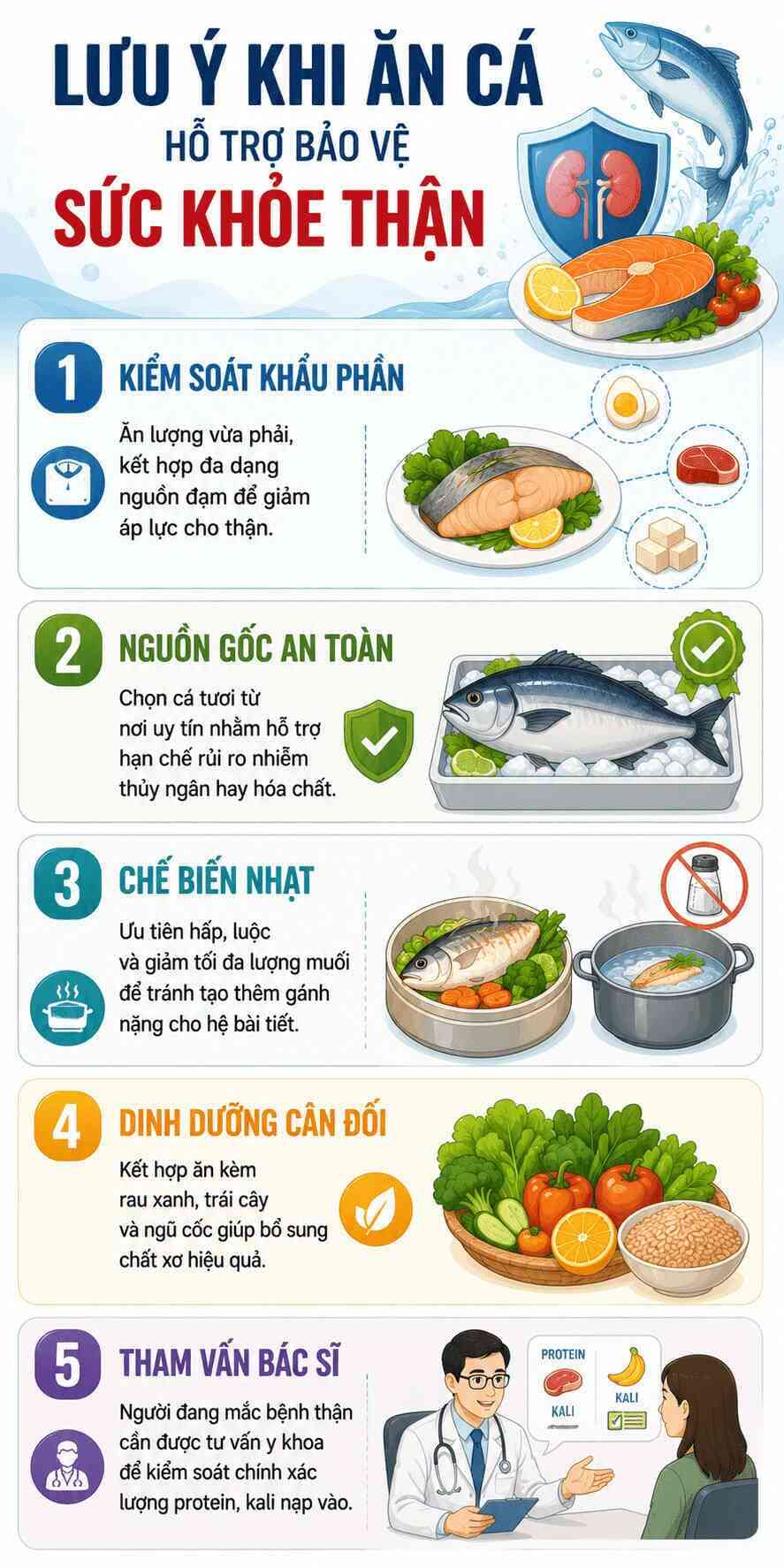
Prioritize healthy cooking methods: You should prioritize steaming, boiling or pan-frying with a little oil to retain nutrients, and at the same time help meals be lighter for the digestive and excretory systems.
Limit oversalty dishes: Eating too much salt can increase blood pressure and create more pressure on the kidneys. It is necessary to limit salty braised fish, salted fish or processed foods.
Combined with a balanced diet: You should eat fish with green vegetables, fruits and cereals to supplement fiber, contributing to maintaining healthy kidney function.
People with kidney disease should consult a doctor: People with kidney disease often need to control protein and potassium. Therefore, it is necessary to consult a doctor before changing the menu to have the safest diet.
Q&A corner: Nutrition supports kidney protection
Why do people with kidney disease need to consult a doctor before eating a lot of fish?
According to experts, kidney patients often have difficulty excreting certain substances. Consulting a doctor will help patients accurately control the amount of protein, potassium and phosphorus intake into the body, thereby building a suitable and safe fish diet for each stage of the disease.


