Many people when they detect an increased blood sugar index are often worried and immediately abstain from rice, vermicelli, pho, bread or foods containing starch.
However, according to nutrition experts, the key to supporting hypoglycemia is not "whether to eat starch or not", but choosing which type of starch, how much to eat and how to combine them with other foods.
Change the type of starch to help lower blood sugar
Refined starches such as white bread, pasta, pastries, or large amounts of white rice can cause post-eating blood sugar to rise faster in some people, especially when eating a lot and lacking vegetables, protein, or accompanying healthy fats.
Conversely, fiber-rich carbohydrate sources such as brown rice, oats, sweet potatoes, beans or whole grains can help make meals more balanced. However, these foods still contain carbohydrates and can still raise blood sugar if eaten too much.
Patients do not necessarily have to completely eliminate white rice if it is still suitable for the diet and personal glycemic index. You can reduce the amount of white rice, combine with more green vegetables, lean protein or replace a portion with whole grains, depending on the advice of a nutritionist. This helps the meal to be more balanced, contributing to supporting blood sugar control and reduction.
Table comparing the effects of starches on blood sugar
| Refined starch group | Whole grain group |
|---|---|
| White rice, white bread, vermicelli, pho. | Brown rice, oats, sweet potatoes, beans. |
| It can cause blood sugar to rise faster after eating, especially when eating a lot. | It usually helps feel full longer and can make blood sugar increase later in the day slower, depending on the portion size. |
| You should control your food intake and limit sugary and low-fiber foods. | It is still necessary to control portion sizes because these foods still contain carbohydrates. |
Portion control and food combination
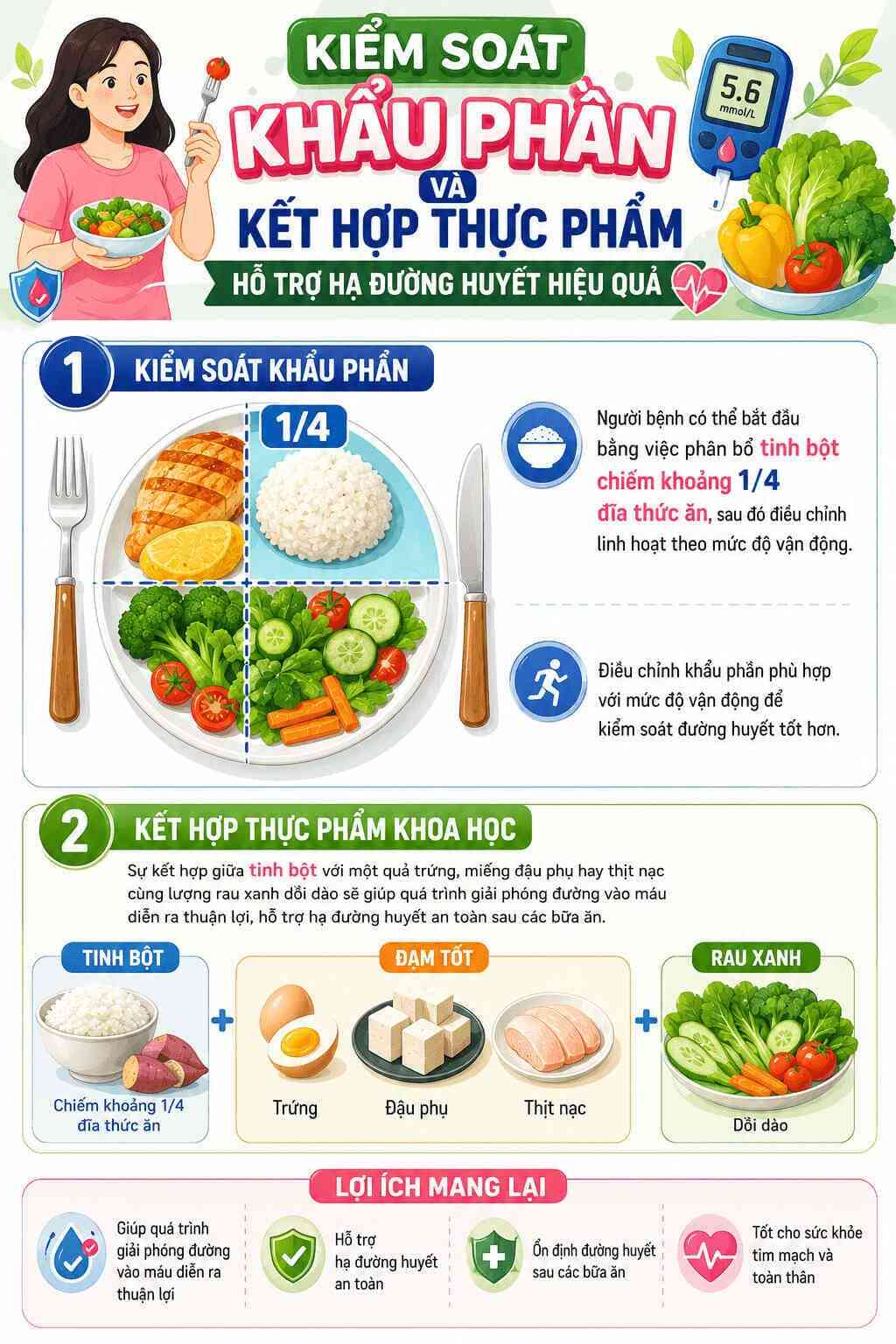
Even good grains when entering the body still convert into glucose. Therefore, controlling portion sizes is a mandatory principle. Patients can start by distributing starch accounting for about 1/4 of the food plate, then adjust flexibly according to exercise level.
In addition, finding a "companion" for starch is a decisive factor. The combination of starch with an egg, a piece of tofu or lean meat along with abundant green vegetables will help the process of releasing sugar into the blood take place smoothly, supporting safe hypoglycemia after meals.
Be careful of the risk of excessive hypoglycemia
Diet adjustments need to take place gradually. According to medical experts, for patients being treated with insulin, using hypoglycemic drugs or having a history of hypoglycemia, absolutely do not arbitrarily cut down on carbohydrates suddenly. To ensure safety, patients need to actively monitor indicators closely and consult a treating doctor to have the most appropriate nutritional regimen.
The information in the article is for reference only, not for medical diagnosis or treatment. You should talk directly to your doctor for accurate and appropriate advice to your health condition.
Safe Nutrition Question and Answer Corner for people with diabetes
How can I combine foods to eat starch without worrying about blood sugar spikes?
You should apply the "food dish" principle: combine 1 part of complex starch (such as oatmeal, brown rice) with 1 part of protein (eggs, fish, tofu) and 2 parts of green vegetables. Fiber and protein will support slowing down the absorption of sugar into the blood, contributing to supporting natural blood sugar control and reduction.