
According to experts, maintaining an exercise habit can contribute to slowing down the progression of the disease, reducing the risk of complications and improving the quality of life. However, people with cardiovascular disease need to choose a sport and exercise intensity suitable for their physical condition.
| Exercise group | Specific subjects/movements | Effects and recommendations |
|---|---|---|
| Walking, slow cycling, swimming, aerobics, dancing. | Support circulatory endurance (Should be maintained daily). | |
| Lift small weights, use resistance rope, stand up and sit down on the chair. | Increase muscle strength (Minimum 2 times/week). | |
| The exercises focus on training balance ability. | Contributing to preventing falls (For the elderly). | |
| Any walking activities, gentle stretching. | Preventing risks from sitting still for more than 60 minutes. |
Sports that are good for the heart
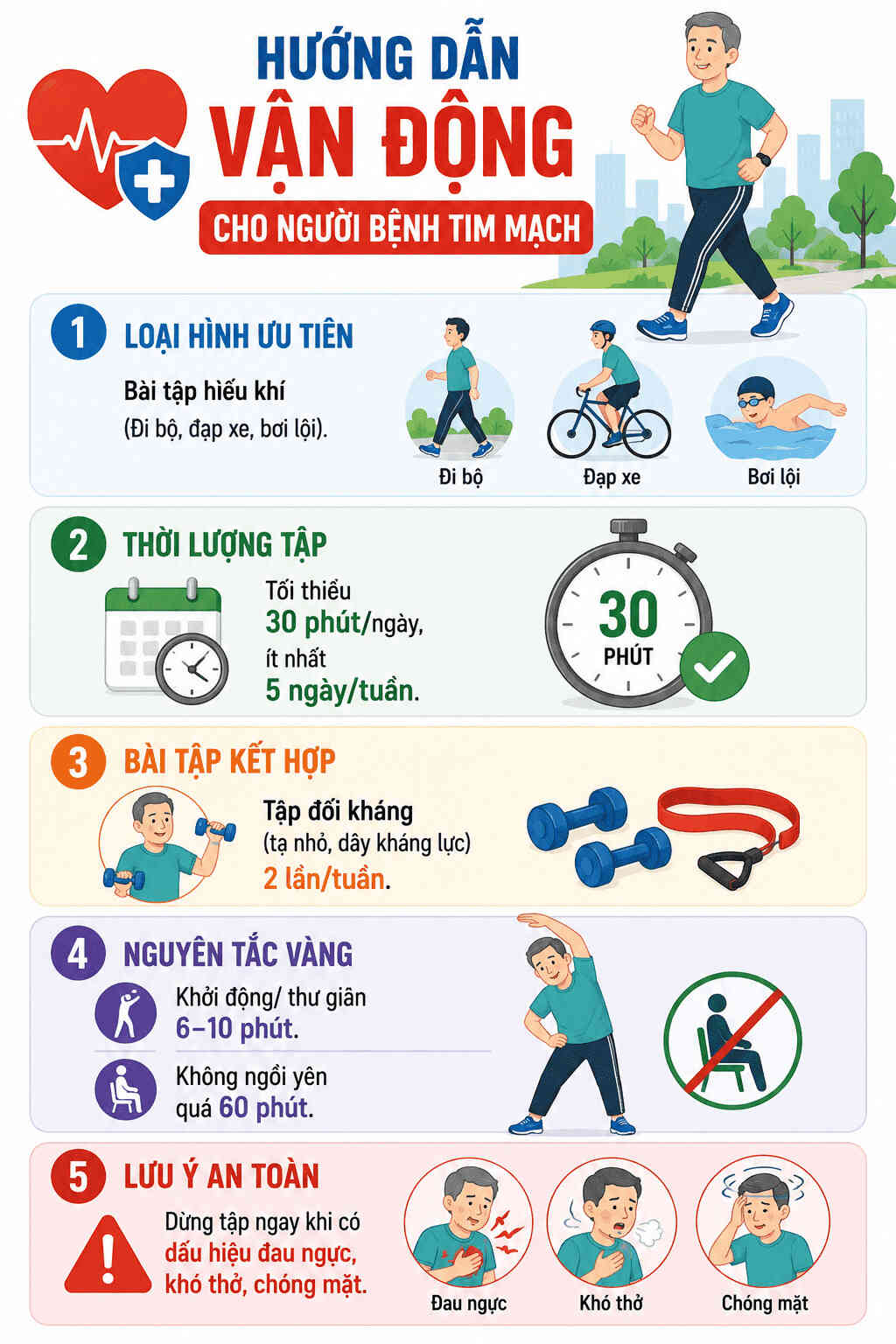
Patients can refer to exercises such as: walking, slow cycling, swimming, gentle aerobics or dancing. These are sports that can improve endurance when chosen and adjusted appropriately. Frequency and duration need to gradually increase according to their ability and professional guidance.
In addition, if health conditions permit, patients can combine antagonistic exercises (such as lifting small weights, using resistance ropes, standing up and sitting down) about 2 times/week to maintain muscle strength if the condition is stable and have been instructed on how to exercise and breathe. Elderly people should supplement balance exercises to prevent falls.
Safety training principles
For cardiovascular patients, the core principle is to always spend 6-10 minutes warming up and relaxing according to the doctor's instructions. Exercise should alternate between light and moderate intensity, maintaining at least 30 minutes/day, at least 5 days/week. In particular, it is necessary to minimize sitting still for more than 60 minutes.
During exercise, if signs such as chest tightness, shortness of breath, dizziness appear, the patient needs to stop immediately, rest and notify those around to receive timely medical support.
The information in the article is for reference only, not for medical diagnosis or treatment. You should talk directly to your doctor for accurate and appropriate advice to your health condition.
Quick Q&A: Movement and cardiovascular health
Should people with cardiovascular disease exercise in the early morning (when it is still cold)?
According to experts, patients should be cautious. Cold temperatures can cause blood vessel constriction and sudden high blood pressure.
Patients need to be careful because cold, strong winds and humid weather can increase the burden on the cardiovascular system, especially in people with coronary artery disease or unstable heart disease. Do not start suddenly with strenuous activities when the body is still cold.
If still exercising outdoors, you should dress warmly enough, warm up thoroughly, start slowly and choose a lower intensity than usual. When the weather is too cold, windy or rainy, patients can switch to walking in place, exercising with a chair or resistance band in the house.


