
The US National Oceanic and Atmospheric Administration (NOAA) said that the probability of El Nino forming this summer is up to 62%. Although this period is forecast to have many variables, signs under the ocean - where large amounts of heat accumulate - along with the weakening of monsoon winds are strengthening this possibility.
According to the NOAA Climate Forecasting Center, there is about 1/3 chance that El Nino will reach a "strong" level by the end of the year, especially in the period from October to December.
A typical El Nino can cause the global average temperature to increase by 0.1-0.2 degrees Celsius. Although this number may seem small, it is enough to trigger a series of extreme weather phenomena such as heavy rain, floods, droughts and heat waves.
The reason is that for every 1 degree Celsius increase in air temperature, the atmosphere can retain about 7% more humidity, making rains more intense.
Scientists believe that thermal energy accumulated during the previous La Nina period was the "fuel" for El Nino. However, the fact that a strong El Nino appeared too early after the 2023-2024 period is quite surprising.
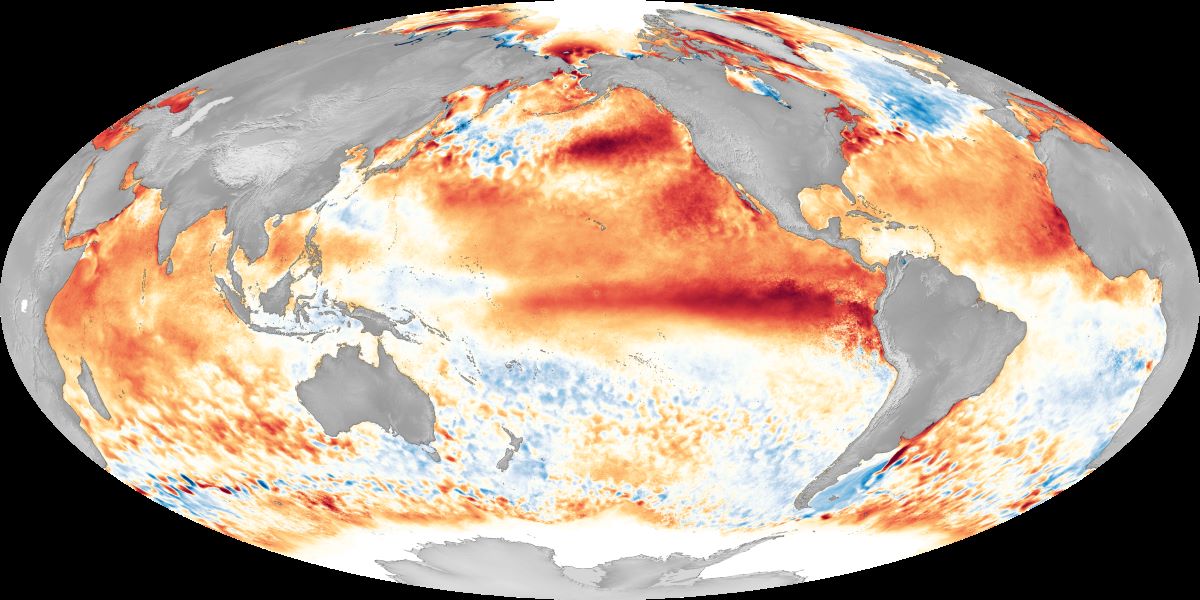
One hypothesis is put forward: Global warming may be shortening the "warming" time of the ocean, making climate cycles faster and more unpredictable.
History shows that years with El Nino are often among the hottest ever recorded. The 2023-2024 period witnessed a series of temperature records, followed by forest fires, floods and deadly heat in many areas.
If El Nino strongly returns in 2026, the world may face a harsher weather cycle, in the context of global temperatures already high due to human impact.
Regarding the impact of El Nino on Vietnam, it is forecast that widespread heat waves will occur with more intense intensity, especially in the summer months in the North and Central regions.
The number of storms and tropical depressions may not be large, but beware of strong storms.
Temperatures across the country are forecast to be higher than the multi-year average and the 2026-2027 winter may be warmer.
According to the weather forecast bulletin of the National Center for Hydro-Meteorological Forecasting of Vietnam, on April 4, the area from Quang Tri to Quang Ngai will be hot, with intense heat in some places with the highest temperature commonly 35-37 degrees C, in some places above 37 degrees C, the relative lowest humidity commonly from 40-45%.
On April 5, the area from Thanh Hoa to Quang Ngai will be hot, with intense heat in some places with the highest temperature commonly 35-37 degrees C, in some places above 38 degrees C, the relative lowest humidity commonly from 40-45%.
On April 4-5, the Southeast region will be hot with the highest temperature commonly 35-36 degrees C, in some places above 36 degrees C, the relative lowest humidity commonly from 45-50%.
Warning from April 6, hot weather is likely to expand to the Northwest region and the Northern Delta. Hot weather in the area from Thanh Hoa to Quang Ngai and the Southeast region is likely to last for many days to come.


