Do not let the later violations be larger or more serious than the previous violations
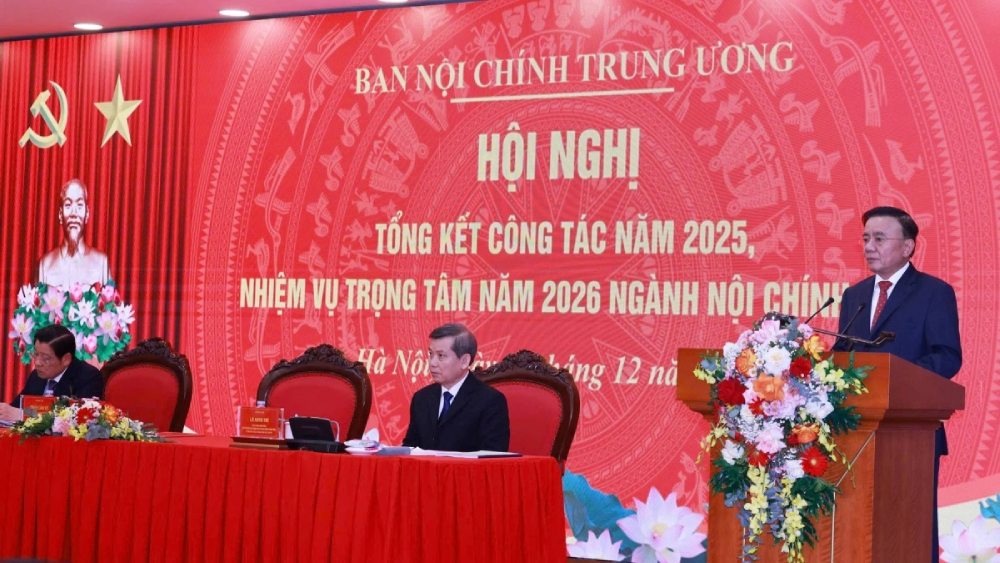
On the afternoon of December 10, the Central Internal Affairs Committee held a conference to summarize the work of the Party's Internal Affairs sector in 2025, directions and tasks for 2026.
Politburo member and Standing member of the Secretariat Tran Cam Tu attended and directed the conference. Also attending were Politburo members: Secretary of the Party Central Committee, Head of the Central Internal Affairs Commission Phan Dinh Trac; Secretary of the Hanoi Party Committee Nguyen Duy Ngoc. The conference was also attended by the Secretaries of the Party Central Committee: Deputy Head of the Central Internal Affairs Commission Le Minh Tri; Secretary of the Ho Chi Minh City Party Committee Tran Luu Quang.
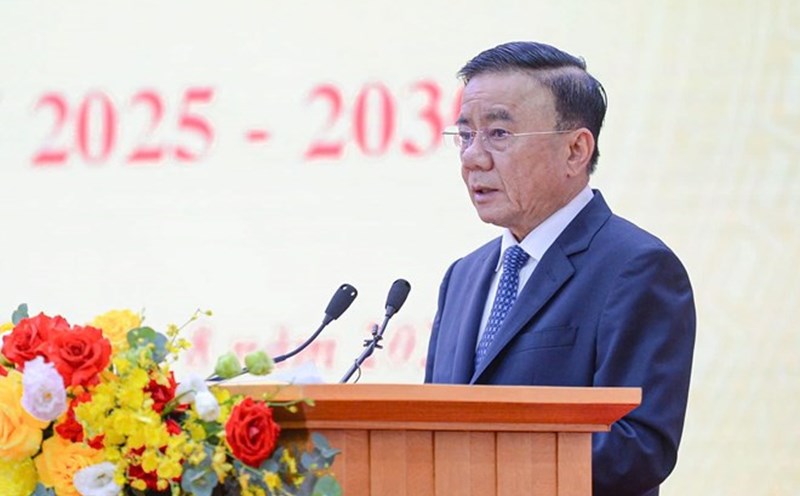
Speaking at the conference, Politburo member and Standing member of the Secretariat Tran Cam Tu said that since the beginning of the term, the Central Internal Affairs Commission has studied and advised the Central Executive Committee, the Politburo, and the Secretariat on over 30 major projects. The internal affairs committees of the provincial and municipal Party Committees have promptly advised the Party Committees to lead, direct, specify and effectively implement the Central's policies and guidelines.
Through the summary of 5 years of implementation, the whole industry has discovered, advised and directed the handling of over 1,000 corruption, waste and negative cases and incidents. The Central Internal Affairs Commission has advised the Central Steering Committee to monitor and direct 149 cases and 84 serious and complicated corruption, waste and negativity cases that are of public concern; advised on expanding the scope and adding functions and tasks of the Steering Committee to prevent and combat both negativity and waste.
"Through the results of the survey of public opinion on the work of preventing and combating corruption, waste and negativity during the 13th Congress of the Central Propaganda and Mass Mobilization Commission, it shows that the majority of people (98%) expressed their confidence in the Party's leadership in the work of preventing and combating corruption, waste and negativity in the recent past," said Mr. Tran Cam Tu.
Regarding the tasks in the coming time, the Standing Committee of the Secretariat requested the Party's Internal Affairs sector to focus on researching, disseminating, and effectively implementing policies, tasks, and solutions on internal affairs, preventing and combating corruption, waste, negativity, and judicial reform according to the 14th National Party Congress Documents.
"Counsulate on summarizing and fully identifying violations and causes to direct correction, remediation, and prevention, not allowing repeated violations; old violations to recur; later violations are greater, more serious than previous violations and the maximum recovery of assets for the State", Mr. Tran Cam Tu stated.
Do not let waste last long, but absolutely do not legalize violations
Along with that, the Standing Committee of the Secretariat noted that the Party's Internal Affairs sector advised and directed to strengthen inspection, supervision, control of power, prevent and combat corruption, waste and negativity, build a truly honest, close-to-the-people, and serve the people at two levels.
Timely detect, advise, direct strict handling, publicize cases and incidents of harassment and inconvenience to people and businesses and the mentality of holding back, waiting, relying on, pushing, avoiding in performing public duties to warn, deter, and effectively overcome the evils of "petty corruption" that cause frustration for people and businesses.
The Standing Secretariat also requested the industry to advise and direct the acceleration and creation of stronger changes in waste prevention and control in the whole society.
Timely advise on directing the review of projects violating land laws, projects with difficulties and problems in inspection, examination and judgment conclusions to handle according to the policies and conclusions of the Politburo to unlock land resources, contribute to promoting growth and socio-economic development, avoid prolonged waste, but absolutely do not legalize violations. Coordinate to advise the Steering Committee to include a number of typical works and projects on waste in the scope of monitoring and direction to focus on directing the final handling.