
Unstable livelihoods after storms and floods
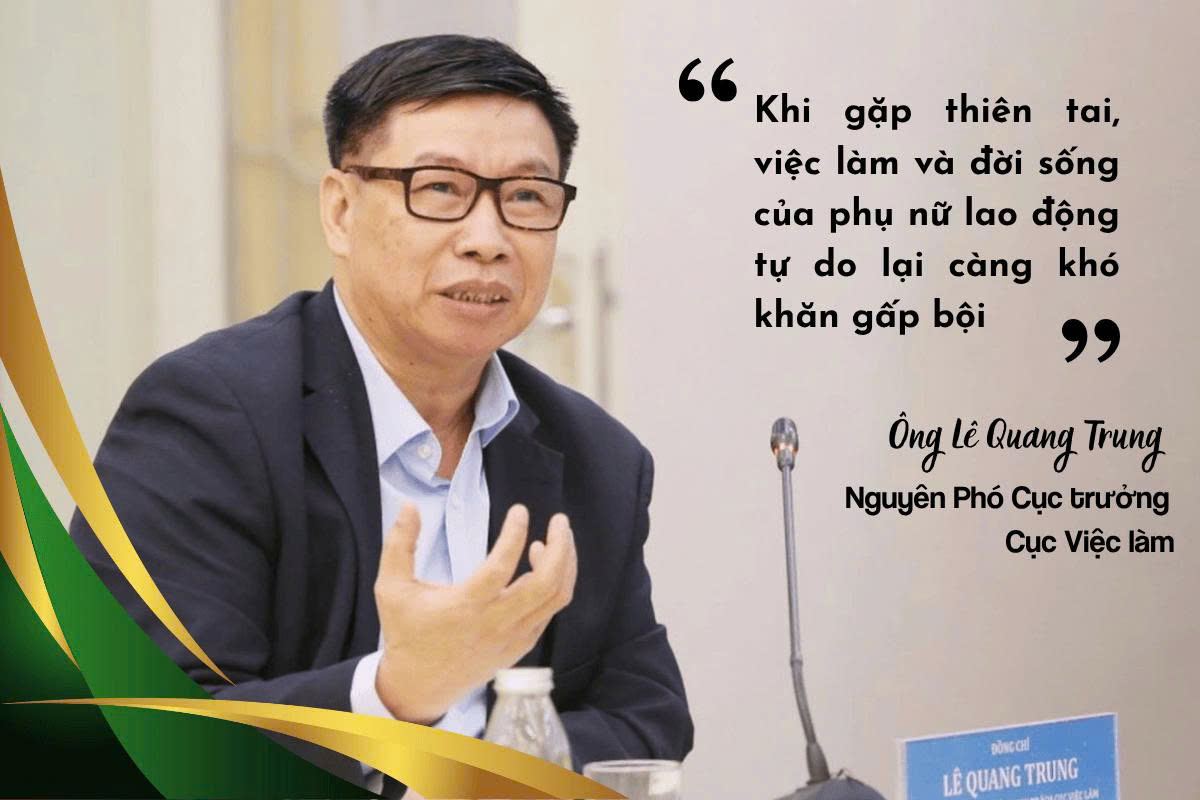
Mr. Le Quang Trung - former Deputy Director of the Department of Employment (Ministry of Labor - Invalids and Social Affairs, now the Ministry of Home Affairs) acknowledged that in recent months, many localities across the country such as Thai Nguyen, Cao Bang, Lang Son... have suffered heavy damage due to floods, directly affecting the lives and jobs of people, especially women who are freelance workers (unofficial workers).
"Women working in the informal sector do not have contracts, jobs are unstable, income is unstable and there is almost no savings. When there are natural disasters, jobs and life are even more difficult" - Mr. Trung said.
The Labor and Employment Report for the third quarter and the first 9 months of 2025 of the Statistics Office (Ministry of Finance) said that employment for workers tends to increase, but the labor market is not developing sustainably when the number of informal workers accounts for a large proportion.
The number of workers with general informal employment (including workers working in agricultural, forestry and fishery households) in the third quarter of 2025 was 32.6 million people, accounting for 62.4% of the total number of employed workers, down 1.1 percentage points compared to the previous quarter and down 1.5 percentage points compared to the same period last year.
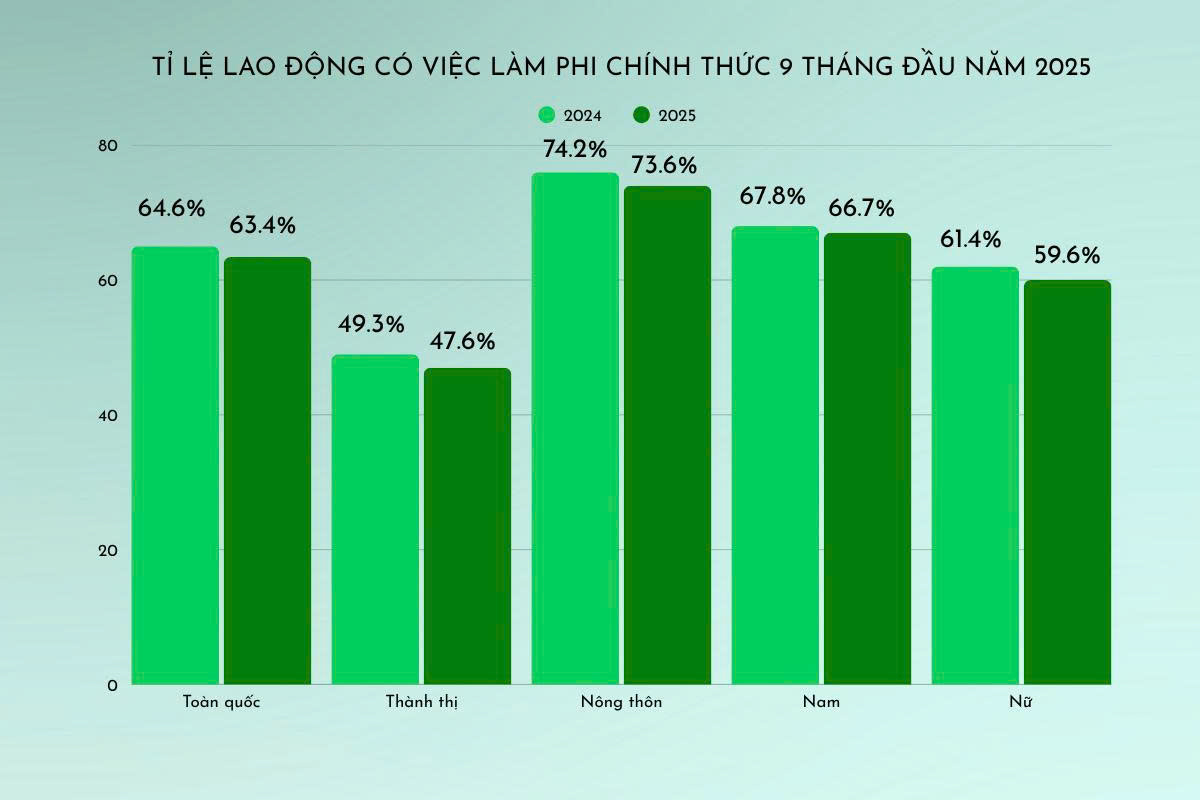
According to Associate Professor, Dr. Nguyen Thi Lan Huong - former Director of the Institute of Labor Science and Social Affairs, our country's social security system currently has points that need to be calculated and researched on the level of social security coverage, especially for the informal labor group. Because this is a group that accounts for a large proportion, more than 60% of the labor force of the labor market.
"The COVID-19 trend is a big lesson showing that without reserve policies and flexible financial resources, we would be very confused when the incident happened" - Associate Professor, Dr. Nguyen Thi Lan Huong commented.
Expanding the social security "grid" for disadvantaged workers
The former Director of the Institute of Labor Science and Social Affairs said that in financial sources related to the labor market, unemployment insurance is a long-term policy with practical significance to help workers have a support when they lose their jobs.
The new point of the 2025 Law on Employment is to expand 4 more groups of subjects participating in unemployment insurance, thereby creating a wider social security net. This is also a premise for expanding social security for the informal labor group itself.
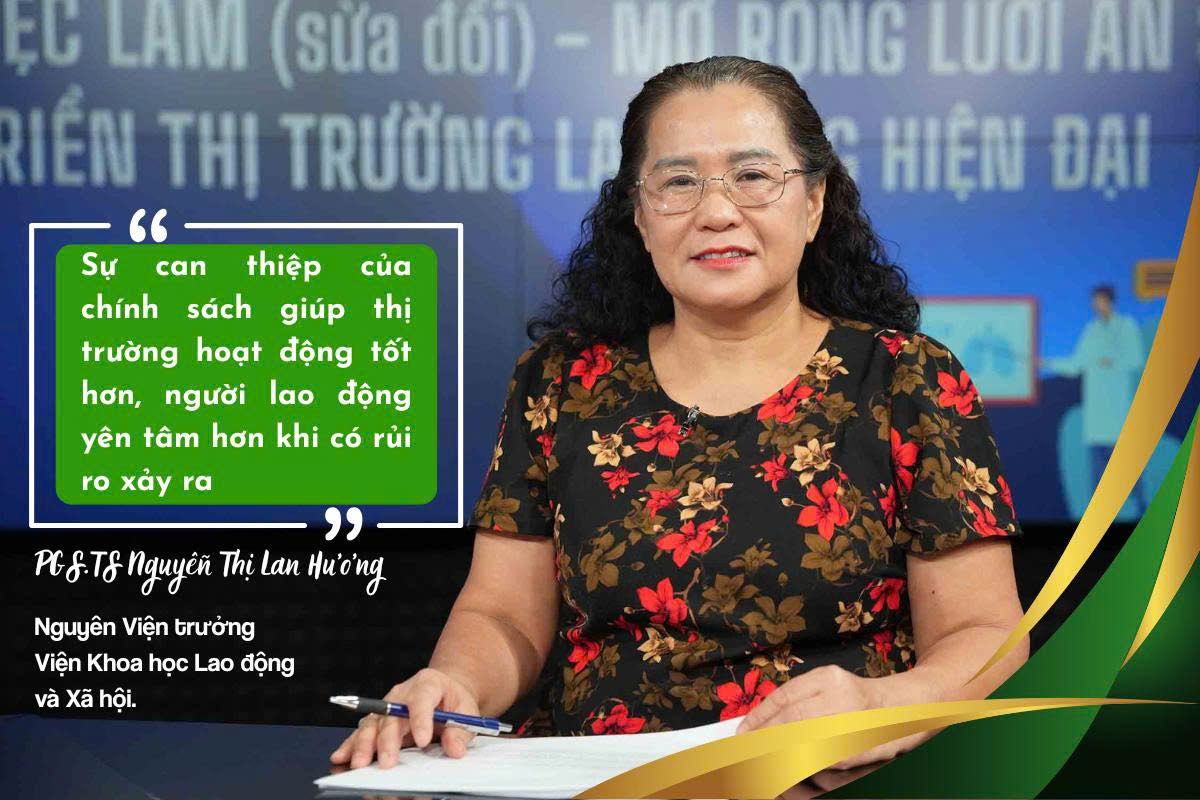
Ms. Huong said that this is not only a technical policy, but also demonstrates the active role of the State in intervening in the labor market. "In this case, policy intervention helps the market operate better, workers are more assured when risks occur" - she said.
According to Associate Professor, Dr. Nguyen Thi Lan Huong, expanding unemployment insurance coverage not only increases the ability to protect workers, but also creates motivation for shifting the labor structure - from low-yielding areas to high-yielding areas, from simple jobs to jobs that require technical expertise. This is an important factor in the context of the economy being affected by technological transformation, automation and climate change.
"This policy in the long term also helps reduce inequality in the labor market. Because when they lose their jobs without a support, workers, especially the disadvantaged group, will easily fall into the spiral of poverty" - Ms. Huong warned.
In order for the group of female freelance workers, especially in disaster-affected areas, to stabilize their livelihoods, access sustainable jobs and social security in the coming time, former Deputy Director of the Department of Employment Le Quang Trung said that, first of all, it is necessary to organize a specific assessment of each freelance female worker and their family about the level of damage, self-repair ability and desire to be supported to stabilize their lives and jobs.
Next, it is necessary to urgently provide timely support to stabilize life and overcome damage caused by storms and floods through appropriate forms; at the same time, speed up the progress of repairing infrastructure damage, restoring production and business conditions to create jobs right in the locality.
In the long term, there should be measures in each region and locality to prevent and limit the impact of storms, floods and natural disasters; research and orient the development of industries that are less dependent and less affected by natural disasters to create more jobs, attract workers and improve job quality.
In addition, it is necessary to strengthen vocational training for female freelance workers; have policies and projects to transfer female freelance workers, especially female freelance workers, to work in the formal sector; promote job consultation, job introduction, labor market information, and job exchanges for female freelance workers to access new jobs.
Experts also believe that it is necessary to promote communication so that workers can change their awareness, proactively adapt to new working conditions and environments; have policies to encourage businesses to attract more female freelance workers to work; build a coordination mechanism between businesses receiving workers and training facilities in each locality and each region to ensure jobs after training.
At the same time, there should be policies to encourage and support the start of businesses owned by female freelance workers, as well as support jobs for this group of workers.
"Re- renewing" the social security space
Mr. Ta Van Ha - Vice Chairman of the National Assembly's Committee on Culture and Society - said that unemployment insurance and job creation are the " livelihood leverages" for women and workers in the informal sector.
Unemployment insurance is a social security policy that helps workers not fall into the spiral of poverty when they lose their jobs. But more importantly, we must expand the scope of participation.
"We need a mechanism to "support 3 parties" - the State, workers and businesses - to share responsibilities. For the group of female freelance workers, lower and more flexible contribution levels can be applied, linked to actual income" - Mr. Ha said.
In addition, policies on connection, support, and job creation need to be promoted, especially after natural disasters and epidemics. Along with that are policies on promoting vocational training, meeting social needs, and linking vocational training with employment. Focus on socializing vocational training, encouraging businesses to participate in vocational training. Support for livelihoods is a long-term "fishing rod" for freelance workers, especially female workers.
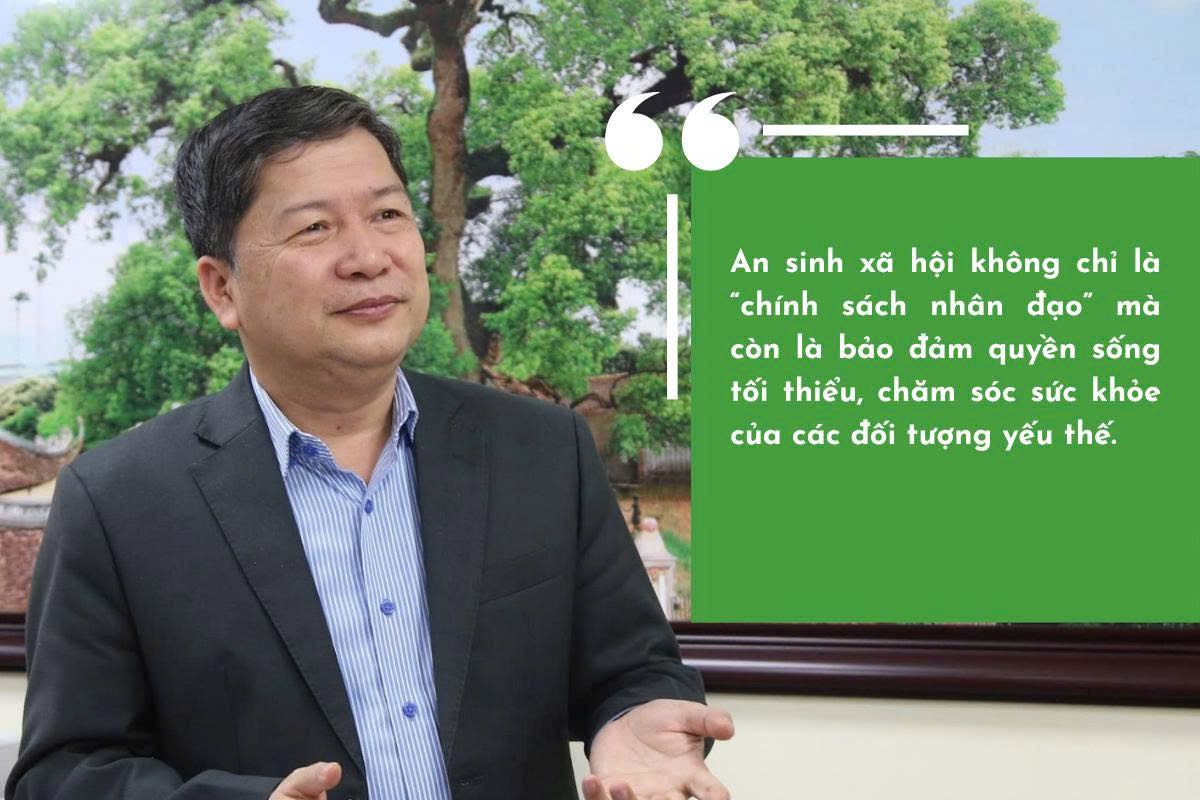
To "reserve" the social security space for the group of women working freely, especially when natural disasters and incidents occur, Mr. Ta Van Ha - Deputy Chairman of the National Assembly's Committee on Culture and Society said that it is necessary to recognize this as a systematic task, not just a short-term relief or support.
First, there must be an emergency response mechanism specifically for disadvantaged workers after natural disasters, with flexible funds, timely support with money, materials and livelihoods.
Second, vocational training and livelihood transformation to adapt to climate change must be considered a long-term strategy.
Third, strengthen communication and education on social security so that workers understand that participating in insurance, vocational training, and risk prevention are essential benefits.


