
At the preliminary conference on the work in the first 6 months of the year, deploying key tasks for the last 6 months of 2026 of the Ministry of Home Affairs, Director of the Department of Salary and Social Insurance (Ministry of Home Affairs) Pham Truong Giang said that in the first 6 months of 2026, the Department of Salary and Social Insurance has advised the Minister of Home Affairs to submit to the Government for promulgation 16 legal normative documents.
In which, there are many contents related to salary policies after arranging the organizational structure and implementing the 2-level local government model.
According to Mr. Giang, immediately after arranging commune-level administrative units, the Government promptly issued regulations to arrange position allowances for the affected cadres and civil servants.
Regarding regional allowances, the Ministry of Home Affairs has issued Circular No. 15/2026/TT-BNV adjusting in the direction that for communes that are merged, the highest regional allowance level of units before merger is applied.
According to statistics, currently about 48% of communes and wards enjoy regional allowances and about 4.8% of communes and wards enjoy special allowances. In addition, localities with economic conditions have also provided additional support for officials and civil servants," Mr. Giang said.
Regarding salaries, Mr. Giang said that at the time of arrangement, the lowest salary of a commune-level civil servant was about 7.4 million VND/month. After adjusting the base salary from July 1, 2026, this level has increased to about 9 million VND/month.
For the group with higher incomes, he said that the benefit level depends on the mechanism of each locality. For example, in Hanoi and Ho Chi Minh City, there are additional "very specific, special" supports of 24-25 million VND/person/month.
In addition, many localities also have other supports such as travel support and some policies suitable to actual conditions.
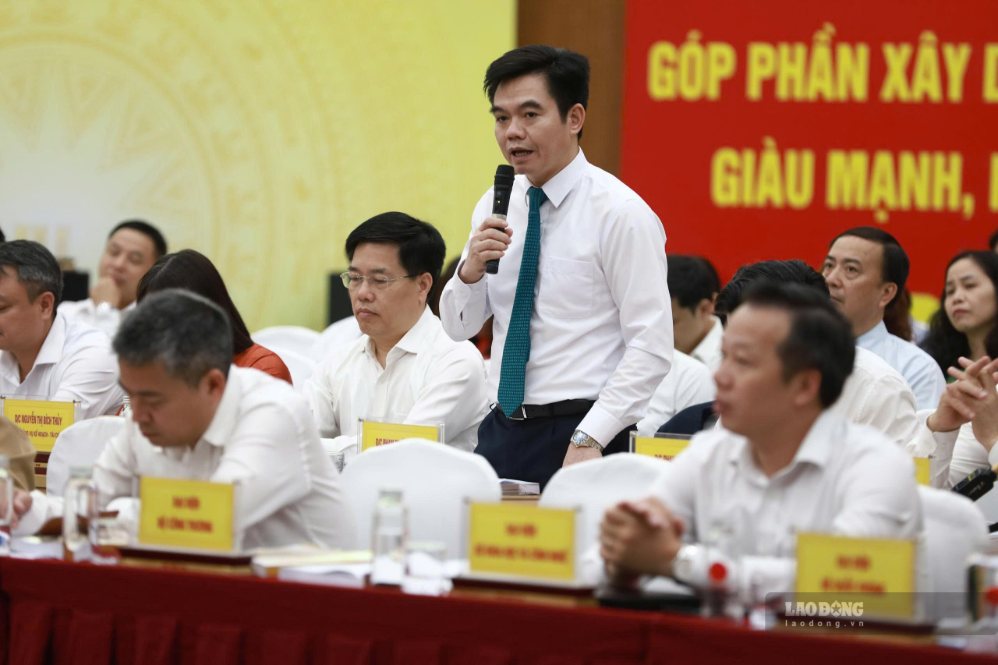
According to the Director of the Department of Salary and Social Insurance, the Ministry of Home Affairs will continue to advise on perfecting salary policies.
Currently, the Politburo has concluded on the development of the Overall Project on reforming salary and social insurance policies, as a basis for continuing to amend and supplement regulations in the coming time.
Regarding the tasks for the last 6 months of the year, Mr. Giang requested localities to focus on a number of contents.
On December 10, 2025, the Government issued Resolution No. 403/NQ-CP on assigning targets for developing social insurance participants to 2030.
According to him, at the end of this year, the Government will review the implementation results of each locality, including assessing the responsibility of the Chairman of the Provincial People's Committee. Therefore, the Department of Home Affairs needs to advise the Provincial People's Committee to review the results of implementing the targets for the first 6 months of the year, and develop solutions to complete the targets for 2026 as well as the goals to 2030.
He also stated the task that localities need to fully and accurately statistically report data on salaries, allowances and increased income to serve the development of the Project on reforming salary policies and social insurance.
This is a very important input data. When the Central Steering Committee has a document requesting the Departments of Home Affairs to proactively advise the Provincial People's Committee to review and fully summarize to serve the development of the project," Mr. Giang emphasized.
He also proposed that localities manage state labor relations, especially after arranging the organizational structure.
According to him, the Departments of Home Affairs need to proactively advise the Provincial People's Committee to pay attention to arranging human resources and funds for labor relations management in the locality. Because this is a solution to prevent early and remote labor disputes and problems arising in labor relations.


