
Continuing the program of the First Session, on the morning of April 22, the National Assembly discussed in the hall the draft Resolution of the National Assembly on a number of breakthrough mechanisms and policies for Vietnamese cultural development.
Delegate Do Duc Hong Ha (Hanoi Delegation) said that the draft stipulates that November 24th every year is Vietnam Culture Day, stipulating that employees are entitled to leave work and receive full salary, along with the exemption or reduction of entrance fees at public cultural and sports facilities on this day.
The draft also stipulates encouraging teenagers to participate in cultural activities.
The delegate noted that this is a strong national symbolic policy with a profound practical impact. Allowing people to have paid holidays not only honors cultural values but also directly creates a tipping point to stimulate cultural consumption and promote domestic tourism.
However, according to the delegate, instead of only limiting fee exemption and reduction in public cultural and sports facilities, the resolution should supplement a mechanism to encourage cultural and entertainment facilities in the private sector to participate in the price reduction campaign. This will create a festival to stimulate the demand for cultural industry nationwide.
Regarding the institutionalization of specific preferential policies, protection and attraction of talents for the art labor force, according to the delegate, the draft allows public non-business units to recruit through competitive examinations for talented artists and international award-winning students.
It is noteworthy that the professional preferential allowance regime is very high, from 40 to 60% of the current salary level, for people working in traditional, classical, circus performing arts or those working in remote and isolated areas.
At the same time, the state supports funding for retraining artists in specialized industries to change jobs when they are past their working age. The delegate noted that this is a series of deeply humane regulations, showing the legislator's thorough understanding of the extremely short working age and the harsh training process of artists.
High remuneration for traditional and classical art will help preserve national identity under the pressure of the market economy. To make this regulation more convincing, delegate Do Duc Hong Ha proposed diversifying the criteria for recognizing talents for special recruitment consideration, not only limiting it to medals and regional and international awards.
Because in traditional art, there are many outstanding individuals, folk artisans who do not participate in medal-winning competitions but have a great influence on the practice and transmission of heritage, they also need to be applied this special mechanism.
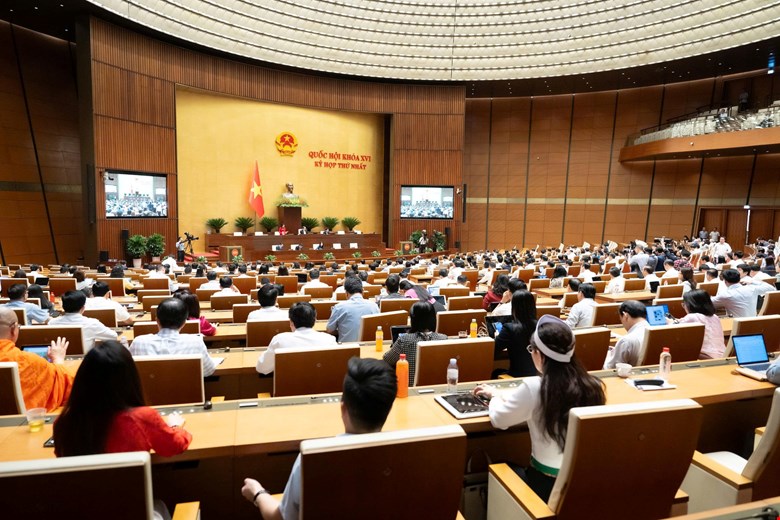
Sharing the same view, delegate Ca Thi Tham (Lai Chau Delegation) said that to spread the practical meaning of Vietnam Culture Day, there needs to be a stronger incentive mechanism for people to access public cultural and sports facilities.
Accordingly, on holidays, people when participating in using services at public cultural and sports facilities should be exempted from all service fees. Therefore, it is proposed that Clause 2 be adjusted in the direction of regulating the exemption of all entrance fees for services at public cultural and sports facilities during Vietnam Culture Day.


