
Implementing Conclusion No. 34-KL/TW dated May 18, 2026 of the Politburo, Directive No. 21/CT-TTg dated May 20, 2026 of the Prime Minister and directing documents, localities have developed plans for arranging villages and residential groups and reported overall plans.
The rearrangement of villages and residential groups not only aims to streamline the apparatus and reduce the number of non-specialized workers, but also contributes to saving budget and creating more resources for socio-economic development investment.
According to the expected plan, many localities will reduce half the number of units, contributing to streamlining the apparatus.
In Lam Dong province, based on reports proposing village and residential group arrangement plans of localities, the Provincial People's Committee has submitted to the Standing Committee of the Provincial Party Committee for consideration and comments on the overall plan.
On June 2nd, the Standing Committee of the Provincial Party Committee issued a concluding notice, requesting localities to carefully review the specific factors of geography, transportation, history, culture, ethnicity, religion, national defense, and security to ensure that the arrangement plan is suitable for reality and convenient for the people.
The goal set by the province is that after arrangement, it is necessary to reduce at least 50% of the existing number of villages and residential groups. Localities with a reduction rate of the number of villages and residential groups from 50% or more such as: Lam Vien - Da Lat ward (65.31%), Mui Ne ward (61.54%), Bao Lam 2 commune (61.29%), Cat Tien commune (60.87%), Dinh Trang Thuong commune (60%), Nam Thanh commune (60%), Cu Jut commune (60%), Hoa Bac commune and Phan Thiet ward (59.09%)...
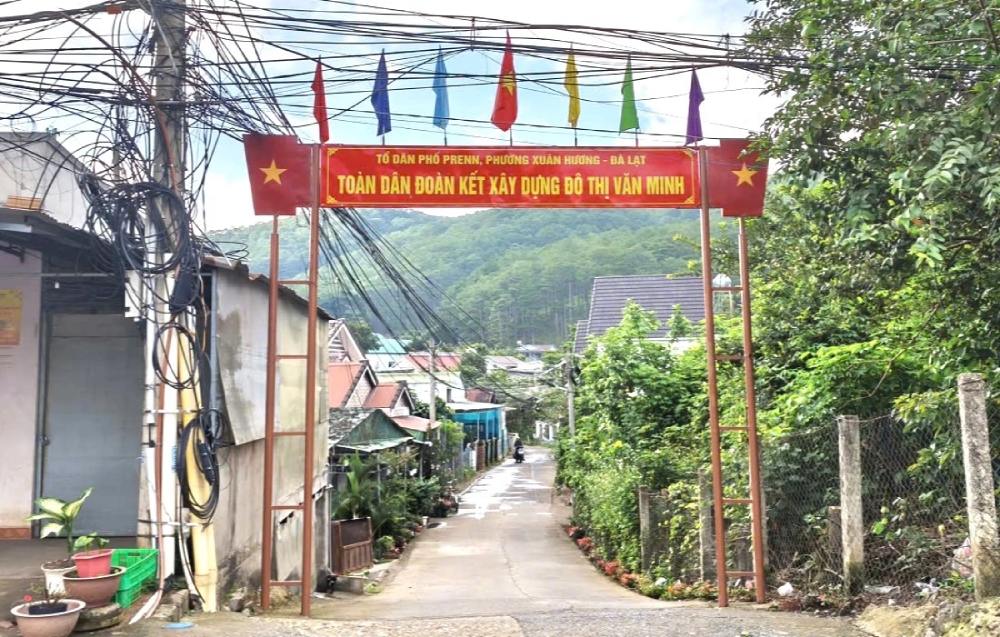
In Thai Nguyen province, the locality will complete the plan to arrange and reorganize villages, hamlets, and residential groups before June 10.
After implementing the arrangement of provincial and commune-level administrative units, Thai Nguyen currently has 92 commune-level administrative units, including 77 communes and 15 wards. The whole province has 3,145 villages and residential groups, of which 2,351 are villages, hamlets and 794 are residential groups.
Initial review results show that the province plans to rearrange and reorganize 2,926 villages and residential groups; maintain the stability of 177 units and continue to consider 42 units with specific factors.
If the plan is approved, the whole province will have 1,416 villages and residential groups, a decrease of 1,729 units compared to the present, equivalent to about 55%.
In Quang Ngai province, this locality currently has 1,710 villages, hamlets, and residential groups, but up to 700 units (accounting for 40.94%) do not meet the standards for household size according to new regulations.
Quang Ngai province will rearrange 1,095 villages and residential groups in 87 communes and wards to merge and form 549 new villages and residential groups. This process means that the whole province will reduce 546 units throughout the province.
At the same time, the remaining 615 villages and residential groups, because they have met the standards or have specific characteristics, will be kept in their original state, without arrangement. After completing the entire plan, the total number of villages and residential groups in Quang Ngai province will be reduced to 1,164 units, a sharp decrease of 31.93% compared to the initial total number.
In Lao Cai province, according to the roadmap, the People's Committees of communes and wards will review the number and scale of households and develop plans for arranging villages and residential groups. The Department of Home Affairs will take the lead in summarizing, developing and submitting for approval the overall plan for arrangement in the province before June 10, 2026.
For the project on arranging villages and residential groups in each locality, the commune-level People's Committee must complete the construction and organize the collection of people's opinions before June 11, 2026 and submit it to the commune-level People's Council for approval, ensuring the issuance of resolutions is completed before June 30, 2026.


