
SJC gold bar price
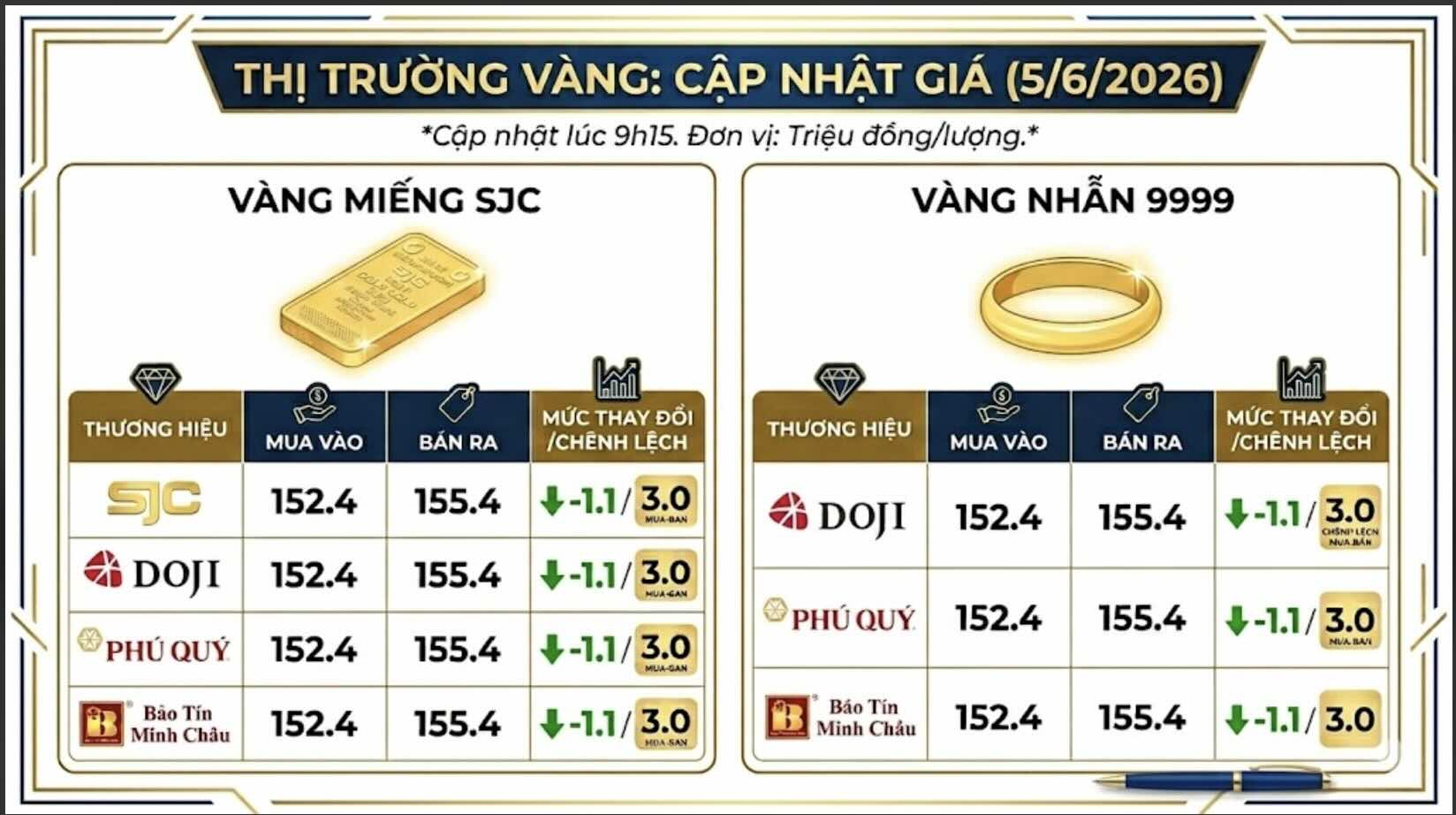
As of 9:15 am, SJC gold bar prices were listed by DOJI Group at the threshold of 152.4-155.4 million VND/tael (buying - selling), down 1.1 million VND/tael in both buying and selling directions. The difference between buying and selling prices is at the threshold of 3 million VND/tael.
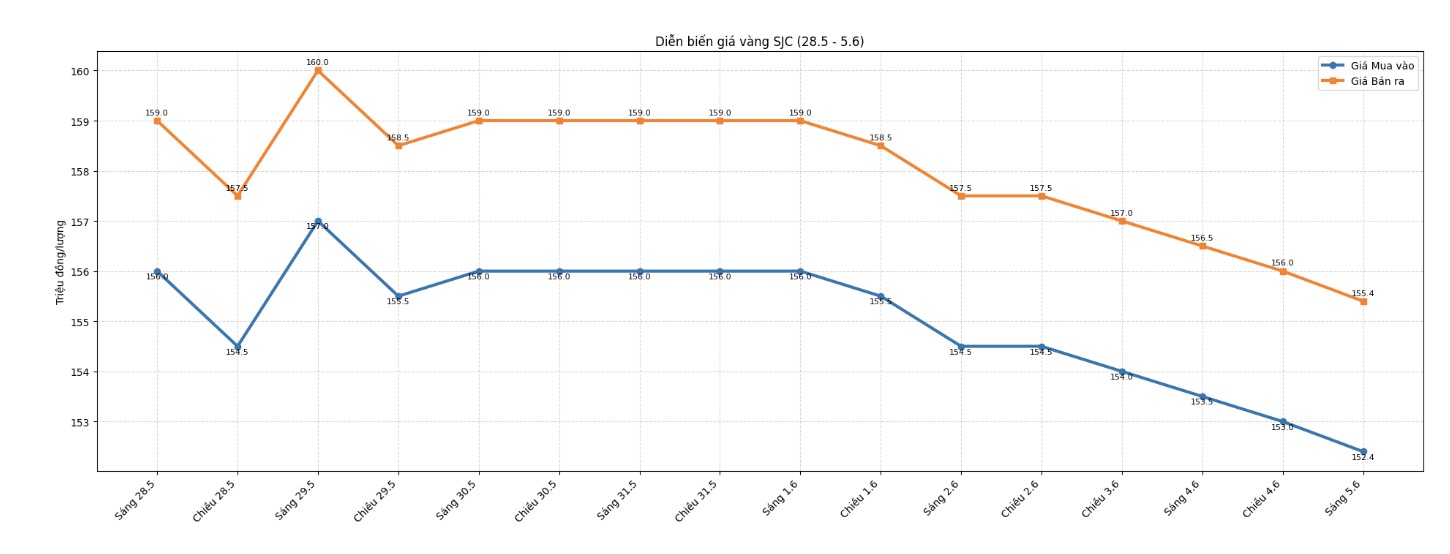
Bao Tin Minh Chau listed SJC gold bar prices at the threshold of 152.4-155.4 million VND/tael (buying - selling), down 1.1 million VND/tael in both buying and selling directions. The difference between buying and selling prices is at the threshold of 3 million VND/tael.
Phu Quy Jewelry Group listed SJC gold bar prices at the threshold of 152.4-155.4 million VND/tael (buying - selling), down 1.1 million VND/tael in both buying and selling directions. The difference between buying and selling prices is at the threshold of 3 million VND/tael.
9999 gold ring price
As of 9:15 am, DOJI Group listed the price of gold rings at the threshold of 152.4-155.4 million VND/tael (buying - selling), down 1.1 million VND/tael in both buying and selling directions. The difference between buying and selling prices is at the threshold of 3 million VND/tael.
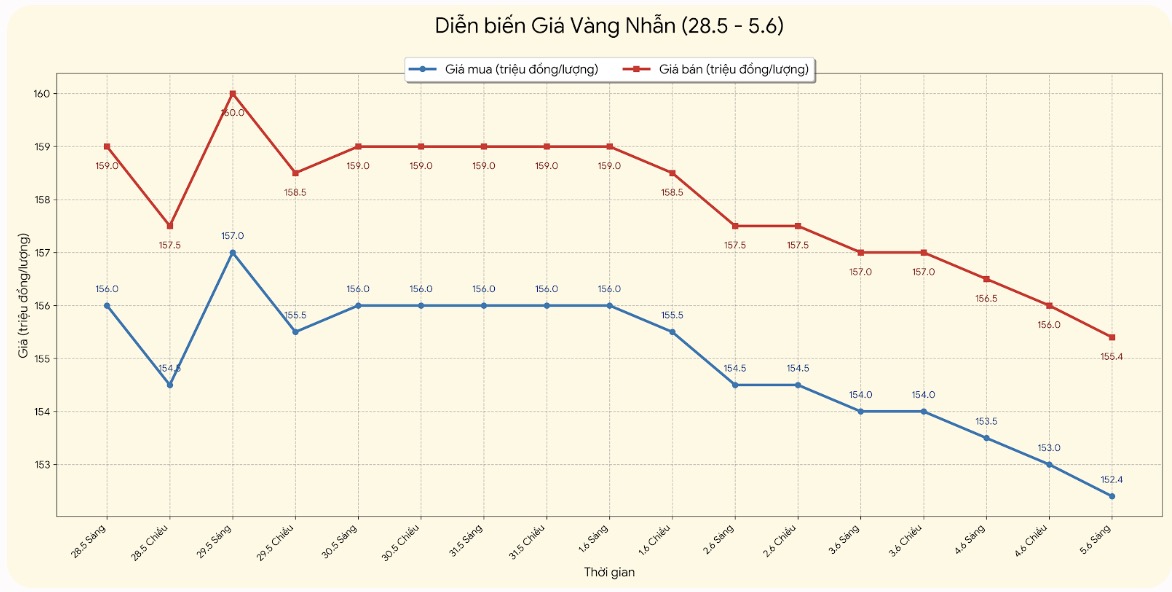
Bao Tin Minh Chau listed the price of gold rings at the threshold of 152.4-155.4 million VND/tael (buying - selling), down 1.1 million VND/tael in both buying and selling directions. The difference between buying and selling prices is at the threshold of 3 million VND/tael.
Phu Quy Gold and Gems Group listed the price of gold rings at the threshold of 152.4-155.4 million VND/tael (buying - selling), down 1.1 million VND/tael in both buying and selling directions. The difference between buying and selling prices is at the threshold of 3 million VND/tael.
Currently, the buying - selling price difference of gold is at a very high level, around 3 to 3.5 million VND/tael, posing a risk of losses for investors.
World gold price
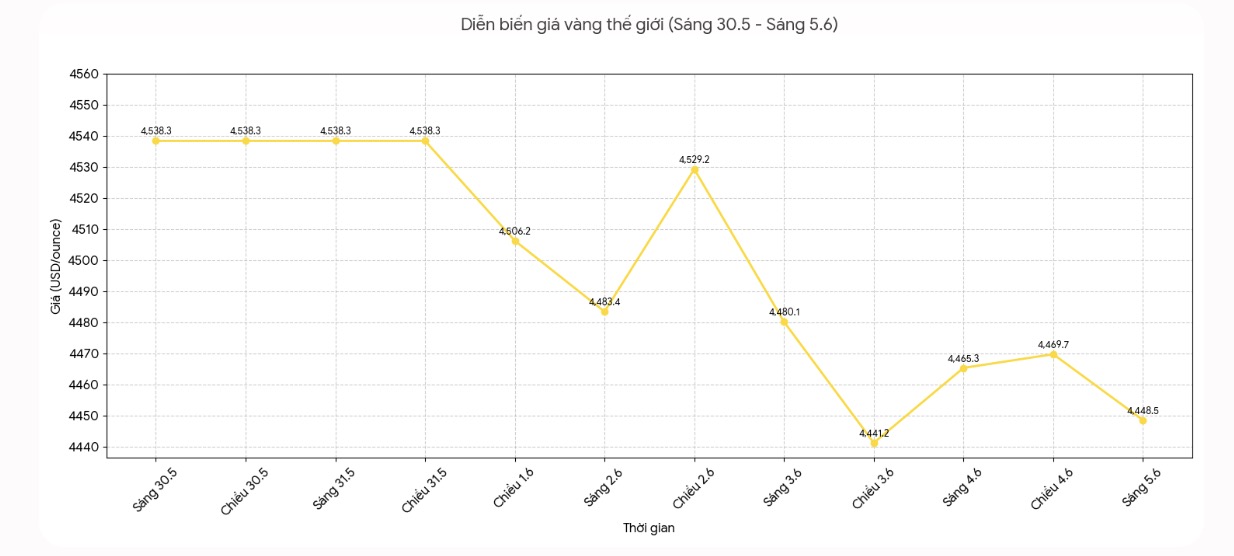
At 10:15 AM, world gold prices were listed around the threshold of 4,438.9 USD/ounce, down 26.4 USD compared to the previous day.
Gold price forecast
World gold prices are in a period of strong correction after hitting a historic high at the end of January. Market data shows that from a record high of over 5,500 USD/ounce, the precious metal has decreased by about 20%, to around the 4,470 USD/ounce range.
This development makes investors question whether gold prices are only accumulating after a hot uptrend cycle, or have entered a deeper downtrend.
Looking back at history, strong gold gains often come with a prolonged correction period afterwards. In the period 2008-2011, gold prices increased by about 170%, before falling by 37% in the following years.
Similarly, from 2018 to 2020, gold increased by 74%, then decreased by more than 20% afterwards. With an increase of about 245% from September 2022 to January 2026, some analysts believe that the possibility of gold prices continuing to be under pressure in the near future cannot be ruled out.
However, the current context has many differences. The previous increase in gold not only came from interest rate expectations, but was also supported by central bank buying power, consumer demand in China and India, and defensive sentiment against inflation risks, geopolitics and instability related to the position of the USD.
However, these drivers are showing signs of weakening. According to data from the World Gold Council, central banks bought 243.7 tons of gold in the first quarter of 2026, an increase of only 3% compared to the same period last year and lower than the very strong buying period in previous years. Jewelry demand in China decreased by 31%, while India decreased by 19%. Total global gold demand in the first quarter also decreased by 9% compared to the same period.
In China, the gold market recently showed clearer signs of cooling down. A report from Gelonghui Finance said that 14 gold ETF funds recorded a net withdrawal of more than 10 billion yuan in one month as of June 3. The amount of gold withdrawn from the Shanghai Gold Exchange in May only reached 63.5 tons, the lowest since February 2020.
In the short term, gold prices are likely to continue to be dominated by the monetary policy expectations of the US Federal Reserve (Fed), oil price developments and the US-Iran conflict. When oil prices rise, inflation concerns return, reducing expectations of interest rate cuts and putting pressure on gold. Conversely, cooling oil may support the recovery of precious metals.
Although short-term volatility is still large, some industry experts believe that the strategic allocation role of gold in the medium and long term has not disappeared, especially in the context of geopolitical risks and the need to diversify reserves is still present.
Gold price data is compared to the previous day.
See more news related to gold prices HERE...


