
In the context of digital transformation becoming a key strategy of the nation in the spirit of Resolution No. 57-NQ/TW, along with the direction of cultural development in the spirit of Resolution No. 80-NQ/TW, the Vietnamese library industry is facing the requirement of strong transformation to adapt.
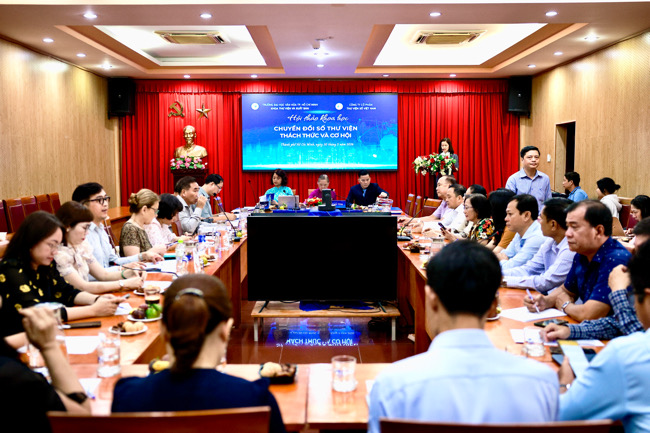
Putting users at the center
In the presentation session, Assoc. Prof. Dr. Nguyen The Dung - Former Rector of Ho Chi Minh City University of Culture raised the issue of "taking users as the center" to adapt to the requirements of digital library development. Accordingly, all technology platforms, digital library services, access interfaces and search tools need to be designed based on the actual needs of library users. Improving the experience, expanding access to information and developing online services becomes an important requirement to improve the quality and operational efficiency of digital libraries.
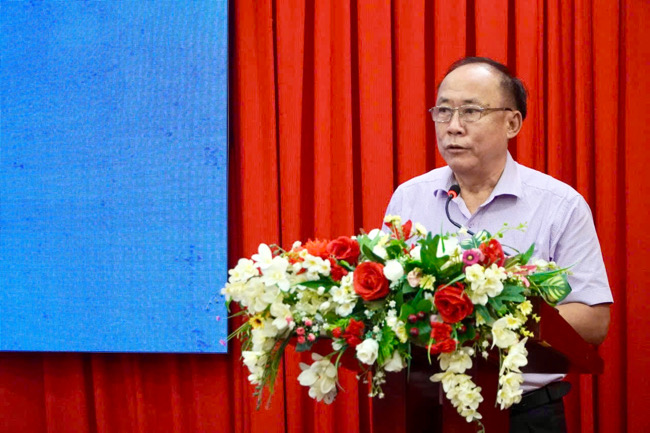
Agreeing with this view, Mr. Nguyen Anh Dung - Founder and Chairman of the Digital Library of Vietnam, said that people's need to access knowledge today has shifted strongly to an online, multi-platform and data interconnected environment. The biggest bottleneck of the industry is not the lack of resources, but the scattered resources, individual operations and lack of shared infrastructure.
Resolving administrative "loopholes" with integrated digital infrastructure
From the perspective of public library management, MSc. Vinh Quoc Bao - Deputy Director of the Ho Chi Minh City General Science Library said that from July 1, 2025, after the merger of Ho Chi Minh City, Binh Duong and Ba Ria - Vung Tau have completely eliminated the district level. This creates a large gap in organization when there are no longer intermediate coordinating units. Therefore, building a two-level integrated digital library model is an essential administrative management solution. By establishing the CRRM mechanism - Centralized digital copyright and resource management, this model allows central libraries to play a core role to directly connect and coordinate without distance to 168 ward and commune library points, so that each core library does not have to take care of copyright issues themselves.
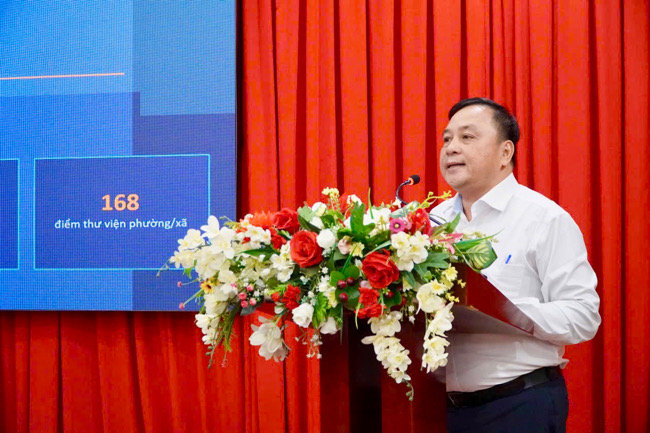
However, MSc. Vinh Quoc Bao also frankly pointed out the current challenges, when merging three systems that are using three different management software (ILS), along with extreme infrastructure differentiation between urban and suburban areas. In particular, the biggest challenge lies in grassroots human resources when most ward and commune officials are part-time and lack digital skills. To prevent digital libraries from falling into a situation of "no users", he emphasized that digital resource warehouses must be built according to the actual needs of the locality, such as providing legal information to workers in Binh Duong industrial park or farming techniques for fishermen in Ba Ria - Vung Tau...
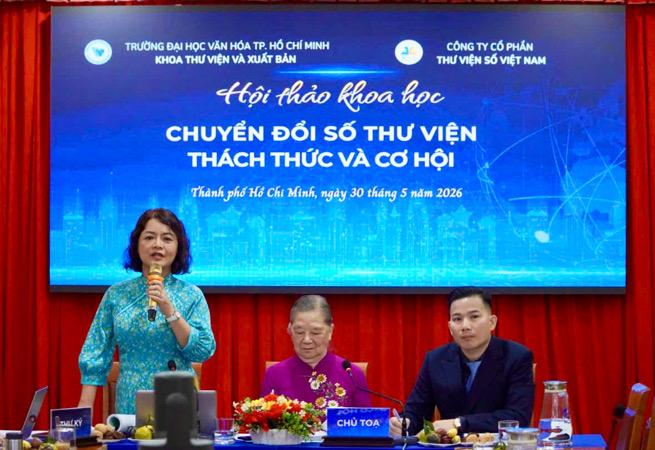
The conference continued to record many professional contributions from researchers, lecturers... To develop the digital library, the conference agreed on the core solution group.
First of all, the State needs to soon complete and promulgate regulations on system management according to a two-level model to clearly define the responsibilities of all parties. Second, technology upgrades must go hand in hand with a substantive content development strategy. In which, the shared digital library solution plays a key role in helping to synchronize infrastructure, break down data fragmentation and shift resources closely following the actual needs of each locality. This synchronous coordination is a prerequisite for building a modern and equal knowledge sharing environment in the digital age.


