
From 2026, eliminate secondary school graduation certificates, unify shared textbooks
The National Assembly has passed the Law amending and supplementing a number of articles of the Law on Education, effective from January 1, 2026. The notable change is the removal of the issuance of junior high school graduation certificates. Instead, students who have completed the junior high school program will be confirmed directly by the principal in their transcripts instead of being granted a degree as before.

The new law stipulates that the national education system diploma only includes high school graduation certificate and other vocational - university degrees, while the results of completing the junior high school program are only recorded in the academic records. High school graduates still have to take the exam to get a certificate; those who do not take the exam or do not pass the exam will be granted a certificate of completion of the program to continue vocational training or register for re-examination when needed. Documents and certificates can be issued in paper or digital form to promote digital transformation.
The law also stipulates the free provision of textbooks for students and unifies a set of textbooks for national use. The Minister of Education and Training will approve textbooks after the National Council appraises and evaluates them as meeting the requirements, and at the same time issue standards and procedures for compiling and editing textbooks. See more...
Making English the second language in schools
Many National Assembly deputies agreed with the goal of making English the second language in schools under the National Target Program for the period 2026-2035, with a mark of 30% by 2030 and 100% by 2035. However, delegates emphasized the need to carefully consider the feasibility, because to effectively implement, it is necessary to synchronously prepare facilities, equipment, programs and teaching staff.
Some delegates said that applying the 30% quota nationwide is unrealistic, especially in mountainous provinces where English teachers are seriously lacking. The delegate recommended dividing local groups according to conditions with more suitable rates, while prioritizing support for funding, equipment and teacher training for disadvantaged areas to avoid the situation of the goal of " placing on paper". See more...
Experts recommend eliminating a series of unnecessary fees in education
Teachers point out inadequacies in regulations on seniority allowances for teachers
According to Decree 77/2021/ND-CP, teachers with 5 consecutive years of teaching or more are entitled to seniority allowances, this allowance is also the basis for paying insurance. However, many teachers have reflected their shortcomings: Although they have been teaching for decades, when they are transferred to a position where they do not directly teach at the end of their career, they have their seniority allowance completely cut and not included in their pension. Meanwhile, those who have only spent the last 5 years of teaching will enjoy full benefits.
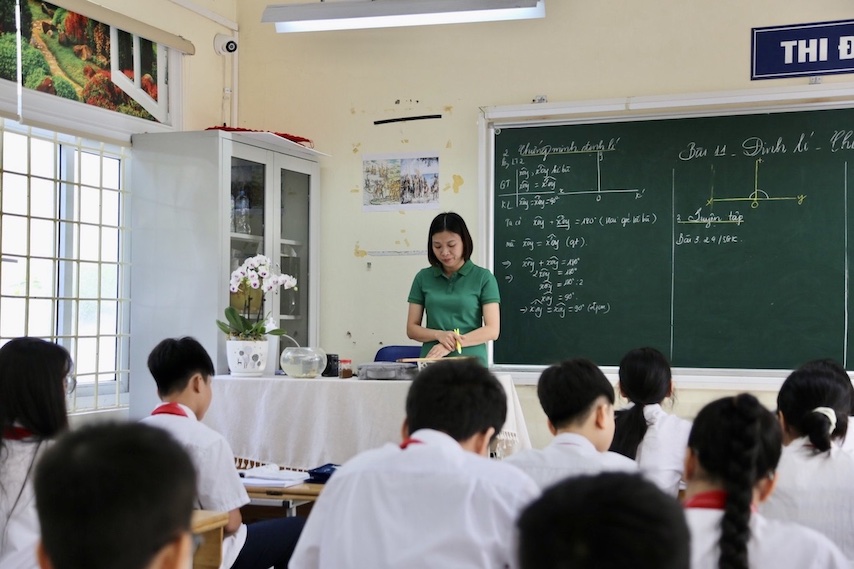
The teacher said that this difference is unfair. The time to teach becomes a factor that determines the rights: Two people have the same number of years of teaching, but if one person teaches in the early stages, one person teaches in the final stages, the allowance and pension regime is completely different. The disadvantage is that teachers who have paid social insurance on seniority allowances for many years but when changing positions are not reserved, leading to retirement benefits not reflecting the correct amount of money paid.
To overcome this, many teachers have proposed amending the policy in the direction of: expanding the scope of seniority allowance to all teachers who have taught for 5 years or more, regardless of working time;... See more...


