
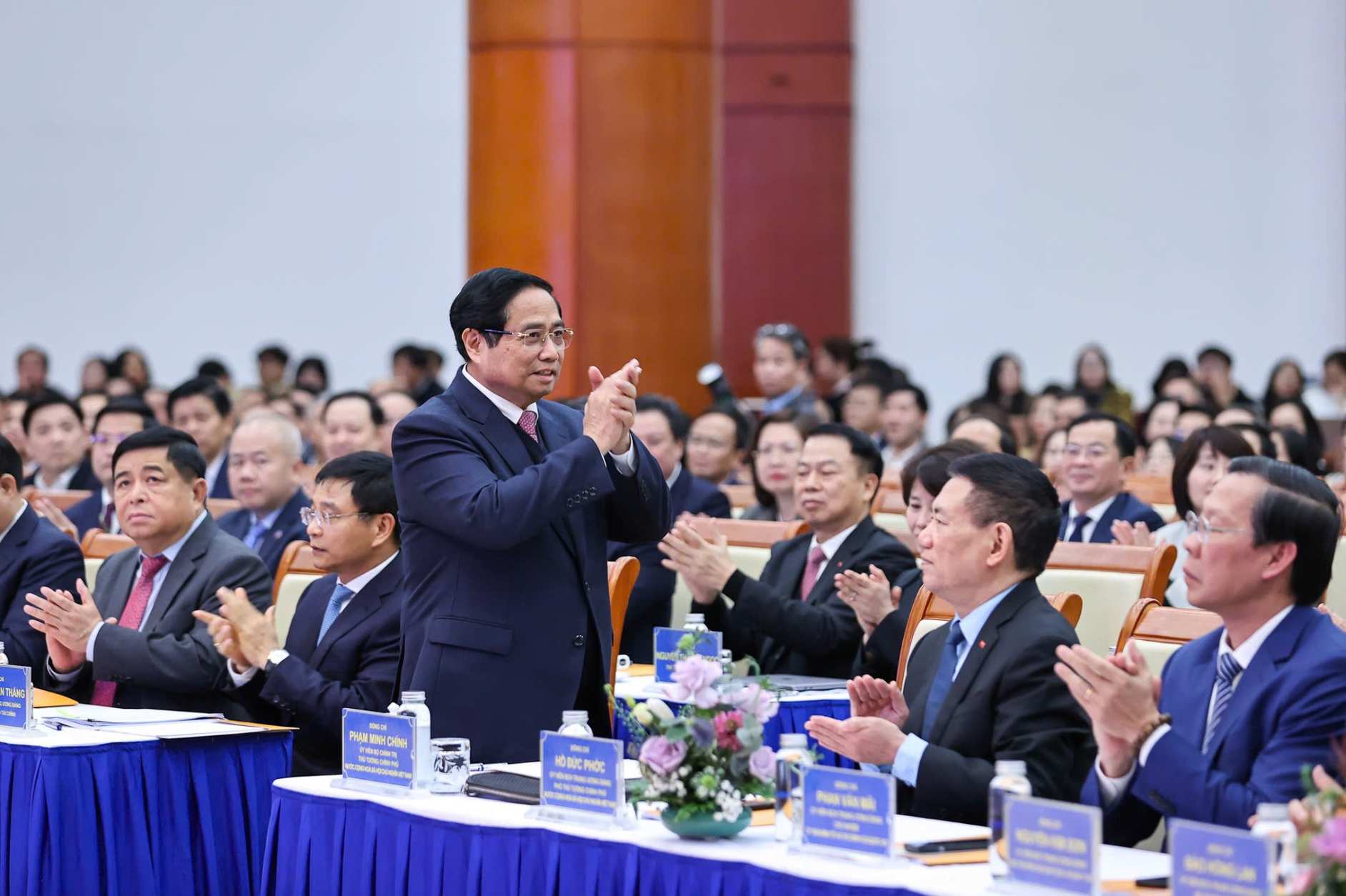
On the afternoon of January 6, 2026, the Ministry of Finance held a conference to summarize the work in 2025 and deploy tasks for 2026.
The conference was attended by Prime Minister Pham Minh Chinh, representatives of leaders of Party agencies, the National Assembly, the Government Office, central ministries and branches, and leaders of provinces and cities.
Speaking at the opening of the conference, Minister of Finance Nguyen Van Thang emphasized that this is a conference of special significance as it is a conference summarizing the first year of work of the new organizational apparatus of the Ministry of Finance after merging and consolidating the Ministry of Finance, the Ministry of Planning and Investment, the State Capital Management Committee in enterprises and Vietnam Social Security.
The Minister said that 2025 continues to be a year with many major difficulties and challenges beyond forecast, especially uncertain and unpredictable fluctuations in the financial and commercial markets; natural disasters, floods, and climate change causing heavy damage. In that context, the Ministry of Finance has implemented an unprecedented large organizational arrangement from central to local levels, with a reduction of 37% in focal points.
According to Minister Nguyen Van Thang, thanks to the close attention and direction of the General Secretary, Party and State leaders; the drastic direction of the Government, especially Prime Minister Pham Minh Chinh, the entire Finance sector has united, unified, overcome difficulties and challenges and achieved many remarkable results.
The Minister clearly stated that in 2025, the Ministry of Finance has focused on building the largest volume of legal documents and policies ever, associated with innovating thinking and ways of doing things, promoting decentralization and delegation of power. Along with that, the Ministry has advised the Government and the Prime Minister on operating scenarios and solutions to achieve the economic growth target of 8% or more, controlling inflation at a low level.
Fiscal policy is managed proactively, drastically, effectively, with focus and key points; implementing the reduction and extension of taxes and fees to support production and business, while improving the efficiency of budget revenue management, collecting correctly, fully, and thoroughly saving regular expenditures to increase development investment spending, ensure social security, and consolidate national defense and security.
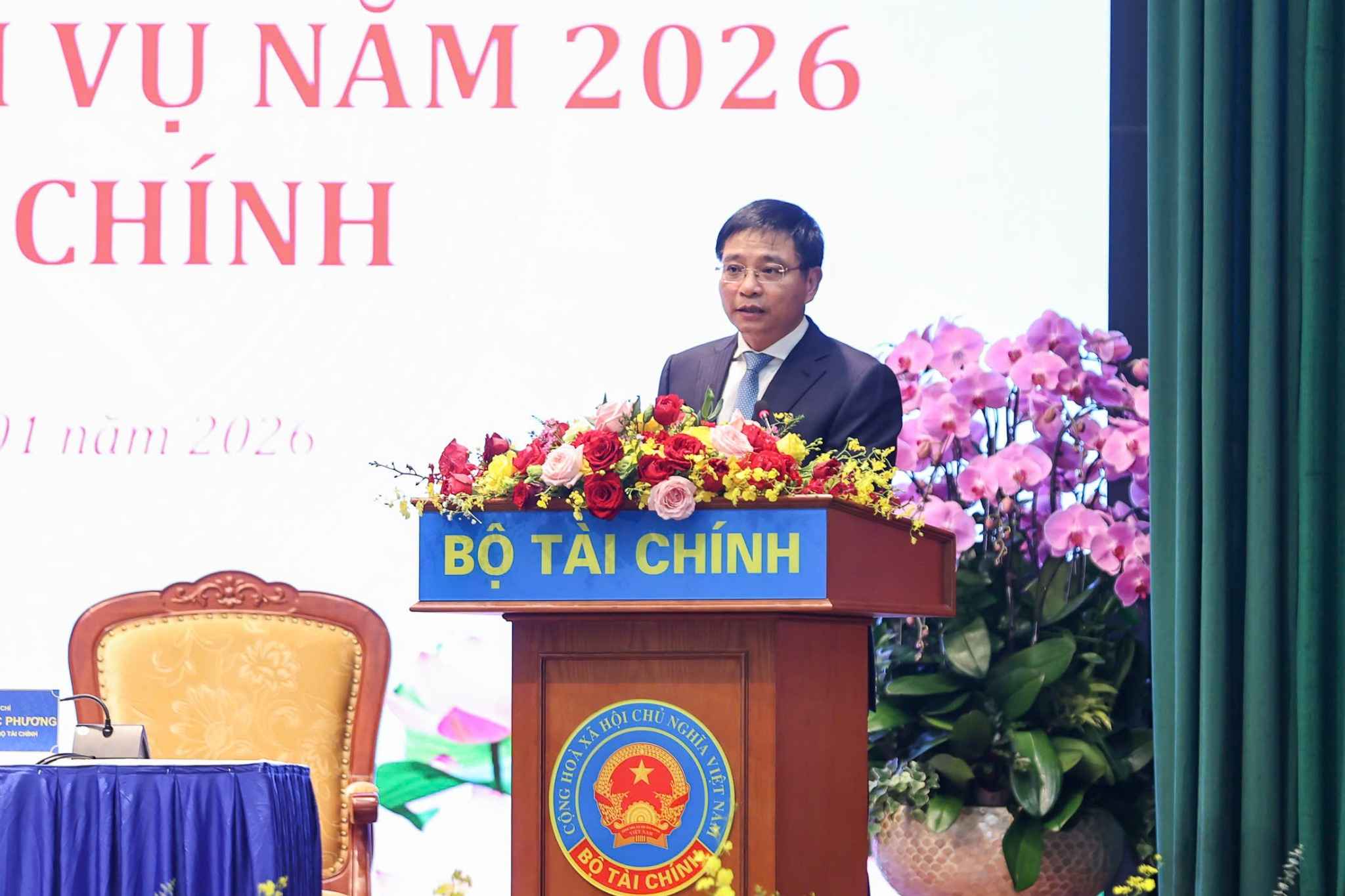
The Minister also said that the Finance sector has promoted administrative procedure reform, improved the investment and business environment; developed financial and securities markets in a modern and sustainable direction; promoted the effectiveness of the social insurance system and insurance market, contributing to reducing risks for the economy.
Besides the achieved results, Minister Nguyen Van Thang frankly pointed out the great pressures in the coming time, including the requirement to promote social investment capital to reach about 40% of GDP to serve the double-digit growth target, along with the requirement to continue innovating financial and investment policies, meeting increasingly high tasks.
Stepping into 2026, the Minister emphasized that this is a year of particular importance with the goal of economic growth of 10% or more, while maintaining macroeconomic stability, controlling inflation, ensuring major balances and social security. This requires the entire Finance sector to continue to improve the spirit of solidarity, determination, innovate thinking and ways of doing things, and closely coordinate with ministries, branches, and localities.
It's a bit of a bit of a bit of a bit of a bit of a bit.


