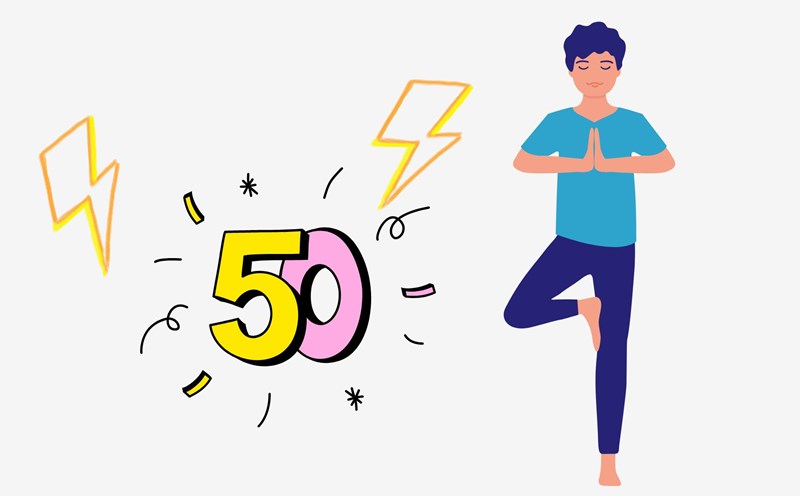
Why is the single-leg test important?
The one-sided stand test is simple but actually tests many systems in the body, including vision, inner ear, musculoskeletal and brain. If one of these parts is not working properly, the ability to maintain balance will decrease immediately.
A inability to stand firm on one leg for 10 seconds, especially after the age of 40, is often a sign of a problem with the nervous system, muscles or vestibular system, says Dr. Chandana R Gowda, Neurologist at Fortis Hospital, Bengaluru.
The study also shows that the ability to maintain balance reflects muscle strength, flexibility, vestibular function and overall neuropathy, while warning of a higher risk of falls if not improved.
What does imbalance say about your health?
Weak leg or core muscles: A sedentary lifestyle causes vital muscle groups such as the hip muscles, core muscles and calves to gradually weaken. When these muscle groups are not strong enough to support and stabilize the body, you will easily shake or lose a pole when standing with one leg.
Poor activities of the vestibular system: The vestibular system located in the inner ear has the task of detecting movement and maintaining balance. When this part has problems, you may appear dizzy, lightheaded, and have difficulty maintaining a steady standing position, even for a very short time.
Early signs of neurological disorders: Some neurological diseases such as Parkinson's or diabetes neurological disease can manifest very early through difficulty in maintaining balance. When signals from the brain to muscles are slow or interrupted, the body will react inex linearly and easily become unstable.
Decreased sensation of location: The sensation of the core helps the body recognize the location of the limbs in space. When this function is impaired due to aging, injuries or neurological diseases, you are more likely to put your feet in the wrong position, easily won't move your legs when changing your posture and easily stumble.
Increased risk of falling: In the elderly, loss of balance is a warning factor of danger. Even a minor fall can lead to broken bones, loss of joint strength or long-term impaired mobility. Therefore, any change in the ability to maintain balance needs to be noticed and evaluated early.
When should you worry?
Unable to stand firm on one leg for 510 seconds despite trying.
Often tripping or losing balance while traveling, climbing stairs or changing direction.
Feeling dizzy, dizzy or lightheaded when standing up.
Plucking, reducing sensation or weakness in the feet and ankles.
Difficulty walking straight on a line or feeling shaken.
How to improve balance
Practice balance: Stand with one leg, walk on your heels to touch your toes, practice yoga.
Strengthen your muscles: Work your core, hip, and calves to improve stability.
Stay active: Avoid sitting for too long, move around frequently throughout the day.
Health check: Monitor vitamin D and blood sugar levels if you are often unbalanced.
Small supportive habits: Stand with one foot while brushing or rotating your ankle at rest.