
On December 17, according to the latest weather report, this year's winter in the Northern Hemisphere is developing at an unusual intensity. Although the astronomical calendar determines that December 21 will be the time of winter, in fact, extremely strong cold air waves have been spreading for the past month.
Observations recorded two record cold spells in November 2025 hitting two of the eastern two United States and many large areas of Western Europe, bringing heavy snowfall and a sharp drop in temperatures.
Meteorological experts identify the main culprit for this situation as fluctuations in the direction of the tropical cyclone. In essence, this is a giant wind belt surrounding the North pole at an altitude of 15-50km above the average.
In a stable state, the extreme cyclone acts as a solid "dyke" blocking the wind with strong westerly winds. His task is to loosen the bone-tensive cold air mass in the cucum and help the weather in temperate countries maintain a temperate state.
However, this protective mechanism was broken by the phenomenon of sudden warming in the economy. Monitoring stations recorded temperatures in the high atmosphere above the Arctic suddenly spiking from 20-40 degrees Celsius in just a few days. This heat shock caused the weak westerly wind structure to seriously deform, shift the axis or break in half.
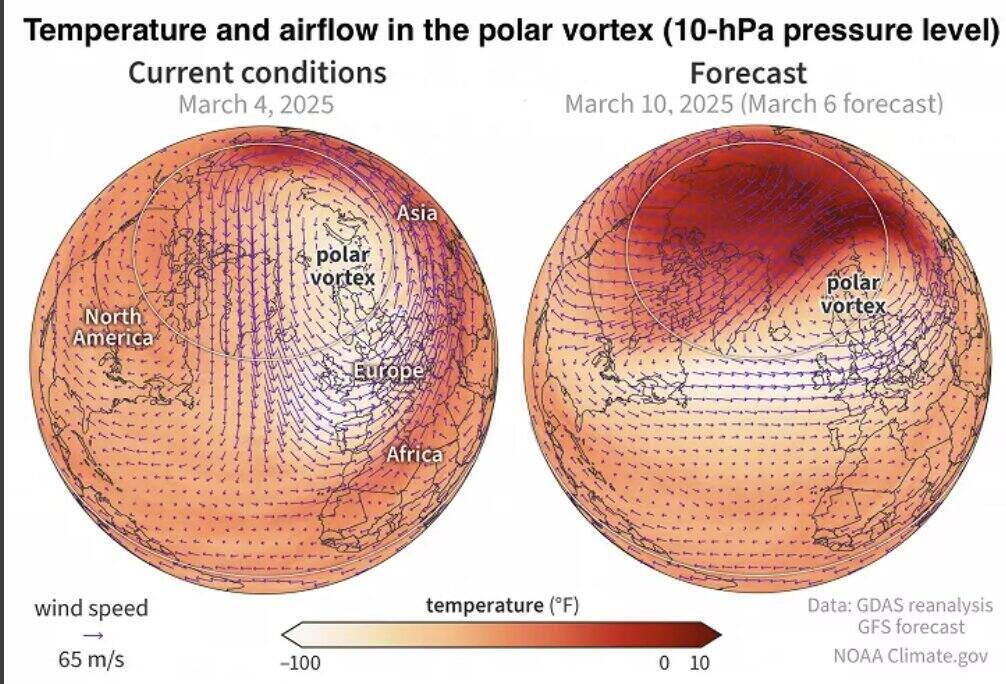
As a result, the natural protective barrier was broken. The cold air mass from the Arctic has the opportunity to overflow deep to the south, causing widespread cold spells.
The effect of this phenomenon is usually 1-3 weeks late from the time the average temperature heats up. When the disturbance spreads to the convective layer close to the ground, it will deform the flow rate. Instead of blowing directly, the current begins to curve strongly, creating "deep edges" that allow cold air to penetrate directly into densely populated residential areas.
Weather forecasts also specifically warn about the appearance of high-pressure systems. When this phenomenon occurs, the cold weather will be "locked" in an area for a long time, causing severe cold.
With the current meteorological indicators for the winter of 2025, scientists recommend that people proactively take measures to keep warm as the temperature is forecast to have many unpredictable fluctuations in the coming weeks.


