
Billion-VND ginseng thefts
In recent years, authorities in communes such as Tu Mo Rong, Mang Ri, Dak Pek (Quang Ngai province) have discovered and investigated many cases of ginseng theft that caused billions of dong in damage.
On the occasion of the Lunar New Year 2024, when people were busy preparing for Tet, thieves broke into ginseng gardens in Dak Na, Dak Sao, Te Xang, Ngoc Lay communes (old Tu Mo Rong district) to steal. People quickly reported. The authorities established an interdisciplinary team to inspect the scene and count the damage.

Initial results determined that more than 800 ginseng plants from 4-10 years old of the people of the three communes were stolen, causing billions of dong in damage. To prevent recurrence, the People's Committees of communes have mobilized people to take turns on duty 24/7 and install cameras at appropriate locations.
In October 2024, the police expanded the investigation of the ginseng theft in the area and identified the two perpetrators as A Doan (born in 2007, residing in Ngoc Lay commune) and A Guong (residing in Mang Ri commune). Previously, on October 7, Mr. Nguyen Thanh Tuan (Dak Chum 1 village, Tu Mo Rong commune) reported the loss of 38 ginseng roots. The police immediately collected data, reviewed drug dealers and monitored transactions online.
The two subjects stated that after drinking alcohol, on the way back, A Doan had the idea of stealing ginseng and invited A Guong to join. They walked into Mr. Tuan's ginseng garden, climbed the fence and stole a total of 38 ginseng roots and sold them the next morning.
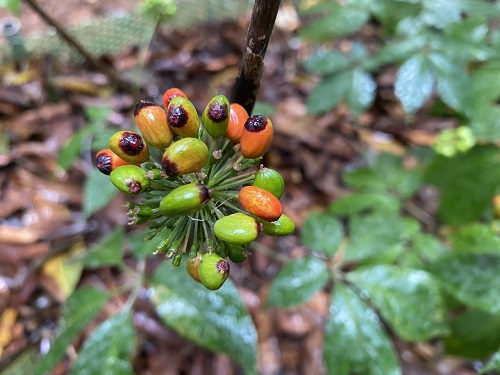
Also in October 2024, the Investigation Police Agency initiated a case, prosecuted the accused and temporarily detained A Ngang (31 years old, Tu Mo Rong commune) for the act of property theft. The investigation shows that on the night of October 7, 2024, while setting a rat trap in the natural forest of Ngoc Linh Nature Reserve, A Ngang discovered a ginseng garden without anyone watching and stole 350 Ngoc Linh ginseng plants. These ginseng were hidden near his family's ginseng garden and partly used to pay the hired laborers.
In March 2024, the police discovered a Facebook fanpage named "Con Tum Province Seed Center" (more than 1,200 likes) regularly posting advertisements for selling unusually cheap Ngoc Linh ginseng plants and tubers. The manager is L.V.C, a subject specializing in importing ginseng seeds of Chinese origin, labeling Ngoc Linh ginseng for sale for profit.
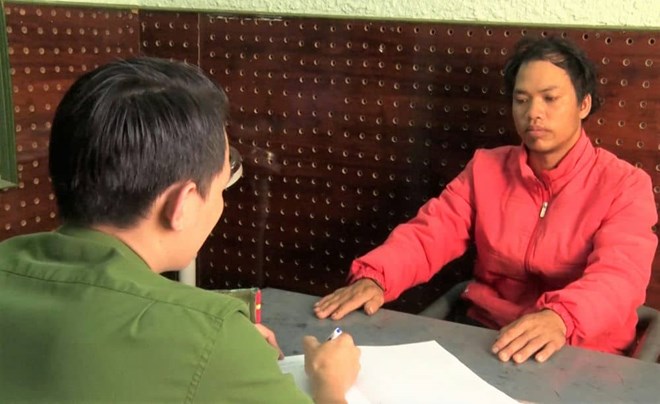
The authorities inspected 150 seedlings in the order and determined that they were not Ngoc Linh ginseng. L.V.C admitted to his actions and stated that he had repeatedly imported Chinese ginseng varieties from a woman in Lao Cai to sell online.
Fighting and preventing "national" theft
In Dak Pek, Tu Mo Rong, Mang Ri communes..., commune officials coordinated with village elders and village chiefs to propagate to people to denounce criminals. ginseng growers cooperate with businesses to ensure security in growing areas, thereby significantly reducing theft in 2025.
People also installed cameras and laid B40 nets, setting traps around the garden. Mr. A Chen (Mang Ri commune) said: "In addition to patrolling at night, people also fenced off B40 nets and set up many spike traps to prevent thieves from breaking in." According to him, the spike trap is only a deterrent, causing minor injuries, making it difficult for thieves to run away in the mountainous forest, thereby reducing the intention to commit crimes. During the days of cold weather and heavy rain, security groups of local people and commune officials are still on duty 24/7 to check mountain rat traps, pests that eat nuts and ginseng roots.
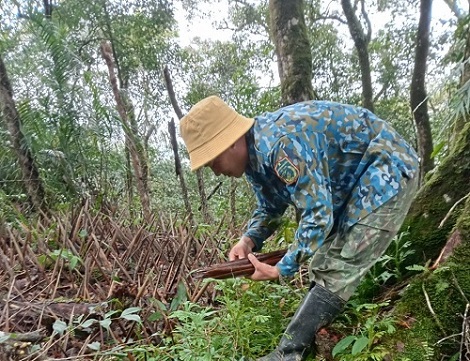
Mr. Vo Trung Manh - Secretary of the Party Committee of Tu Mo Rong Commune, Quang Ngai Province - said that the commune has increased the mobilization of people to provide information and denounce criminals. He recommended: "When theft occurs, people need to immediately report it to the police for timely investigation and handling. At the same time, people and businesses need to invest in a camera system to protect ginseng gardens.
The People's Committee of Quang Ngai province requires relevant agencies to strictly manage Ngoc Linh ginseng varieties, planting techniques, care, harvesting, processing and consumption; handle organizations and individuals trading in ginseng varieties of unknown origin or violating the geographical indication "Ngoc Linh", the certification mark "Kon Tum Ngoc Linh ginseng".
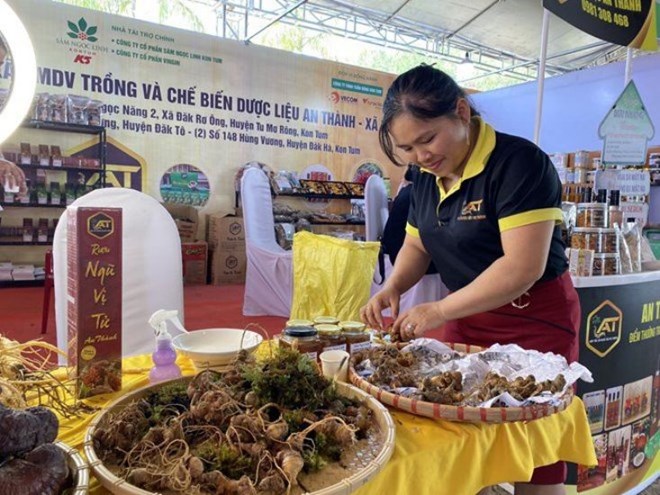
The police, Market Management and People's Committees of communes will implement management measures from input to output of Ngoc Linh ginseng products, protecting the reputation, quality and brand, while ensuring the rights of producers and consumers.
Currently, the mountainous area of Quang Ngai is the province with the largest area of Ngoc Linh ginseng in the country, capable of supplying more than 1 million seedlings per year. However, because ginseng is grown completely naturally in the mountains, protection and conservation work faces many difficulties.
The provincial Market Management Department said that the system of Ngoc Linh ginseng active ingredient testing machines has been fully equipped, helping to distinguish between real and fake ginseng, promptly detecting poor quality goods for handling according to regulations. The province has invested billions of VND in a ginseng inspection system, including a separation device, a DNA test and a saponin analysis device.
In addition, the commune authorities also mobilized philanthropists and benefactors to support seedlings for the people. The planting of ginseng concentrated in hundreds of years old natural forests helps preserve plant sources, raise awareness of forest protection and create jobs for people, especially poor and near-poor households in ethnic minority areas.
Turning " hunger eradication and poverty reduction" into the country's medicinal capital
The communes in the west of Quang Ngai province have mainly mountainous terrain, and are home to a large number of ethnic minorities. In addition to focusing on tourism development in Mang Den, Sa Thay, Kon Tum, the local government also identified the expansion of the area of cold-cationed coffee and Ngoc Linh ginseng cultivation as a key factor to develop the socio-economy and improve people's lives.
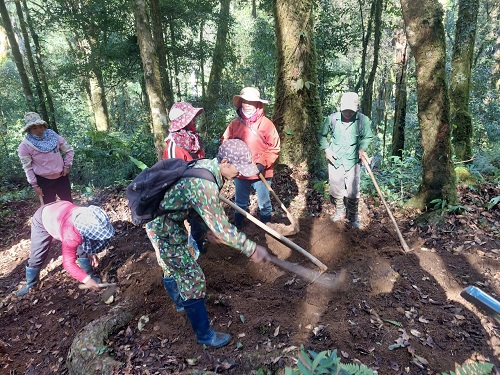
According to statistics from the Department of Agriculture and Environment of Quang Ngai province, communes such as Mang Ri, Ngoc Linh, Dak Plo... have planted about 2,922 hectares of Ngoc Linh ginseng, reaching 65% of the target set by the Provincial Party Committee's Resolution. From the beginning of 2025 to now, mountainous communes have also newly planted 161.3 hectares of Arabica cold-pressed coffee.
Over the years, growing Ngoc Linh ginseng has helped nearly 2,000 households in mountainous areas escape poverty. Many families have improved their income by growing ginseng and linking with ginseng production and trading enterprises and gradually getting rich.

The locality is also associated with forest protection and preservation of traditional cultural values such as gongs, forest houses, and xoang singing dance imbued with the character of the Central Highlands. The government linked tourism with major cities, built resorts, homestays, planted Bulgarian roses and organized an international culinary competition from medicinal herbs. Thereby, the locality expects tourism to take off from the land known as the capital of medicinal herbs.
Ms. Mai Thi Thu, a tourist from Binh Duong, shared: Coming to Tu Mo Rong, my friends and I were able to explore nature, medicinal herbs and the unique life of the Xodang people. The most important thing is to see with your own eyes the ginseng and medicinal herbs growing under the rotten grass, being diligently cared for by the people every day".
Authorities need to promote research and application of post-harvesting and deep processing technology, improve quality standards and traceability. These are key factors to increase the added value of the product. Quang Ngai expects active ingredients from ginseng to be widely applied in the fields of healthcare, community health care, and at the same time contribute to the socio-economic development of the province.


