
Spot gold prices at one point reached 4.916 USD/ounce, up more than 5% during the day; while spot silver reached 87.82 USD/ounce, up 11%.
Some analysts believe that this recovery of precious metals reinforces the increasingly popular view that the recent selling pressure mainly came from short-term speculative positions and momentum trading, not due to fundamental market changes.
A major German bank continues to emphasize optimistic prospects for gold. On Monday, Mr. Michael Hsueh - Head of Metal Research at Deutsche Bank, said that although precious metal investors need to be cautious because market volatility is still high, the investment argument in gold is basically unchanged.
According to Mr. Hsueh, despite strong fluctuations, the gold market is still on track to reach the 6,000 USD/ounce mark by the end of this year.
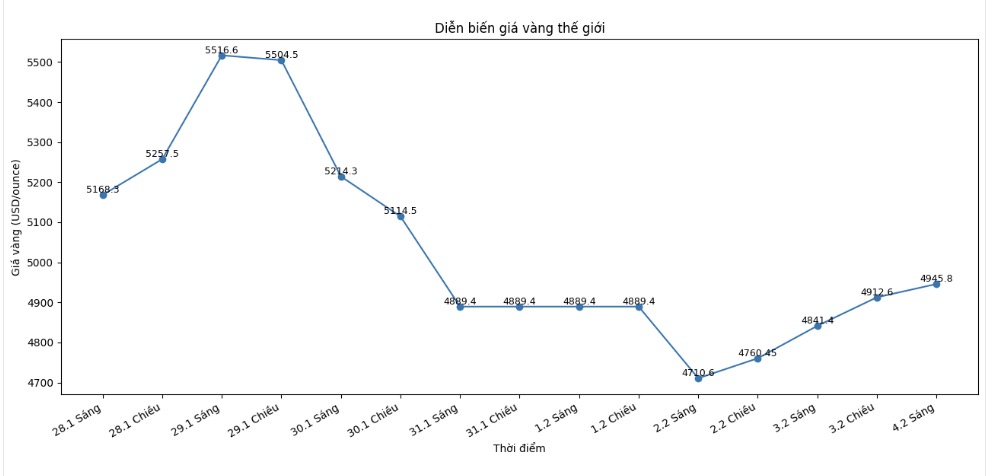
The thematic drivers of gold are still positive and we believe that the reason investors hold gold (and precious metals in general) has not changed. Current conditions do not show a sustainable reversal of gold prices, and we also see many differences between the current context and the period of gold weakening in the 1980s and 2013" - Mr. Hsueh stated in the report.
He also said that investment demand from China will continue to be an important pillar supporting gold prices. Even when gold prices in Western markets fall, the price difference (premium) on the Shanghai Gold Exchange remains high.
Deutsche Bank is not the only organization that maintains an optimistic view. On the same day, commodity analysts at Société Générale said that the basic outlook for their precious metals remained unchanged. Ms. Ipek Ozkardeskaya - market analyst at Swissquote, also affirmed that she still maintains a positive view of gold.
“It seems that the worst-case scenario may be behind us. When leverage positions have been "shed", investors may feel like they are returning to a newly cleaned playground, although still cautious," she said. "The factors supporting gold prices from last year to now remain: prolonged trade and geopolitical instability; the debt burden of G7 countries is becoming less sustainable and more likely to worsen. The attractiveness of the USD, other major currencies and government bonds remains fragile, further strengthening the argument for rising prices for hard commodities.
However, Ms. Ozkardeskaya also warned that market risks are increasing.
Traditionally, gold is seen as a tool to defend against market risks. But now, it acts like a risky asset - even sometimes like stocks being inflated according to crowd psychology and the reverse correlation with risky assets has faded.
The main reason is that speculative positions use leverage at a high level. The problem is that most diverse investment portfolios are allocated to gold, so this fluctuation affects all risk appetites" - she analyzed.


