
Unblocking traffic blood vessels
On December 19, the investment project to expand the Ho Chi Minh City - Trung Luong - My Thuan expressway started construction. This project is implemented under the public-private partnership (PPP) method. The expressway is over 96km long, passing through Ho Chi Minh City, Tay Ninh province and Dong Thap province, and is implemented under the form of a BOT contract with 100% capital mobilized from the private sector. On the same day, the Ministry of Construction coordinated to organize the inauguration and opening ceremony of 2 important expressway component projects: Can Tho - Hau Giang section and Hau Giang - Ca Mau section.
Dr. Tran Huu Hiep - Vice President of the Mekong Delta Tourism Association - shared: "Upgrading and expanding the Ho Chi Minh City - Trung Luong - My Thuan Expressway is not simply a transport infrastructure project. This is an urgent requirement to reduce logistics costs and restructure the development space of the Mekong Delta region".
According to Dr. Hiep, this expressway is currently in a state of serious overload, turning a vital artery into a "bottleneck". Slow travel and congestion not only consume fuel but also directly reduce the competitiveness of agricultural products in the West - which are products sensitive to time and preservation. "When the expansion project is completed, it will help the flow of goods from the country's largest raw material area to seaports and consumption centers in Ho Chi Minh City become more smooth. This is the most substantial "push" to reduce product costs and increase profits for farmers and businesses," he said.
Dr. Hiep believes that the Ho Chi Minh City - Trung Luong - My Thuan Expressway is the "backbone" starting for an ecosystem of expressways in formation such as My Thuan - Can Tho, Can Tho - Ca Mau, Ca Mau - Dat Mui, An Huu - Cao Lanh, Lo Te - Rach Soi, Chau Doc - Can Tho - Soc Trang. When this spinal axis is large enough and smooth, it will create a continuous connection of logistics centers, deep processing industrial parks and satellite cities will automatically form along intersections, creating new growth poles, instead of focusing only on old, cramped cities.
"Infrastructure goes first, investment comes later. The determination to expand this route is a strong commitment of the Government, creating confidence for strategic investors. When transportation risks are controlled, the Mekong Delta will become more attractive to FDI enterprises and large corporations in the fields of export processing, green energy and high-quality services," Mr. Hiep affirmed.
From a social perspective, Dr. Tran Huu Hiep believes that shortening travel time between the West and Ho Chi Minh City is the most effective way to bridge the development gap. It promotes a two-way shift: knowledge and technology from urban to plain areas and labor resources have easier access to high-quality medical and educational services.
Connecting inter-regional tourism
The Vice President of the Mekong Delta Tourism Association said that transport infrastructure is also a bridge that "unlocks" the potential of inter-regional tourism. The Mekong Delta owns unique eco-tourism resources but has long been stuck in the trap of "cheap destinations" and "unresident customers" due to traffic congestion.
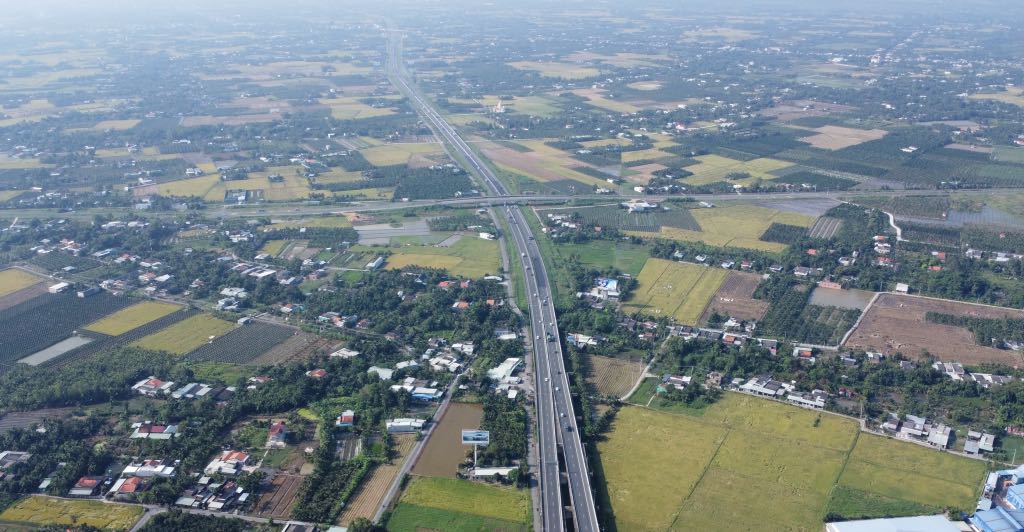
According to Mr. Hiep, when the expressway axis is expanded, the optimal travel time will bring the Western provinces closer to Ho Chi Minh City. This not only attracts domestic visitors but also creates conditions for travel businesses to create high-quality tours, extend their stay and increase tourists' spending, making tourism truly a spearhead economic sector of the region.
Upgrading the Ho Chi Minh City - Trung Luong - My Thuan expressway is the solution to the problem of economic compression for the Mekong Delta. When barriers in time and cost are removed, the circulation between goods, capital flows and people will create new momentum for the whole region. This is not only a road but a symbol of sustainable connectivity, taking the plains out of the "low" state of infrastructure to become a dynamic growth pole of the whole country," said Dr. Tran Huu Hiep.


