
On the morning of April 23, the National Assembly discussed in the hall about the draft National Assembly's supervision program for 2027.
Delegate Hoang Van Nghia (Quang Ngai Delegation) clearly stated that it is necessary to innovate supervisory thinking in the direction of going deep into evaluating the contingent of cadres and civil servants in the implementation of 2-level local government.
With 1,084 tasks of grassroots-level government, the capacity of the contingent of cadres in performing tasks is extremely important. Therefore, it is necessary to focus on monitoring the thinking and actions of daring to think, dare to do, dare to take responsibility for the common interests of the current contingent of cadres and civil servants.
Therefore, the supervision program for 2027 and the following years needs to focus on assessing the implementation capacity of local authorities at 2 levels. Especially specialized supervision on the capacity of the contingent of officials; in thinking, ways of doing, daring to think, daring to do, daring to take responsibility for the common good.
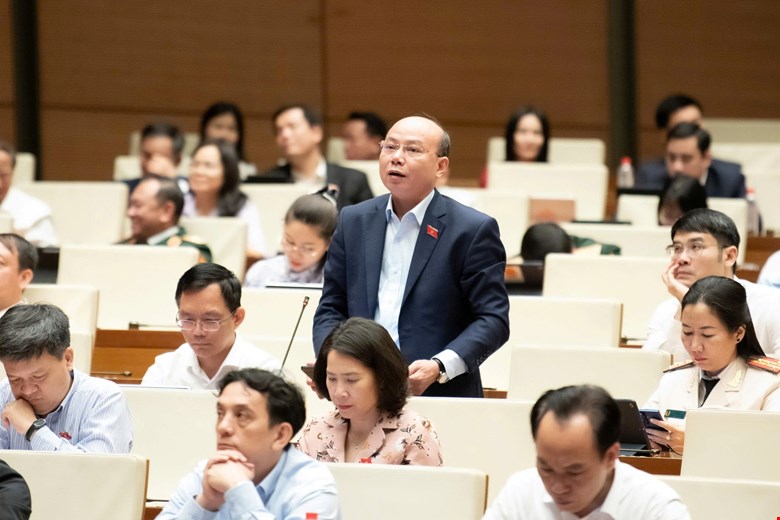
Delegate Tran Thi Hoa Ry (Ca Mau) proposed choosing topic 1 - implementing policies and laws on the management and use of public assets as working headquarters while implementing the policy of arranging and organizing the apparatus and administrative units for supreme supervision.
However, the selection of the above topic is accurate, correct but not comprehensive. The delegate proposed to study and supplement the issue of arranging the implementation of 2-level government.
According to delegate Tran Thi Hoa Ry, the Presidium of the Central Committee of the Vietnam Fatherland Front has proposed that the Party and State pay attention to directing and promptly removing difficulties in implementing 2-level local government, to ensure that the government operates effectively, close to the people, and serves the people better; consider and approve regimes and policies for grassroots cadres and civil servants, and non-specialized workers in villages and residential groups in accordance with the increasing requirements and tasks of the government.
Delegate Tran Thi Hoa Ry stated that with the structure of 2 professional departments under the Commune People's Committee, on average, each professional department carries the tasks of 7 departments and branches. This leads to work overload at the grassroots level. One commune official has to handle many tasks.
The delegate also cited the reality that the number of administrative dossiers has increased sharply at the commune level, but the staffing is not really suitable.
Therefore, it is necessary to focus on reviewing the improvement of administrative procedures, reducing intermediaries and formal reports. Grassroots levels need to standardize procedures in the direction of one focal point, one process and clear responsibilities, and at the same time promote digital transformation.
A bottleneck point pointed out by delegates lies in the capacity of officials who have not kept up with the requirements. With the 2-level government, grassroots officials not only do administrative work but must perform management functions at a higher level.
Currently, delegates realize that when handling issues related to investment, planning or digital transformation, many officials are still confused due to lack of in-depth skills. Therefore, delegates believe that there needs to be strong enough policies to attract high-quality human resources to the grassroots level.
From there, the female delegate proposed to add in the content of the supreme supervision the implementation of policies and laws on arranging, organizing the apparatus and managing and using public assets as working headquarters after implementing the policy of arranging the organizational apparatus and administrative units at 2 levels for supreme supervision in 2027.


